Living on a standard suburban block today usually means you can hear your neighbours breathing. With Australian block sizes shrinking and medium-density housing becoming the norm, creating a private sanctuary is harder than ever. We all want a space where we can relax without feeling watched. But building a two-metre high solid brick wall around the front boundary just turns your house into a compound. You lose the natural cross-breeze, block out the afternoon sun, and make the home look completely uninviting from the street.
The trick is creating boundaries that obscure the view without trapping you inside. You want to filter the outside world rather than blocking it out entirely. Here are the exterior design upgrades that strike the right balance between security and open space.
Smart Screening with Timber and Aluminium
Solid fences are the default for most properties, but they are rarely the best option for front courtyards or tight side passages. A much better approach is using slatted screens. When you space timber or powder-coated aluminium battens a few centimetres apart, you get the best of both worlds. People walking past on the footpath can only see brief, moving glimpses of your yard. Meanwhile, you still get natural light and fresh air filtering through to your living room windows.
The orientation of the slats also matters. Vertical battens tend to make a space feel taller and are harder for outsiders to look through when walking past at an angle. Horizontal slats can make a narrow courtyard feel wider. Using a durable, high-quality timber like spotted gum or blackbutt holds up well to the harsh Australian sun and adds instant warmth to an exterior brick or render finish. If you want zero maintenance, wood-grain aluminium is incredibly convincing these days and will not warp over time.
Securing the Boundary Gracefully
Your driveway and front path are the main openings in your privacy perimeter. Securing these access points is essential, but a heavy solid metal door across the driveway completely blocks the streetscape. Instead, look at installing custom gates designed with permeability in mind.
A well-constructed gate made with vertical aluminium slats or a classic open wrought-iron design establishes a very clear property line. It stops wandering dogs and keeps the kids safely off the road, but it keeps your property visually connected to the neighbourhood. You maintain your own sightlines down the street while controlling who actually walks up to your front door. Adding motorisation to these gates brings the convenience of security without the visual weight of a solid barrier.
Elevation and Raised Planter Boxes
Sometimes you need more height than your local council allows for a front fence. Most areas restrict solid front fences to about 1.2 metres, which does absolutely nothing for privacy if your house sits close to the footpath. One of the most effective ways around this is using raised masonry planter boxes set just inside the boundary line.
By building a planter box up to half a metre high and filling it with dense, bushy shrubs, you instantly gain an extra metre or two of visual screening. The fence itself stays within regulations, but the overall height of the green barrier blocks the line of sight from pedestrians. This terracing effect also adds depth to a flat front yard and makes the landscaping feel naturally integrated into the architecture of the house.
Acoustic Control with Water Features
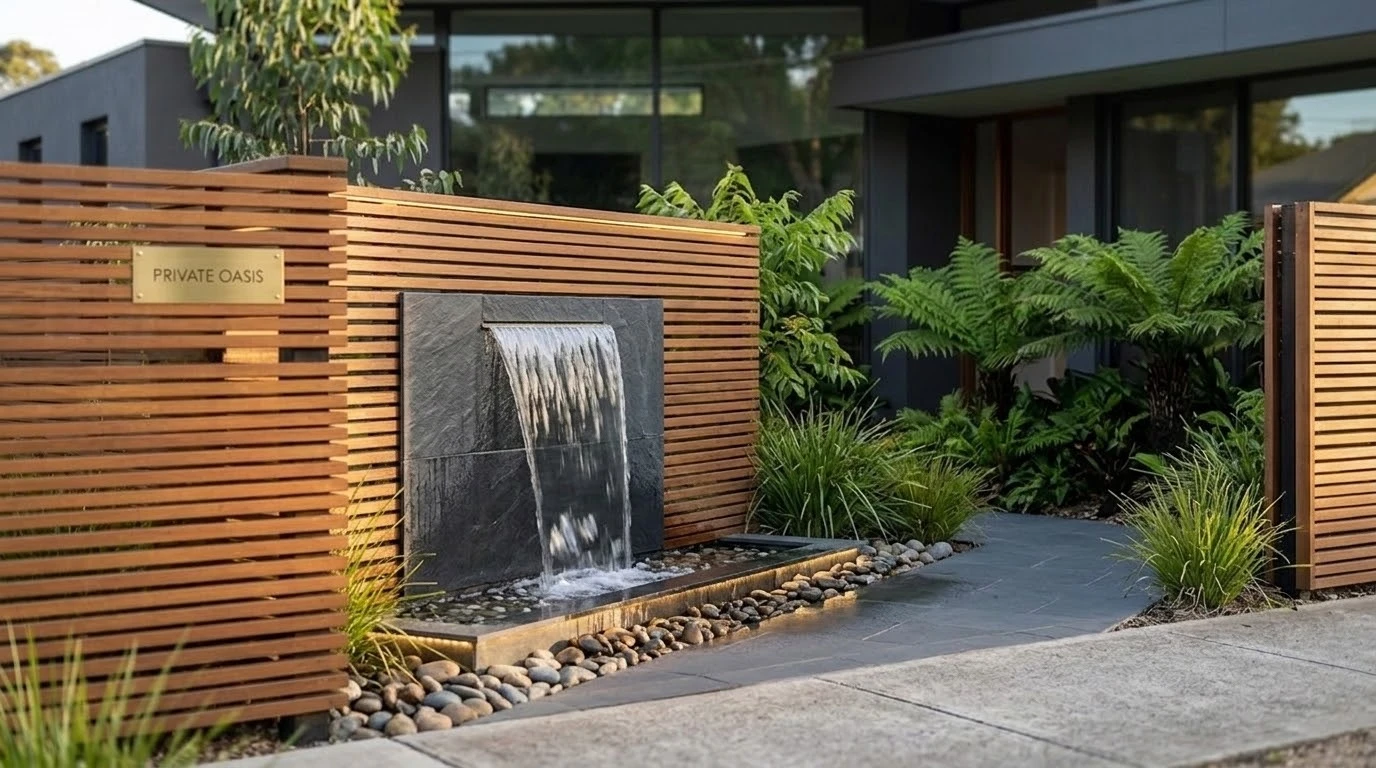
Visual privacy is really only half the battle. If you can clearly hear the conversation happening on the next patio over, you do not really have privacy. Adding a constant, pleasant background noise is a highly effective way to mask the sounds of suburban traffic and chatty neighbours.
A built-in water wall or a modern spillway feature does exactly this. The sound of running water tricks the brain into focusing on the immediate space rather than the background noise of the street. To get it right, you need proper drainage, an overflow system, and a reliable mains water supply. It is always worth getting a Local Bayside Plumber to run the pipework and install the pump correctly. Trying to DIY the plumbing for a permanent exterior water feature usually ends with water pooling where it shouldn’t, ruined paving, or a burnt-out pump a few months down the track.
Landscaping as a Natural Barrier
Plants do an incredible job of softening hard boundary lines while creating a dense screen. A thick hedge of a native plant like lilly pilly provides excellent screening up to three metres high. Unlike a colorbond fence, greenery absorbs ambient sound and actually breathes, keeping the yard cooler in summer.
Clumping bamboo is another brilliant option if you need height fast, particularly for screening out a neighbour’s second-storey window. Just make sure you specify the clumping variety, or you will be pulling invasive bamboo shoots out of your lawn and your neighbour’s garden for the next decade. Layering your planting is the secret to a good screen. Put small shrubs in the front and taller screening plants in the back. It tricks the eye and creates visual depth so the boundary feels much further away than it actually is.
Overhead Privacy with Adjustable Louvres
Privacy issues are not always at ground level. Overlooking from adjacent balconies or double-storey builds is incredibly common in newer estates. Adding a timber pergola or an alfresco roof is the most practical fix for an exposed backyard deck.
However, fixed roofs can make a living space feel dark and gloomy, especially in winter when you actually want the sun to warm up the house. Adjustable louvred roof systems solve this entirely. You can angle the aluminium blades just enough to block the line of sight from the house next door while still letting the morning sun hit your outdoor dining table. When the afternoon rain hits, you shut them completely. It extends the usable footprint of your home and provides total privacy on demand without putting up permanent walls.
Using Frosted and Textured Glass
Glass might sound like the exact opposite of privacy. But textured, fluted, or frosted glass panels are highly effective for exterior upgrades. They work exceptionally well around outdoor showers, pool areas, or as side partitions on a front porch.
These materials let almost all the ambient daylight pass through while completely blurring the details behind them. A shadow moving behind a frosted glass panel feels secure and private, but the space itself remains bright and open. It is a great alternative to building a solid stud wall on a deck, keeping the area weather-proofed and private without feeling like you are sitting inside a dark box.