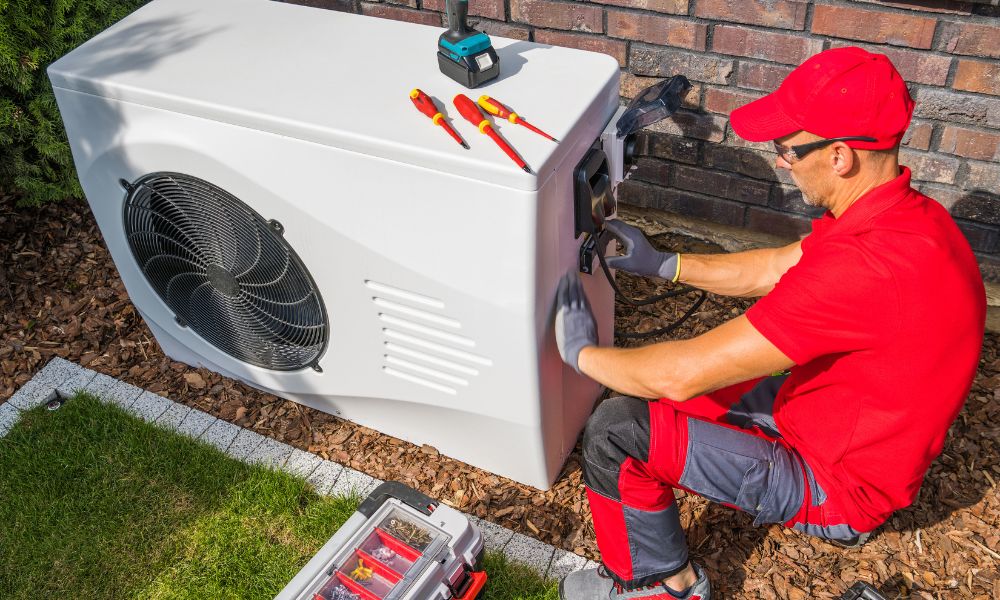
Every homeowner faces this moment: a technician hands over a repair estimate, and you wonder whether it’s smarter to fix what you have or invest in something new. If you’ve ever asked yourself Should I repair or replace my air conditioner, you’re facing one of the most significant HVAC decisions a homeowner can make. Cost matters, but it doesn’t tell the whole story.
The Real Lifespan of an HVAC System — What the Data Shows
According to the U.S. Department of Energy, typical HVAC equipment lasts:
- Central air conditioners: 15–20 years
- Heat pumps: 10–15 years
- Gas furnaces: 15–20 years
- Boilers: 15–30 years
These benchmarks assume reasonable maintenance. A system that’s never been serviced may fail years earlier. Working with a reliable HVAC company that performs consistent preventive maintenance is one of the most effective ways to reach — or exceed — those averages.
The key point: understanding when to replace HVAC system components becomes easier by comparing the unit’s age, condition, and expected remaining lifespan with the cost of major repairs.
The “5,000 Rule”: A Simple Formula to Help You Decide
Multiply the system’s age (in years) by the repair cost (in dollars). If the result exceeds $5,000, replace. If it’s under $5,000, repair may be the smarter short-term move.
Examples:
- 10-year-old system × $350 repair = $3,500 → Repair
- 14-year-old system × $600 repair = $8,400 → Replace
- 8-year-old system × $900 repair = $7,200 → Consider replacing
This is a guideline, not a rule — system efficiency, energy costs, and repair frequency all factor in.
Hidden Costs of Keeping an Aging HVAC System Running
The sticker price of a repair is rarely the whole cost. Aging systems carry ongoing financial burdens:
- Higher energy bills — Systems over 10 years old operate at significantly lower efficiency than modern units, which can reach SEER ratings above 20
- Frequent breakdowns — An aging system that has failed once often fails again within the same season
- R-22 refrigerant costs — Systems manufactured before 2010 often use R-22, which has been phased out and now costs significantly more per pound than modern refrigerants
- Reduced comfort — An aging system often struggles to maintain consistent temperatures or humidity levels
Signs Your System Has Reached the End of Its Useful Life
- Needs repairs more than once per season
- Energy bills have risen steadily without a change in usage
- The system runs constantly, but can’t hold the set temperature
- Rooms heat and cool unevenly despite servicing
- The unit is 15+ years old and requires any repair over $500
What to Ask a Technician Before Agreeing to Repairs
Before signing off on a major repair, ask:
- How old is this system, and how does this repair affect its remaining lifespan?
- Is this likely to be an isolated repair, or does it indicate broader system decline?
- What is the energy efficiency rating of this unit compared to a replacement?
- Would a new system qualify for current federal or utility rebates?
A trustworthy technician will answer these honestly, even if the answer points toward replacement. If you’re wondering whether I should replace my HVAC system, these questions can help you make a more informed decision.
How to Budget for an HVAC Replacement
New central AC systems typically cost $3,500–$7,500 installed, depending on size, efficiency rating, and installation complexity. Full HVAC replacements (heating and cooling) range from $6,000 to $12,000+.
Ways to reduce the financial impact:
- Federal tax credits for high-efficiency systems (check current IRS guidelines)
- Utility rebate programs — many offer $300–$1,500 for qualifying equipment
- Manufacturer financing through HVAC dealers
- Phased replacement — replace the cooling and heating units separately if only one has failed
Planning ahead rather than reacting to an emergency breakdown typically saves $500–$1,500 in rushed labor and equipment markup.
