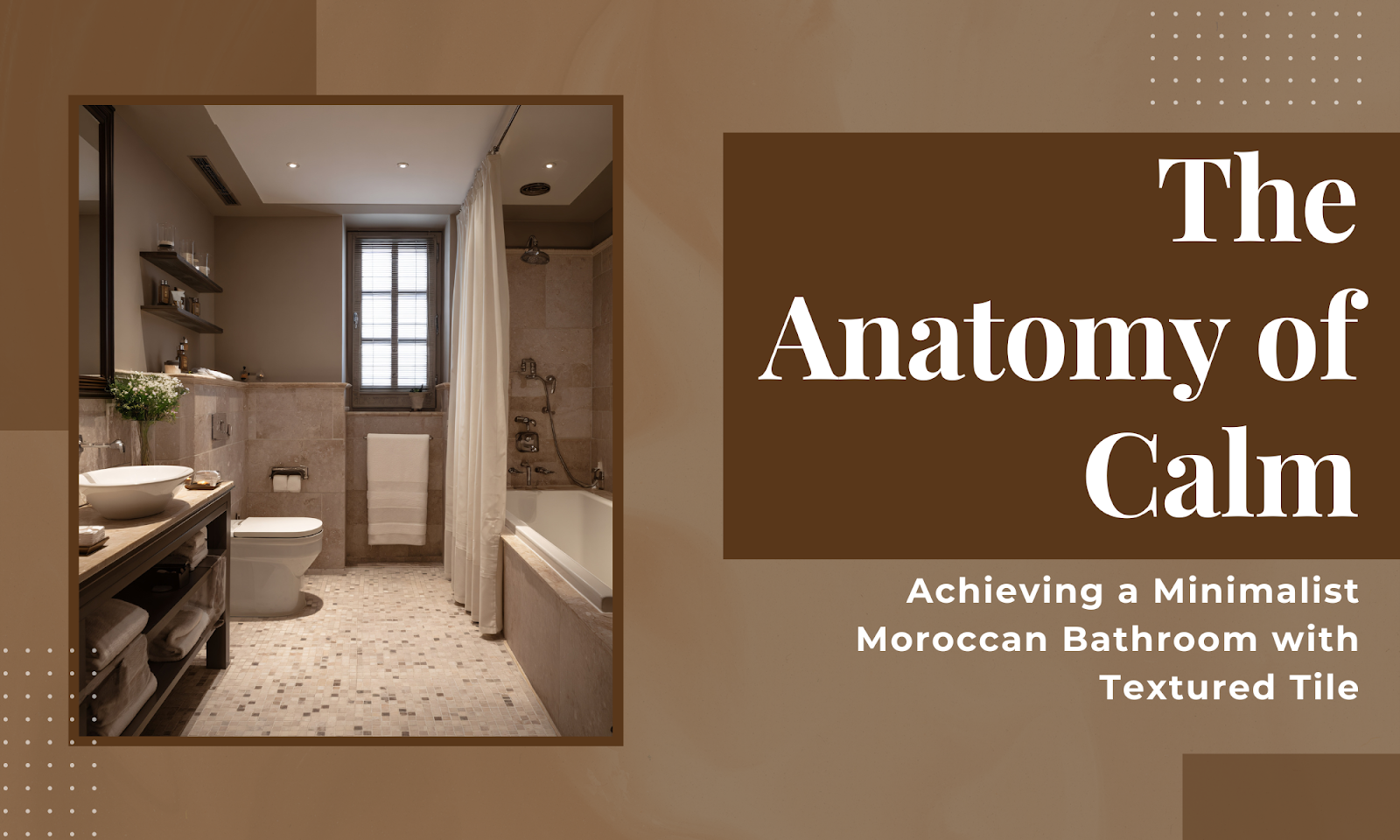
As the modern pursuit of wellness reshapes how we design our homes mindfully, the bathroom has evolved from a purely functional space into a personal sanctuary. Increasingly, designers are looking not to futuristic minimalism, but to ancient architectural wisdom for inspiration.
Few traditions offer a more compelling blueprint than Moroccan design; particularly when reinterpreted through a modern, restrained lens.
Contrary to the colorful maximalism often associated with Morocco, its most timeless interiors are grounded in material honesty, tactile surfaces, and visual calm. At the center of this approach is hand-glazed Zellige tile, a material whose texture, light play, and imperfection create depth without excess.
Designing a modern Moroccan bathroom is not about decoration; it is about allowing materials to do the work.
The foundation of modern Moroccan minimalism
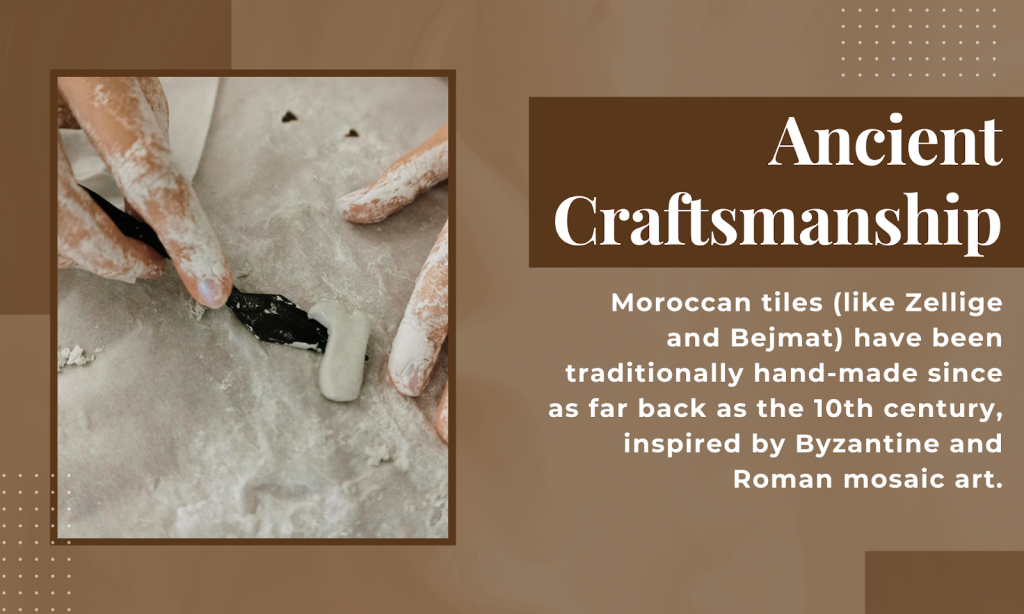
Traditional Moroccan bathrooms, hammams, and riads were designed for climate, durability, and ritual.
Materials like Tadelakt lime plaster, Zellige, and Bejmat were not stylistic choices; they were functional solutions that naturally produced a minimal, cohesive aesthetic.
This material-first philosophy translates seamlessly into modern design. Instead of layering patterns and finishes, Moroccan minimalism relies on:
- Fewer materials
- Handcrafted surfaces
- Seamless transitions
- Texture as the primary visual interest
In this context, Zellige is not an accent. It becomes the architectural surface that defines the space.
Zellige as the hero: texture over pattern
In a modern bathroom, Zellige is used very differently from its traditional mosaic applications. Rather than intricate geometry and multiple colors, the contemporary approach favors monochromatic fields that allow texture and light to take center stage. Popular choices include:
- Soft whites and off-whites (such as Blanc Fumé)
- Muted terracotta
- Deep, mineral greens
- Smoky blues or charcoals
When a shower enclosure or vanity wall is wrapped in a single shade of hand-glazed Zellige, the effect is transformative.
Each tile reflects light differently due to its uneven glaze and hand-cut surface, creating a subtle shimmer that shifts throughout the day. The wall feels alive; never flat, never static.
Because texture and light interaction are doing the visual heavy lifting in a modern bathroom, the quality of the glaze becomes just as important as the tile itself.
Not all Zellige is finished with the same depth, firing variation, or respect for traditional methods.
Designers working in restrained, monochromatic palettes often look specifically for artisanal zellige finishes, particularly those curated by established stone and tile specialists like clè, known for their deep material research, historically accurate glaze development, and close collaboration with traditional ateliers.
In these collections, hand-applied glazes, kiln variation, and subtle surface irregularities are intentionally preserved rather than standardized.
This is the power of textured Zellige: it replaces visual noise with movement, depth, and calm.
Installation as design, not execution
Zellige’s beauty depends entirely on how it is installed. This is where modern Moroccan design separates itself from trend-driven applications.
Professional installation is non-negotiable.
Because Zellige tiles vary in thickness and shape, they must be laid with extremely tight grout joints often 1–2 mm. This creates a near-seamless surface where texture dominates and grout visually disappears.
Design rules to follow:
- Match grout color closely to the tile
- Avoid high-contrast grout
- Expect and embrace; irregularity
- Treat the wall like a mosaic, not a grid
The goal is not perfection, but coherence.
Supporting materials: grounding the shimmer
While Zellige brings light and movement, modern bathrooms rely on grounding materials to maintain balance.
Bejmat for floors: Bejmat tiles; the thicker, rectangular cousin of Zellige. They are traditionally unglazed and ideal for flooring. Their dense, earthy quality anchors the space, providing tactile contrast to glossy walls. Used in wet areas, they feel grounded, durable, and honest.
Limestone as a neutral counterpoint: In vanities, ledges, or flooring zones, limestone introduces softness without visual competition. Its matte surface tempers the energy of glazed tile while reinforcing the natural-material narrative.
Tadelakt: eliminating visual breaks
To achieve true minimalism, Moroccan design minimizes transitions. Tadelakt, a traditional lime-based plaster, plays a crucial role here.
Used on ceilings, upper walls, or integrated basins, Tadelakt:
- Eliminates grout lines
- Creates seamless surfaces
- Is naturally waterproof and breathable
- Enhances the cocoon-like quality of the space
When paired with Zellige, it allows tiled surfaces to feel intentional rather than excessive.
Direct styling guide: How to achieve the look
Achieving a “Modern Moroccan” feel requires a strict edit. Follow these steps to transition from a standard bathroom to a spa-like retreat:
Step 1: The Monochromatic Palette
Avoid busy patterns. Instead, use a single earth tone (like Blanc Fumé or Terracotta) across the entire wall. This allows the texture to become the primary decorative element. When light hits the unevenly fired Zellige, the wall appears to move, creating a moody and evocative atmosphere that shifts throughout the day.
Step 2: Integration via Tadelakt
To achieve true minimalism, eliminate visual breaks like grout lines on non-tiled surfaces. Use Tadelakt; a traditional lime-based plaster for ceilings and built-in basins. This seamless, waterproof finish creates a “cocoon” effect. This is an intentional design choice that prioritizes functional calm over decorative noise.
Step 3: The Artisan’s Edit (Fixtures & Lighting)
- Metals: Opt for unlacquered brass or copper. These will patina naturally, mirroring the aging process of your stone and tile.
- Storage: Ditch the projecting cabinets. Instead, build recessed, arched wall niches into the Tadelakt walls. This maintains clean lines and is a hallmark of high-end, expensive-looking design.
The goal is to stimulate the sense of touch and create a quiet visual dynamism that changes with the light, preventing the room from feeling sterile.
Curation over clutter: the art of the edit
The minimalist goal is not to have nothing, but to have only what is essential and beautiful.
In a minimalist Moroccan bathroom, this means a highly curated selection of fixtures and accessories that respect the material honesty of the tiles.
Fixtures and finishes
- Metals: Opt for aged brass or unlacquered copper. These metals patina naturally over time, providing a soft, warm contrast to the muted clay tones. Crucially, they lack the cold sheen of polished chrome, maintaining the organic, artisanal feel.
- Lighting: The signature Moroccan lantern can be reinterpreted minimally. Choose simple, dome-shaped brass sconces or pendants that cast soft, ambient light rather than intricate, brightly coloured filigree. The light should be used to accentuate the tile’s texture, not to distract from it.
- Storage: Recessed, arched wall niches finished in Tadelakt or the same muted Zellige are essential. They provide storage without projecting into the space, maintaining the clean lines and honoring the traditional Moroccan use of built-in architectural elements.
Modern Moroccan design is about restraint
The success of a modern Moroccan bathroom lies in what you remove, not what you add. This is a design language that rejects mass-produced uniformity in favor of craft, longevity, and sensory richness.
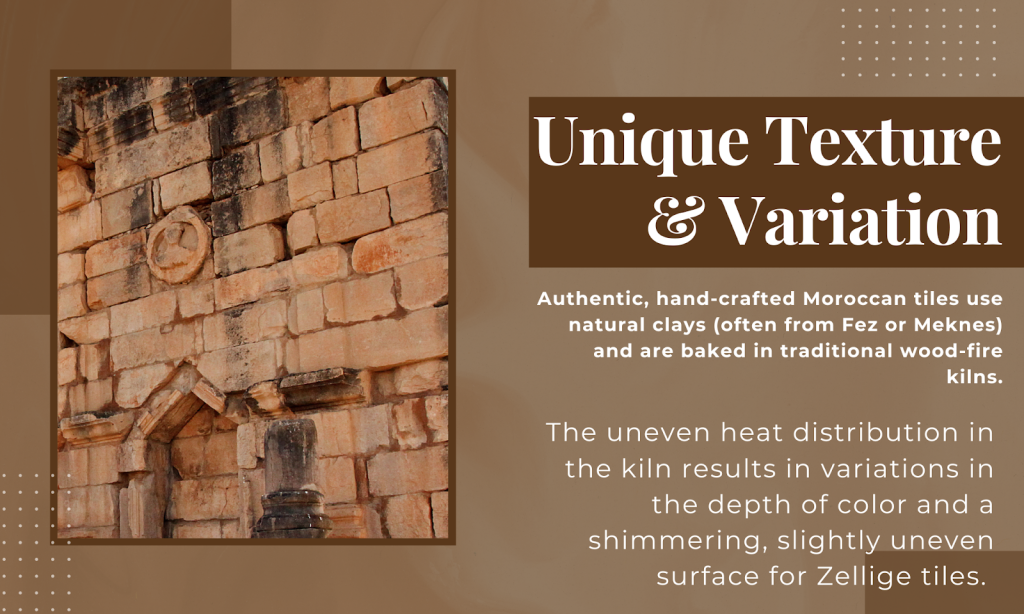
Textured Zellige tile embodies this philosophy perfectly. It offers depth without decoration, movement without pattern, and luxury without excess.
Final takeaway
A modern Moroccan bathroom is not styled; it is composed.
By allowing textured Zellige to lead the design, supported by honest materials and thoughtful restraint, the result is a space that feels timeless, grounding, and deeply human.
This is not trend-driven design.
It is architecture, memory, and material; working quietly together.