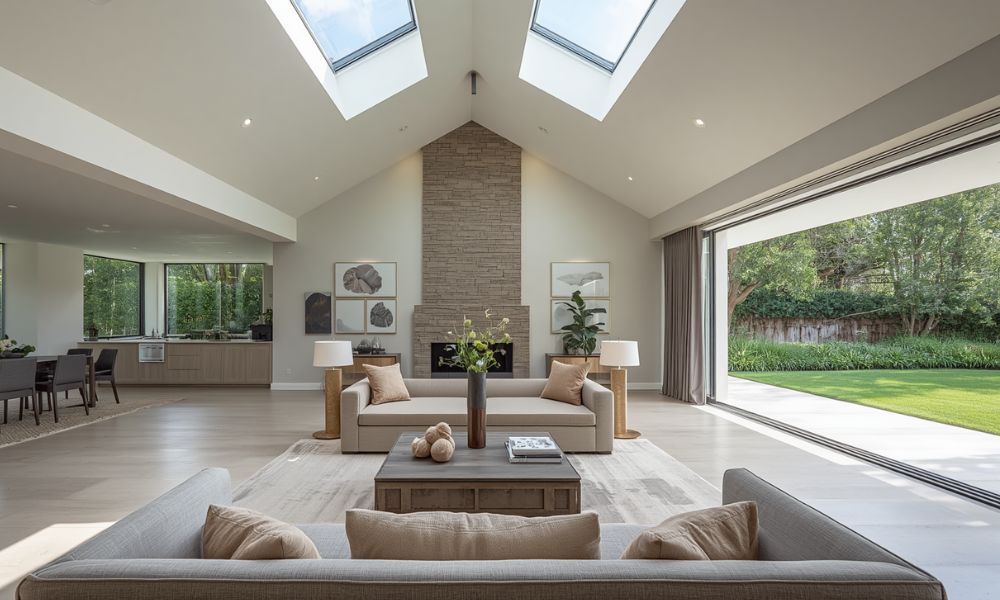
Walk through any architectural tour of a contemporary mansion and the conversation gravitates toward the obvious: the marble countertops, the double-height ceilings, the chef’s kitchen outfitted with restaurant-grade appliances. What rarely gets discussed are the systems running behind those walls and beneath those floors – the infrastructure that determines whether a 10,000-square-foot home actually functions the way it looks.
Grand spaces create grand expectations. A spa bathroom with a rain shower and heated floors is only impressive when the plumbing behind it is engineered to match. The most thoughtfully designed mansions treat mechanical systems as a core design element, not an afterthought. That mindset separates homes that photograph beautifully from ones that genuinely live well.
Here are six behind-the-scenes features that consistently set luxury homes apart from large ones.
1. Whole-Home Water Pressure Management
Standard residential plumbing is built around average demand: two or three fixtures running simultaneously. Mansions with multiple bathrooms, outdoor kitchens, irrigation systems, and pool equipment create a fundamentally different load. Without pressure balancing infrastructure, the experience becomes inconsistent — a shower loses pressure when someone runs the dishwasher two floors down.
High-end builds address this with pressure-regulating valves installed at each zone rather than a single regulator at the main line. Some use variable-speed booster pumps that adjust output in real time based on demand. The result is uniform pressure at every fixture regardless of what else is running in the house.For homeowners retrofitting older luxury properties, Ben’s Plumbing offers diagnostic assessments across the greater Seattle area. Details on service coverage, scope, and neighborhoods served are available on their site, for example at https://bens.plumbing/areas/wallingford/.
2. Radiant Floor Heating with Zone Control
Forced-air heating has a fundamental problem in large homes: warm air rises, and the rooms that need heat most are often the ones that get it last. Radiant floor systems solve this by delivering heat directly at the level where people actually live.
Modern mansion installations use hydronic radiant systems, where water heated by a boiler circulates through loops of PEX tubing embedded in the subfloor. Each room or zone gets its own thermostat, so a rarely used guest suite doesn’t get heated to the same degree as the main living area. The energy savings in a large home can be substantial. More importantly, the comfort level is qualitatively different: no drafts, no noise, no cold spots near exterior walls in winter.
3. Dedicated HVAC Zoning for Every Floor
A single HVAC unit serving a multi-story mansion is almost always undersized for the task and wildly inefficient in practice. Luxury construction typically uses separate air handling units for each floor or wing, connected to a central control system that manages them as a coordinated network.
Variable refrigerant flow (VRF) systems have become a common choice in high-end residential builds for exactly this reason. They allow simultaneous heating and cooling in different zones of the same home, which matters in a large property where a sun-facing bedroom might need cooling while a shaded lower level needs heat. The mechanical room in a well-built mansion often looks more like a commercial building than a residential one.
Key components that distinguish luxury HVAC installations from standard residential setups:
- Energy recovery ventilators (ERVs) that exchange stale indoor air without losing conditioned temperature
- HEPA or hospital-grade filtration integrated into the ductwork
- Humidity control systems that operate independently from temperature management
- Automated dampers that redirect airflow based on occupancy sensors
- Redundant units so a single equipment failure doesn’t affect the whole house
4. Smart Leak Detection and Water Shutoff Systems
A leak inside a wall of a 12,000-square-foot home can go undetected for weeks. By the time visible water damage appears, the remediation cost can reach six figures. Luxury builds increasingly include whole-home leak detection systems as standard infrastructure rather than an optional upgrade.
These systems use flow sensors at the main water line and moisture sensors at vulnerable points throughout the house: under sinks, near water heaters, behind washing machines, around shower pans. When an anomaly is detected, the system can automatically shut off the main water supply and send an alert to the homeowner’s phone. Some integrate with the broader smart home platform so the same app controlling lighting and security also monitors water usage patterns and flags irregularities before they escalate.
5. High-Capacity Drain and Waste Systems
Most people think about what comes into a home through the plumbing. The systems that move water and waste out rarely get the same attention, even though they’re equally critical in large properties.
A mansion with multiple bathrooms running simultaneously, a steam shower, a soaking tub, and an outdoor kitchen creates drainage demands that standard residential pipe sizing doesn’t accommodate well. High-end construction uses larger diameter drain lines, properly sloped to prevent buildup, with clean-out access points at regular intervals so maintenance is straightforward rather than invasive. Some properties include grease traps for outdoor kitchen areas and separate sump systems for lower-level spaces. The difference between a well-designed drain system and a poorly planned one becomes obvious within a few years of heavy use.
6. Whole-Home Generator Integration
Power outages are an inconvenience in a small home. In a mansion with a climate-controlled wine cellar, a saltwater pool system, a home theater, and a security network, an outage becomes an immediate financial and operational problem.
Standby generators in luxury residential builds are typically sized to power the entire home rather than a handful of critical circuits. Natural gas or propane-fed units connect to an automatic transfer switch that detects a grid outage and starts the generator within seconds, with no manual intervention required. A 22-kilowatt unit handles a large home reasonably well; some estates use 45kW or larger generators to maintain full capacity without load-shedding any systems.
Generator placement matters as much as sizing. Units need adequate clearance from the structure, proper ventilation, and soundproofing if they’re positioned near bedrooms or outdoor living areas.
The visible elements of a luxury home are what capture attention in photos and tours. The systems described here are what determine whether that home actually delivers on the experience it promises day to day. Builders working at this level treat mechanical infrastructure as a design discipline, not a commodity line item. For anyone renovating or retrofitting a large home, understanding these systems is the first step toward knowing which investments will matter most over time.