Key Takeaways
- Understand the appropriate pressure settings and nozzles for different surfaces to prevent damage.
- Implement safety measures to protect yourself and your property during pressure washing.
- Recognize when to hire professionals for complex or delicate cleaning tasks.
Pressure washing is a powerful technique for restoring the appearance of your home’s exterior. When performed correctly, it can efficiently remove built-up dirt, mold, and grime, greatly enhancing curb appeal and protecting your property as a whole. However, due to the force of the water involved, using a pressure washer comes with risks of both property damage and injury. For homeowners considering pressure washing near me, learning the fundamentals is crucial before starting any cleaning project.
This guide offers essential best practices for safe and effective pressure washing in a residential setting. It explains how to choose the correct pressure setting and nozzle for various surfaces, outlines important safety precautions, and details the steps for successfully pressure washing different areas of your property. By following these guidelines, you can protect both your investment and safety.
Whether you want to freshen up your siding, clean your driveway, or prepare an area for painting, understanding the process and potential risks will help you avoid common mistakes. Maintaining your home’s exterior is not only about appearance but also about preventing long-term deterioration and costly repairs.
In crowded neighborhoods or areas with frequent storms and mildew, routine pressure washing is often essential for both aesthetic and practical reasons. Selecting the right equipment, setting up your workspace, and preparing yourself with the knowledge in this guide are key steps in protecting your property for the long term.
Understanding Pressure Settings and Nozzles
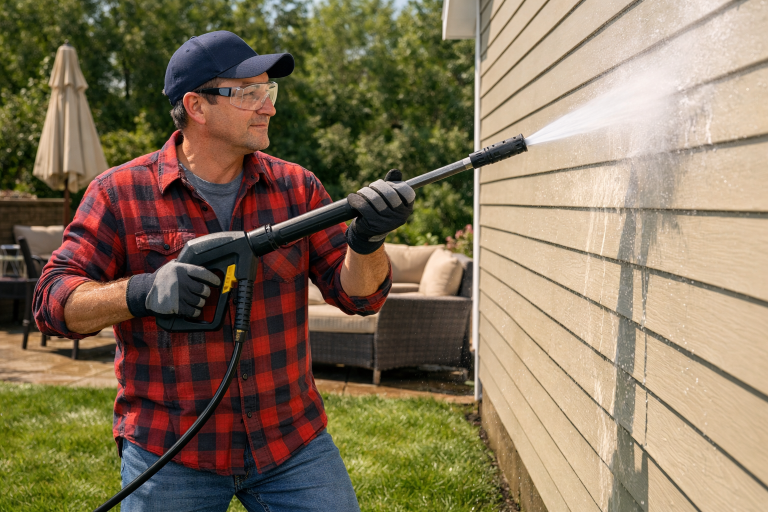
Surfaces around your home respond very differently to pressurized water. Selecting the correct pressure and nozzle is the primary way to avoid causing accidental damage:
- Vinyl Siding: Use a pressure setting between 1,200 and 2,000 PSI with a 40-degree white nozzle. This combination is gentle enough to clean without cracking or bending panels.
- Wood Siding: Set your pressure washer to 1,200–1,500 PSI and use the 40-degree nozzle. Too much pressure can splinter wood and force water deep into crevices, potentially inviting rot.
- Concrete Driveways: Tougher stains and buildup, like oil or mildew, often require a higher pressure of 2,500–3,000 PSI. Use a 25-degree green nozzle to provide enough force while maintaining control.
Always start with the lowest recommended pressure setting. Test a small, inconspicuous area first to make sure the pressure level does not cause visible damage or scarring. Adjust upward only if necessary.
Safety Precautions
Safety is paramount when pressure washing due to the high velocity of the water and risks from electrical hazards or flying debris. To minimize risk:
- Always wear safety goggles, non-slip gloves, and closed-toe shoes to protect against accidental sprays and debris.
- Make sure the tip of the nozzle stays at least six feet from any electrical outlets, lighting fixtures, or exposed wires.
- Keep the water stream away from gaps, attic or wall vents, and beneath the edges of siding to prevent hidden water intrusion and structural problems.
For additional safety information, consider reading Bob Vila’s guide to the dos and don’ts of pressure washing.
Common Mistakes to Avoid
Many homeowners end up with damaged surfaces, personal injury, or incomplete results by overlooking simple best practices. Avoid these frequent mistakes:
- Using Too Much Pressure: High pressure may seem efficient, but it often scars wood decks, strips paint, or etches softer surfaces. Less is more when starting; gradually increase only as needed.
- Incorrect Nozzle Selection: Zero-degree red nozzles are almost never necessary for residential cleaning and often cause irreversible damage. Stick to wider nozzles for most jobs.
- Ignoring Safety Measures: Always clear the area of pets, children, and bystanders, and double-check your protective gear before beginning.
Step-by-Step Guide to Pressure Washing Your Home
- Preparation: Move all patio furniture, grills, and potted plants out of range. Use durable tarps or plastic sheeting to cover electrical boxes, outdoor speakers, and doorbells. Close every window and door securely.
- Apply Detergent: Place a low-pressure tip (such as the black soaping nozzle) on your wand. Spray the cleaning solution from the bottom up to prevent streaking and to give cleaning agents more time on soiled areas.
- Rinse: After letting the detergent sit for five to ten minutes, switch to the recommended cleaning nozzle. Rinse from the top of each wall to the bottom, holding the tip at a consistent distance to avoid blotchy results or gouging.
When to Hire Professionals
Sometimes, the safest and most cost-effective decision is to hire experienced pressure washing professionals. Large or complex projects, such as multi-level homes, roofs, or fragile surfaces like stucco and painted wood, benefit from professional touch and strong insurance coverage.
- Extensive cleaning jobs or those with high ladders and scaffolding required.
- Surfaces that could be damaged by incorrect technique or pressure, including historic homes and delicate trim.
- Lack of proper equipment, cleaning products, or personal protective gear.
You can learn more about the benefits of professional cleaning from resources such as Consumer Reports’ pressure washer buying guide.
Conclusion
Residential pressure washing, when performed thoughtfully and safely, is an outstanding way to maintain your home’s exterior and prevent costly repairs. Always use the correct settings and equipment for each surface, and follow a precise cleaning process to maximize results. Pay close attention to the outlined safety tips, and do not hesitate to turn to professional services when a job appears too difficult or risky. By implementing these best practices, you will keep your home looking great and protect its value for years to come.