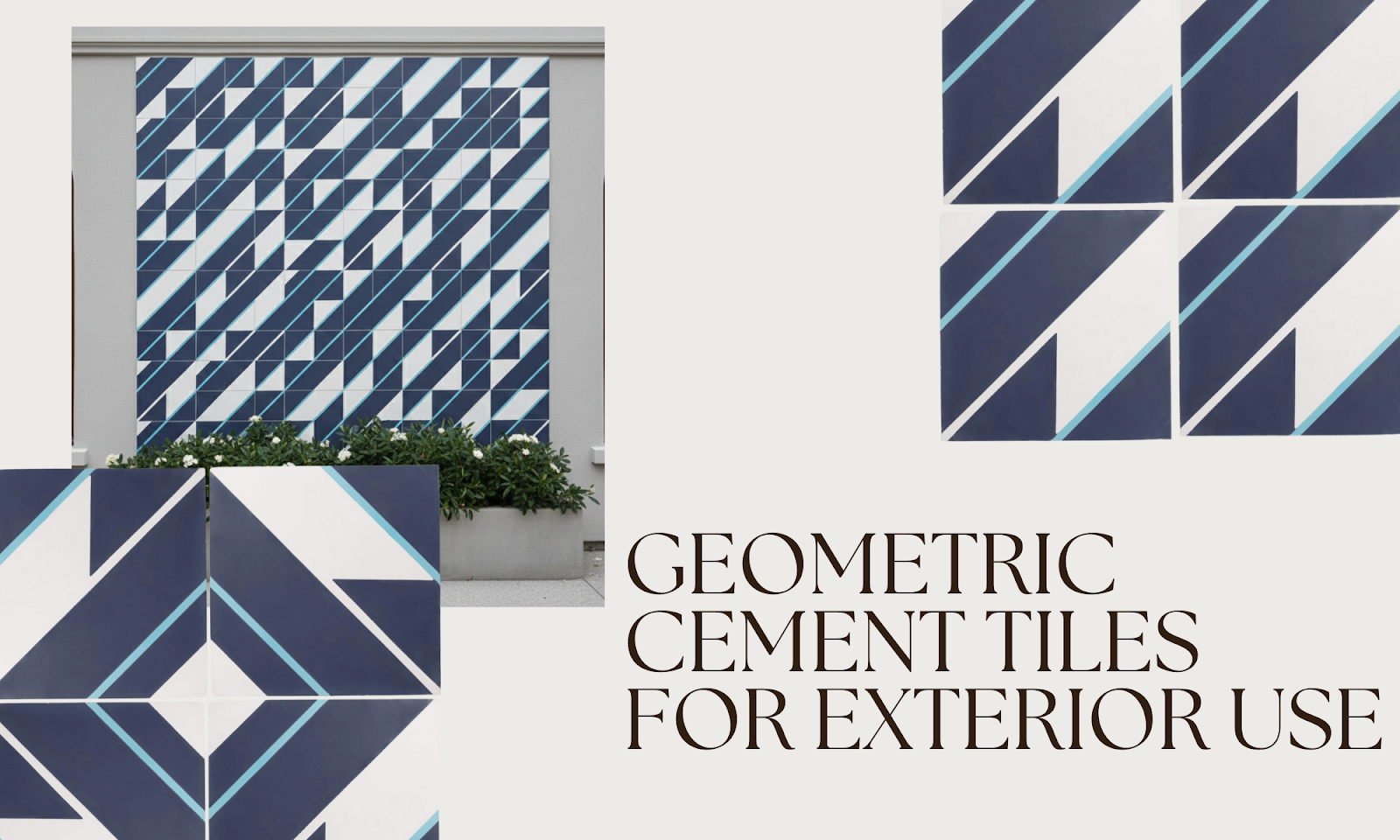
There’s something profoundly satisfying about watching a building facade transform from a flat, forgettable surface into a three-dimensional canvas of light, shadow, and texture.
Geometric cement tiles are revolutionizing the way designers approach exterior design and facade cladding, offering unprecedented creative possibilities.
You know that moment when you’re walking down a street and a building just stops you in your tracks? That’s the power of thoughtful facade design. And geometric cement tiles are having their moment, and for good reason.
The Renaissance of Cement Tiles for Exterior Facades
Cement tiles have existed since the mid-1800s, but their role in modern facade cladding has evolved dramatically. Once limited to interior floors and Mediterranean courtyards, they are now being specified for full exterior walls, screens, and architectural accents.
What’s driving this revival is material honesty.
Cement tiles are pressed, not fired, using cement, sand, marble powder, and mineral pigments. The result is a matte, organic surface that reacts beautifully to light and time.
Unlike glossy ceramic or porcelain alternatives, exterior cement tiles offer depth, texture, and a lived-in character that feels architectural rather than decorative.
Why geometric patterns work on building facades
Geometric patterns bring structure without visual noise. On large exterior surfaces, they introduce rhythm, movement, and scale; transforming blank walls into engaging compositions.
- Hexagonal facade tiles create organic flow inspired by natural forms
- Triangular and chevron patterns introduce direction and energy
- Square or grid-based geometries offer a contemporary, architectural languag
Well-designed geometric facades guide the eye toward entrances, frame architectural features, and soften otherwise imposing elevations.
Scale matters:
Large-format facade tiles create bold, modern statements, while smaller tiles allow for intricate, textile-like surfaces. Many of the most successful projects combine multiple scales across a single facade to respond to different building functions.
Light, shadow & 3D cement facade tiles
One of the most compelling reasons architects specify geometric cement tiles for facades is their interaction with light. Relief patterns are raised and recessed geometries; cast changing shadows throughout the day.
A facade can appear sharp and angular in the morning, subdued at noon, and warm and glowing at sunset. This temporal quality gives buildings a sense of movement and life that flat cladding systems simply cannot replicate.
Some designers even orient geometric patterns to respond to sun paths, using shadow depth as both a visual and passive environmental strategy.
Some of the most innovative designers are even orienting their geometric patterns to respond to sun angles. Chevron patterns that point toward solar south create deeper shadows on one side while subtly reinforcing the building’s passive solar strategy. It’s functional art at its finest.
Texture as architectural language
Beyond pattern, there’s texture.
Cement tiles can be smooth, brushed, or intentionally rough. They can incorporate aggregates that sparkle in certain light. This textural variety lets designers compose facades the way a composer layers instruments; some elements bold and prominent, others providing subtle background harmony.
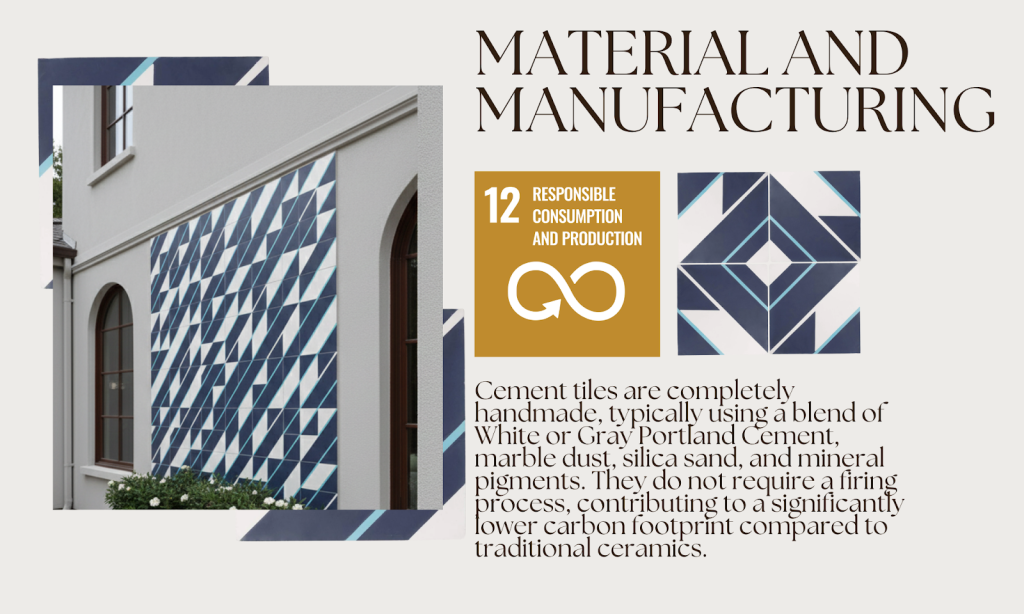
Projects that use monochromatic geometric patterns with varied textures are particularly compelling. Imagine a facade entirely in shades of grey, but with some tiles matte, others with a slight sheen, some smooth, others pebbled.
From a distance, you read the geometric pattern. Up close, you discover this whole other layer of tactile richness. It rewards both the passing glance and the lingering examination.
Durability and longevity of exterior cement tiles
Let’s talk practicality for a moment, because that matters in any architectural project.
Cement tiles are incredibly durable for facade applications. We’re talking decades of service life when properly installed and sealed.
They’re resistant to UV damage, won’t fade like some materials, and they handle freeze-thaw cycles remarkably well when manufactured with exterior-grade specifications.
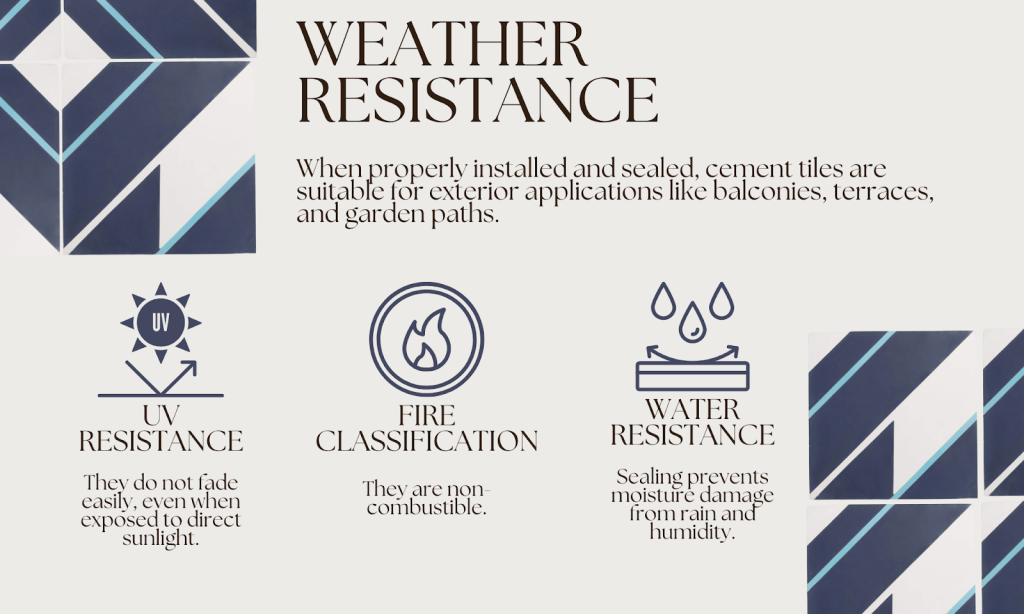
The color goes all the way through the tile rather than being a surface treatment, which means minor chips or wear don’t drastically change appearance. In fact, many designers appreciate how cement tiles develop a subtle patina over time. They age gracefully, picking up character rather than just looking worn.
For maintenance, they’re relatively forgiving. A periodic seal every few years keeps these exterior tiles protected, and cleaning is straightforward.
Compare that to some contemporary cladding materials that require specialized cleaning systems or show every fingerprint and water spot.
Choosing the right colors & facade tile collections
When working with clients on facade tile selections, color choice becomes this beautiful exercise in understanding context.
Cement tiles offer an incredible range, from crisp whites and soft greys to deep terracottas, oceanic blues, and forest greens. The pigments are mineral-based, so colors have this earthy authenticity that synthetic finishes can’t replicate.
When sourcing materials, it’s critical to work with facade-specific tile collections designed for exterior use. Not all cement tiles are suitable for facades; proper thickness, sealing, and moisture resistance are essential.
It’s worth exploring the best facade tile collections from specialized manufacturers who understand the technical requirements of exterior applications.
A standout in this space; OUTERclè, a brand known for its precision-engineered cement tiles and innovative geometric designs tailored specifically for architectural facades. Their collection combines exterior-grade performance including UV-stable pigmentation, superior moisture resistance, and freeze-thaw durability, with thoughtful patterns that enhance light, shadow, and texture on building exteriors. Whether you’re specifying tiles for a contemporary commercial project or a bespoke residential elevation,
Professional installation of facade tiles
Cement tile facades require expert installation. Proper detailing includes waterproof membranes, drainage planning, expansion joints, and precise alignment, especially with geometric patterns where even minor errors are visually amplified.
When installed correctly, cement tiles become an integral part of the building envelope, not just a surface layer. That permanence aligns perfectly with contemporary architectural values of longevity and material integrity.
Sustainability & eco-conscious facade materials
Cement tiles offer a strong sustainability profile:
- Made from natural, abundant materials
- Lower energy production than fired ceramic tiles
- Long lifespan reduces replacement waste
- Increasing availability of recycled content and low-carbon cement options
For architects pursuing LEED or green building certifications, exterior cement tiles can support multiple sustainability goals.
Innovative Facade Design Trends
The most exciting part?
We’re only beginning to explore what’s possible with geometric cement tiles in modern architecture.
Architects are collaborating with tile makers to create custom geometric patterns that respond to specific sites or cultural contexts.
Digital fabrication is enabling patterns of incredible complexity. Parametric modeling is generating geometric tile layouts that respond to programmatic or environmental data.
There’s also growing interest in combining cement tiles with other facade materials; alternating bands of geometric tiles with natural stone, or using tiles as accent elements within metal or wood cladding systems. These hybrid approaches create visual richness while playing to each material’s strengths.
Creating connection through architectural design
Ultimately, what makes geometric cement tiles so compelling for facades is that they bring human scale and craft to buildings that could otherwise feel impersonal. Even when arranged in thoroughly modern interior designs, these tiles carry an imprint of the hands that made them. There are subtle variations from tile to tile; not defects, but evidence of craft. In our increasingly digitized world, that human touch matters.
When people encounter a building clad in geometric cement tiles, they slow down. They look. They often reach out to touch. That engagement, that moment of connection between person and building is what great architecture is all about. Geometric cement tiles don’t just clad our buildings; they invite us into conversation with them.
And isn’t that what architectural design strives to achieve? Not just shelter, but spaces that speak to us, that evolve with light and time, that reward attention with discovery. That’s the promise of sculpting exteriors with geometric cement tiles; buildings that are truly alive.
Ready to transform your building’s exterior? Explore geometric cement tile options and discover how these versatile materials can elevate your next architectural project. From contemporary patterns to timeless designs, cement facade tiles offer endless possibilities for creating memorable, sustainable, and beautiful building exteriors.