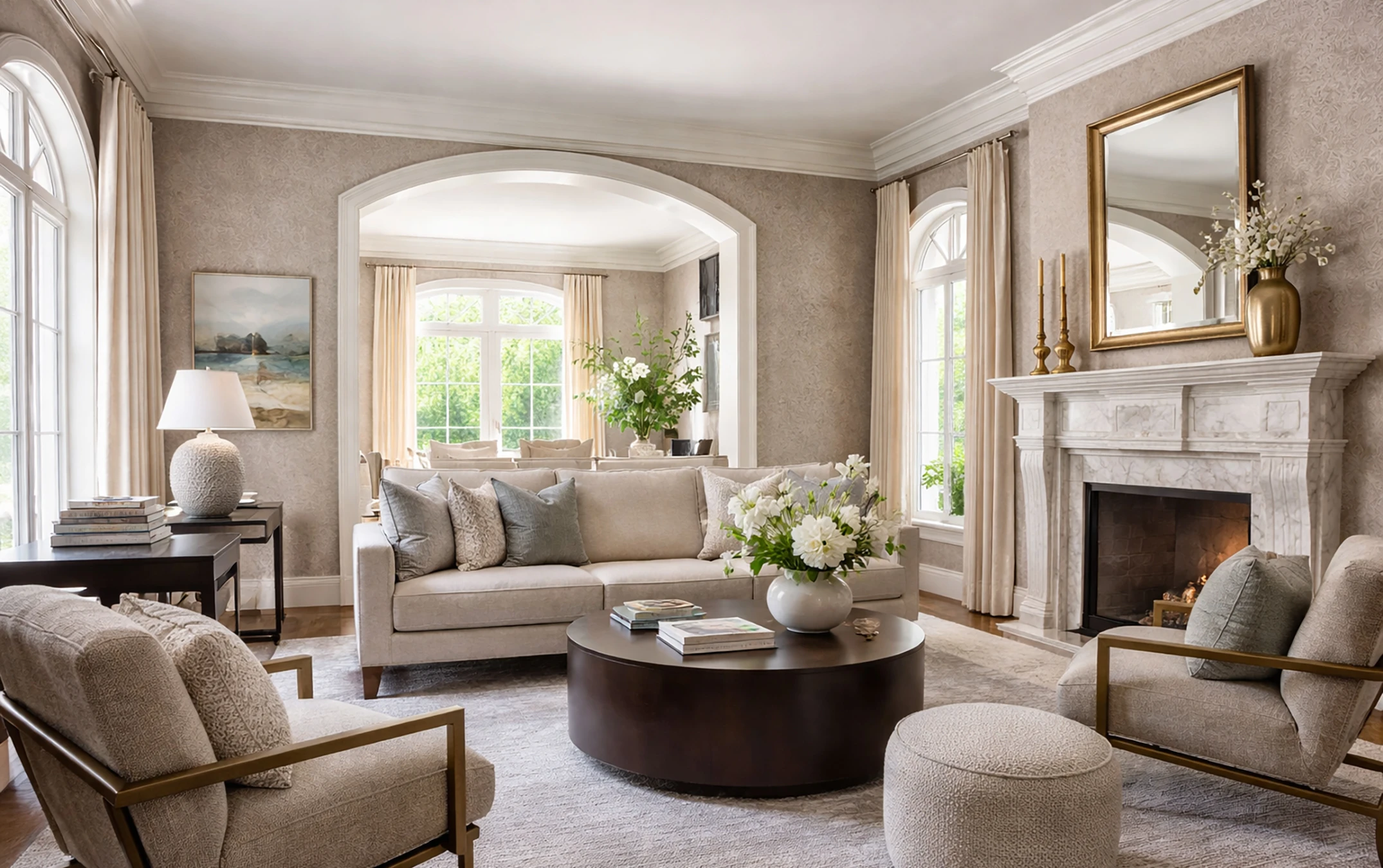
In contemporary residential design, walls are no longer passive backdrops. They define atmosphere, control acoustics, interact with light, and often become the most expressive architectural element in a space. Wallpaper, textile wallcoverings, grasscloth, vinyl, and decorative finishes are increasingly used in luxury homes not as decoration, but as part of the architectural language.
However, the visual success of wallcoverings depends far less on the material itself than on how it is installed.
Wallcoverings Are a Technical Finish, Not Just Décor
One of the most common misconceptions among homeowners and even some designers is that wallpaper installation is comparable to painting. In reality, wallcoverings behave more like finish systems than coatings.
They respond to:
- substrate moisture and porosity
- surface flatness and micro-defects
- primer chemistry
- adhesive selection
- temperature and humidity during installation
Even premium wallcoverings can fail prematurely if these variables are ignored. Issues such as seam separation, bubbling, curling edges, or visible substrate imperfections usually originate long before the first panel is installed.
Substrate Preparation: The Invisible Foundation
High-end wall finishes demand near-perfect surfaces. Drywall that looks acceptable for paint is often unsuitable for wallpaper.
Professional installers evaluate:
- level of wall flatness
- joint compound transitions
- sanding quality
- previous paint types (especially eggshell or semi-gloss)
- presence of repairs or patchwork
In many cases, additional skim coating, specialty primers, or wall liners are required. These steps are rarely visible in final photos, but they are critical for long-term performance.
Skipping preparation may save time initially, but it almost always results in failure that is far more expensive to correct later.
Why Installation Strategy Matters
Every wallcovering behaves differently:
- Natural grasscloth expands and contracts
- Vinyl requires controlled adhesive open time
- Textile backings demand precise tension control
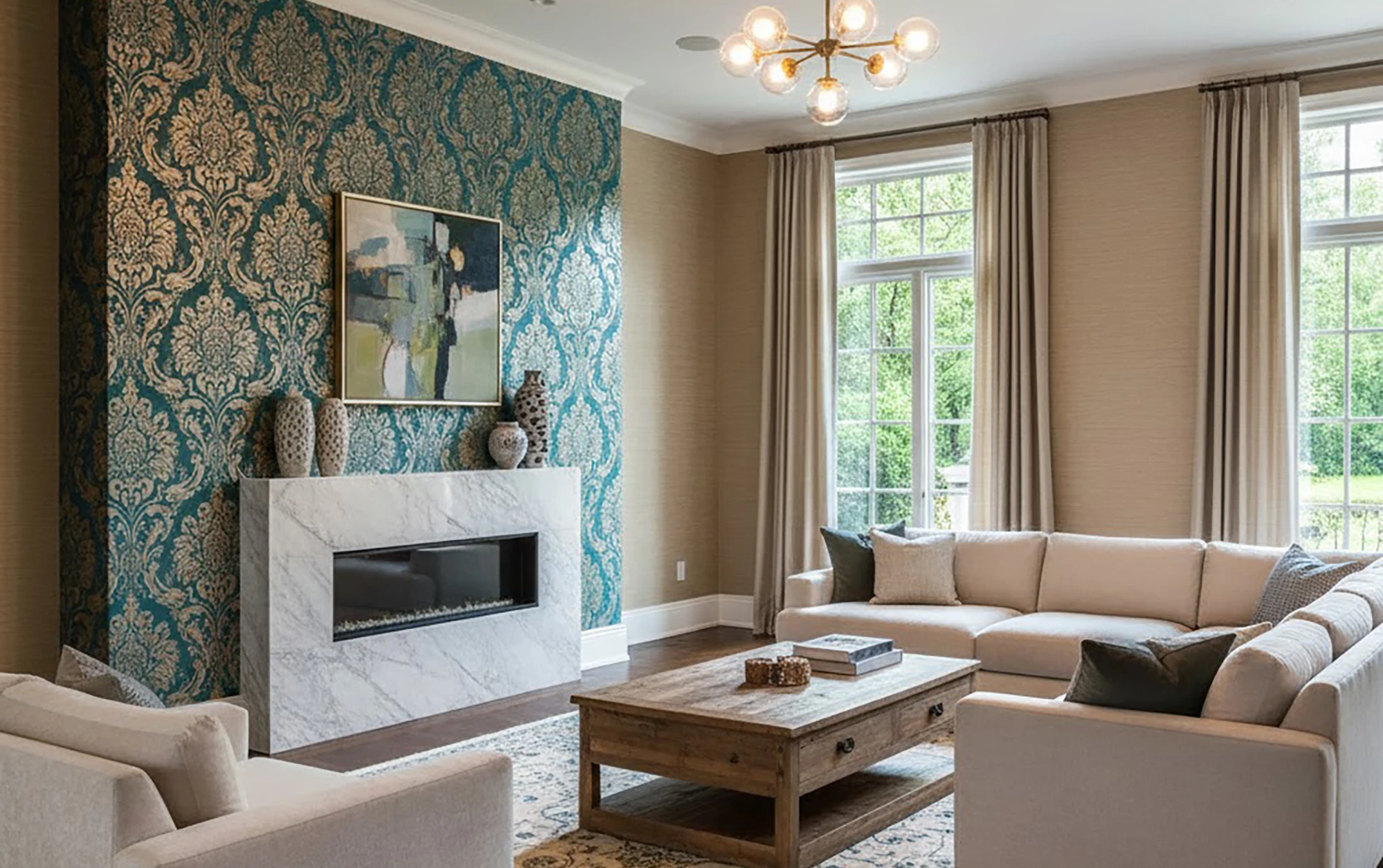
- Large-scale patterns require advanced layout planning
A professional installation strategy accounts for:
- pattern repeat and alignment
- corner transitions
- window and door reveals
- ceiling terminations
- lighting direction and shadow behavior
This is especially important in open-concept homes where walls are viewed continuously rather than in isolation.
Regional Considerations: Climate Is Not Neutral
In regions like Colorado, climate plays a major role in wallcovering performance. Altitude, dry air, seasonal humidity shifts, and temperature fluctuations directly affect both materials and adhesives.
That is why many builders and designers rely on specialists offering wallcovering installation services in the Denver metro area, where local conditions are well understood and addressed during both surface preparation and installation.
A technically sound installation must anticipate how a wallcovering will behave not only on day one, but years later as the environment continues to change.
Collaboration With Designers and Builders
Successful wallcovering projects are collaborative. Installers who work closely with architects, interior designers, and builders help prevent costly conflicts by addressing wall finishes early in the construction or renovation process.
This includes:
- reviewing material selections for feasibility
- advising on substrate readiness timelines
- coordinating installation sequencing
- preventing last-minute changes that compromise quality
Rather than being a final decorative step, wallcoverings should be treated as an integral part of the interior envelope.
Craftsmanship Over Speed
In high-end homes, speed is rarely the priority. Precision is.
Professional wallcovering installers work methodically:
- measuring and pre-planning layouts
- dry-fitting critical areas
- allowing proper curing time
- adjusting techniques to each material
This approach results in walls that feel intentional, balanced, and durable — not rushed.
A Trusted Execution Partner
Companies like Enjoy The Wall focus exclusively on complex wall finishes, combining technical knowledge with craftsmanship to execute wallpaper and decorative wallcovering installations that perform as well as they look.
By treating walls as architectural surfaces rather than decoration, they help designers and homeowners achieve interiors that remain refined and intact for years.