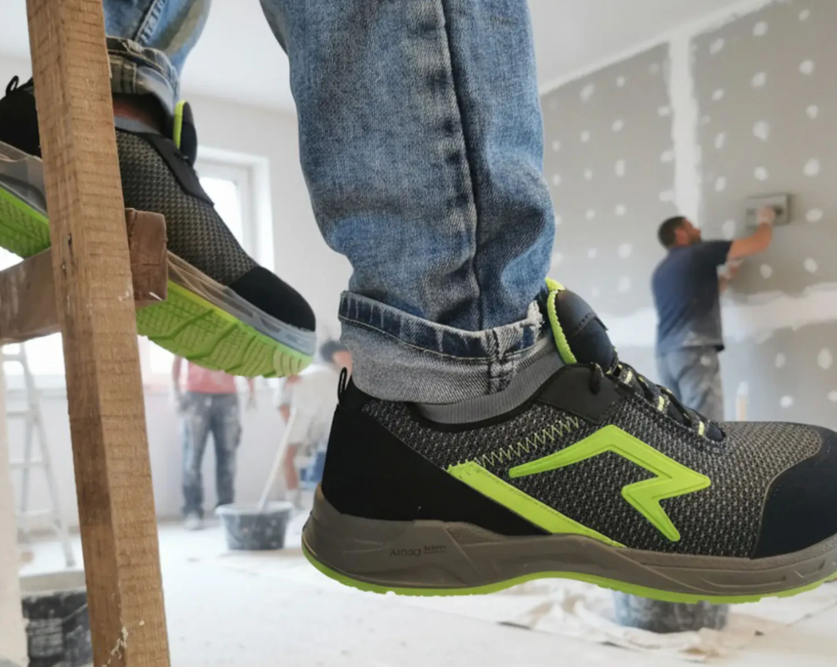
Construction sites in Dubai, logistics centres in Abu Dhabi and oil and gas facilities across the UAE operate in conditions of extreme heat, where the surface temperature of concrete and metal can exceed 50°C. In such an environment, traditional heavy-duty boots quickly lead to overheating of the feet, swelling and general fatigue among staff. The safety footwear market is gradually shifting towards lightweight safety shoes. These are lighter-weight models that combine protection with a high level of comfort.
Comfort technologies for working in hot climates
Modern breathable safety shoes solve the problem of overheating by allowing air to circulate inside the footwear. For safety officers, this is a key factor in improving productivity and reducing staff fatigue. The upper material plays a particularly important role. High-quality natural leather, 2.0–2.2 mm thick, performs differently from budget alternatives at 1.4 mm. The denser structure of the upper on work shoes:
- It takes longer to overheat. Thick, genuine leather is better at regulating the temperature inside the shoe when working in hot conditions.
- It retains its shape better. The material is less prone to deformation under daily wear and tear and prolonged use.
- More resistant to abrasion. Thick leather is less prone to damage when in contact with concrete, metal and construction dust.
- Reduces the risk of unpleasant odours. Natural fibres are more effective at regulating moisture levels inside work shoes.
In the UAE, walking constantly on concrete and metal surfaces places additional strain on the feet. That is why modern safety trainers and lightweight safety shoes UAE feature enhanced shock absorption in the heel area. This cushioning reduces the strain on the spine and knees during long shifts, helping staff maintain their stamina and concentration for longer.
How modern technology has made security easier and more convenient
In the past, ‘comfortable steel-toe shoes’ almost always meant heavy boots. Today, that has changed. Modern toe protection (SB) systems use lightweight materials that still provide 200 joules of impact protection in accordance with safety standard EN ISO 20345:2011.
Equally important is midsole penetration protection (P). Instead of a rigid steel plate, a Kevlar insole is used, which makes the sole more flexible and lighter, whilst also improving thermal insulation during prolonged work on hot surfaces.
A comparison of high-end and budget safety shoes
| Parameter | TALAN safety shoes (Lightweight) | Budget alternatives |
| Upper material | Genuine leather, 2.0–2.2 mm thick | Fleece or synthetic fabric, 1.4–1.6 mm |
| Tray | Lightweight (200J impact) | Heavy steel alloys |
| Insole | Kevlar insole (Anti-penetration) | Steel or none |
| Sole | Dual density (PU/PU) | Single-density (Hard PU) |
| Weight and comfort | Lightweight, breathable | Poor ventilation |
The double-density sole construction also plays an important role. The inner PU layer provides comfort and cushioning, whilst the outer layer ensures resistance to abrasion and contact with harsh surfaces.
Where lightweight safety footwear is particularly in demand in the UAE
Lightweight safety trainers are widely used in sectors where staff spend 10–12 hours on their feet:
- Logistics warehouses. Staff walk tens of kilometres per shift, so the weight and shock absorption of their footwear have a direct impact on their stamina.
- Airports. Non-metallic footwear helps you get through security checks more quickly and reduces strain when walking around the terminals.
- Medicine. Working on your feet for long periods requires footwear with good ventilation and stable arch support.
- HoReCa. In the hotel and restaurant sector, comfort, slip resistance and durability are essential.
- Electronics and ESD zones. Special ESD protection prevents the build-up of static electricity and reduces the risk of damage to equipment.
Non-metallic safety shoes is particularly important for airports and distribution centres. The absence of metal helps staff pass through security checks more quickly and reduces the overall weight of the footwear. In the electronics and engineering sectors, ESD protection is in high demand, as it prevents the build-up of static electricity.
Why businesses in the UAE are switching to lightweight safety shoes
Businesses view lightweight safety footwear as a tool for improving staff efficiency. The less tired an employee is, the lower the risk of errors, injuries and reduced productivity during a shift.
One example of this approach is TALAN safety footwear. The brand has been in operation since 1923 and is expanding its own manufacturing operations in the UAE. Over $4.7 million has been invested in equipment from Italy and Germany, and TÜV Rheinland certification confirms compliance with the EN ISO 20345 standard. Verona Shoes FZE is the official distributor of the products in the UAE, supplying solutions to the region’s construction, industrial and logistics sectors.