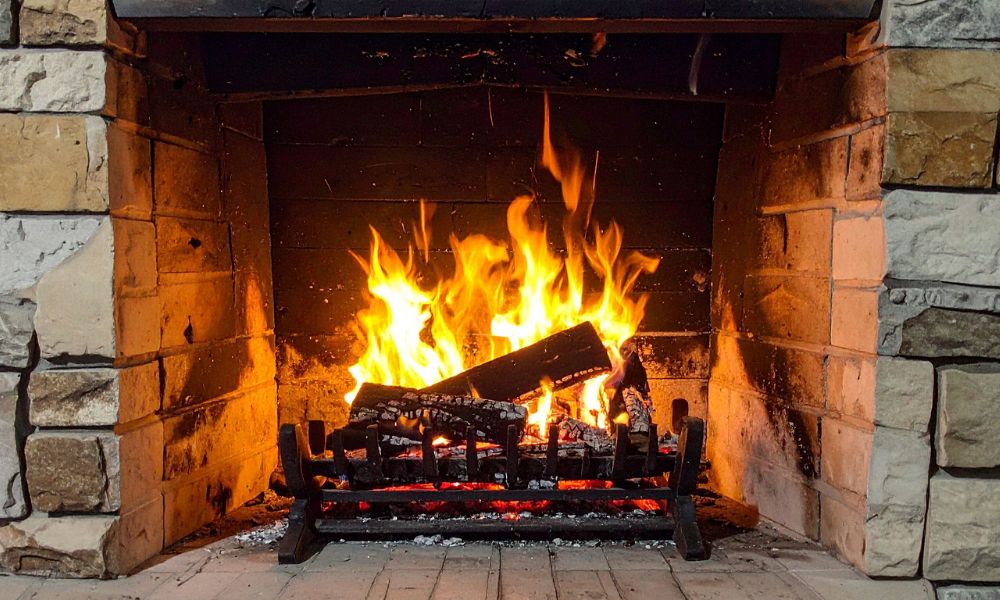
The Tremblays nearly gave up on their back patio. They had bought a propane fire table two summers earlier, the kind with imitation logs sitting over the burner, and it had quietly become the least-used thing they owned. The fake logs looked dull by daylight and crowded half the flame at night. Nobody lingered out there.
Then a neighbour mentioned fire stones. Not as a grand renovation idea, just an offhand comment over the fence about what she had done with her own fire bowl. That small swap turned out to be the difference between a patio the family walked past and one they actually sat in.
The problem with the corner
Their setup was common enough. A mid-size propane fire table, a few weather-worn chairs, and a slab that caught the afternoon sun and not much else. The imitation logs were the weak link. They had faded to a chalky gray, they sat too tall over the burner, and the flame pattern around them looked cramped instead of warm. The whole feature read as an appliance rather than a place to gather.
The Tremblays assumed the fix was a new fire table. It usually is not. The burner was fine. What sat on top of it was the issue, and that is a far cheaper thing to change.
Doing the homework
Their first instinct was to grab a bag of smooth river rock from the garden aisle and pour it in. This is the mistake that sends people to the internet looking for answers, and thankfully the neighbour warned them off it. Ordinary landscaping pebbles and river stone are not made for direct heat. They can hold pockets of moisture, and when that water turns to steam with nowhere to go, the stone can crack or pop. Around an open flame, that is not a risk worth taking.
Heat-rated material is a different category altogether. While researching, the Tremblays found a dedicated catalog of fire stones for outdoor spaces sorted by finish and color, which made it clear how many options actually exist beyond the gray fake logs they were used to. There were natural matte stones, highly polished glossy ones, porous lava rock, and lightweight ceramic fiber pieces. The choice was no longer “logs or nothing.”
What they learned about the options
A few distinctions mattered once they started comparing. Natural fire stones, with their flat rounded shapes and slate-black or ivory-tan tones, gave the most refined finished look and worked equally well with modern and rustic patios. Highly polished stones added a glossy mirror effect that caught the flame at night. Lava rock, dark and porous, was the budget-friendly workhorse, often used as a base layer underneath a thinner top layer of decorative stone so the pretty material goes further.
That last point is the one most people miss. You do not need to fill an entire burner pan with premium stone. A base of inexpensive lava rock brings the level up close to the burner, and a decorative top layer does the visible work. The Tremblays went with slate-black natural stones over a lava base, which suited their dark furniture and the gray tones already in the patio slab.
Ceramic fiber stones were the option that surprised them most. Lightweight and weather resistant, shaped to resemble flat smooth stone, they are easy to handle and rearrange. For anyone who moves a portable fire bowl around the yard or stores it away over winter, that lighter weight is a genuine convenience rather than a gimmick.
Quantity took a little planning. Burner pans are deeper than they look, and the Tremblays measured the volume before ordering rather than guessing. A bag of fire stone covers a set area at a given depth, and ordering a touch extra meant they were not left with a thin, uneven layer that exposed the metal pan. Coverage figures on the product pages made that estimate straightforward.
The install, and the result
Installation took an afternoo