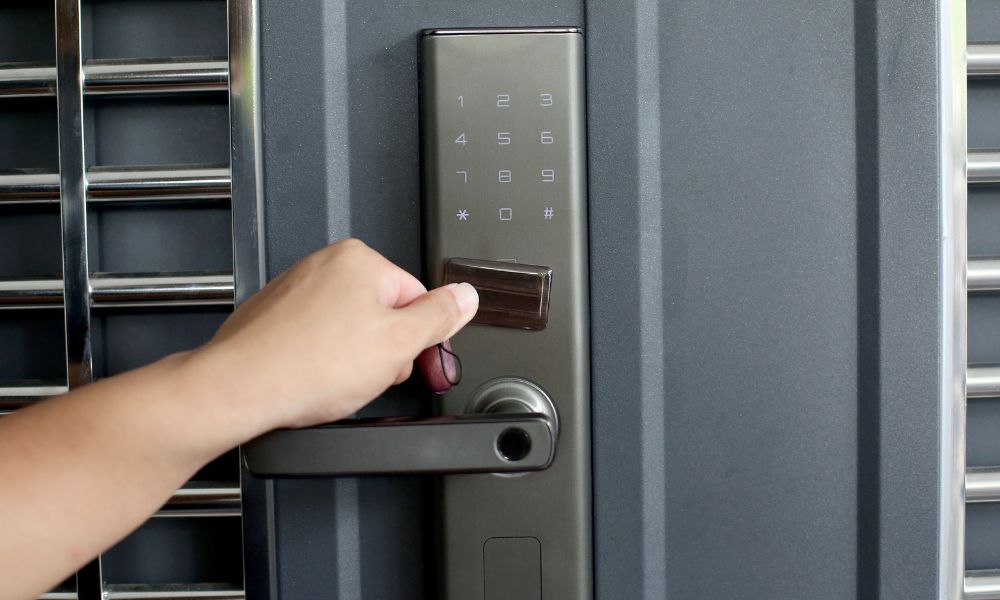
Smart home technology has evolved far beyond smart speakers and connected lights. In 2026, one of the fastest-growing segments in residential automation is smart access control—especially smart garage and gate openers. What was once a simple mechanical function has now become a connected, app-driven, and security-focused system that plays a central role in how people interact with their homes.
As adoption increases across the United States, smart gate systems are no longer considered luxury upgrades. They are becoming a standard component of modern home infrastructure, driven by convenience, security, and the broader expansion of smart home ecosystems.
Rising Adoption of Smart Gate and Garage Systems
Recent industry insights show that approximately 11% of U.S. internet households already use smart garage door or access control systems, and this number continues to grow steadily each year.
This growth is fueled by a combination of factors:
- Wider availability of affordable smart home devices
- Increased awareness of home security risks
- Improved reliability of wireless connectivity
- Integration with mainstream smart home platforms
What was once a niche product category is now entering mainstream adoption. Homeowners are increasingly viewing smart gate openers as essential infrastructure rather than optional technology.
Smart Home Ecosystems Are Expanding Beyond the Home Interior
One of the most important shifts driving this trend is the expansion of smart home ecosystems beyond indoor devices. Traditionally, smart homes focused on interior automation—lighting, thermostats, speakers, and appliances.
In 2026, the ecosystem now extends to the perimeter of the home, including:
- Front doors
- Garage doors
- Driveway gates
- Outdoor security systems
This expansion reflects a shift in mindset: home automation is no longer just about comfort inside the house, but also about controlling access points outside the home.
Smart gate openers sit at the center of this transformation because they represent the first physical interaction between the outside world and the home environment.
Mobile App Control Is Becoming the Standard
One of the biggest drivers of smart gate adoption is the widespread use of mobile app control.
Instead of relying on physical remotes or manual switches, homeowners can now control access systems directly from their smartphones. This has fundamentally changed expectations around convenience and flexibility.
With app-based gate control, users can:
- Open or close gates remotely from anywhere
- Monitor gate activity in real time
- Receive notifications when access is triggered
- Grant temporary access to visitors or deliveries
This level of control is especially important for households with busy schedules or frequent deliveries. It removes uncertainty and allows homeowners to manage access even when they are not physically present.
Integration With Alexa, Google, and Apple Ecosystems
Another major factor driving adoption is integration with leading smart home platforms such as Alexa, Google Assistant, and Apple HomeKit ecosystems.
Voice control and automation routines have become a standard expectation for smart home users. Smart gate openers that integrate with these platforms allow users to:
- Open gates using voice commands
- Include gate actions in home automation routines
- Sync gate activity with lighting or security systems
- Automate entry based on time or location triggers
For example, a homeowner might set a routine where the gate opens automatically when they arrive home, lights turn on, and indoor temperature adjusts simultaneously.
This kind of ecosystem integration transforms the gate opener from a standalone device into a connected part of a larger smart home network.
The Rise of Remote Access Sharing
Modern households are more dynamic than ever, with multiple family members, guests, service providers, and deliveries requiring access at different times.
Smart gate systems address this challenge through remote access sharing features, which allow homeowners to grant temporary or scheduled entry permissions.
This eliminates the need for:
- Physical key exchanges
- Hidden spare remotes
- Manual supervision of visitors
Instead, access can be controlled digitally, with precise timing and usage limits. Homeowners can decide who enters, when they enter, and how long they can access the property.
This feature is especially useful for:
- Delivery drivers
- Cleaning services
- Maintenance workers
- Family members with different schedules
It provides flexibility without compromising security.
Security and Convenience Are Now Equal Priorities
One of the most important trends in smart gate adoption is the equal importance of security and convenience. Homeowners are no longer willing to choose between the two—they expect both.
Smart gate openers now combine:
- Encrypted communication systems
- Rolling code security protocols
- Activity logs and access history
- Real-time alerts for unusual activity
At the same time, they offer seamless usability through mobile apps and automation features.
This balance is critical because access control systems sit at the most sensitive point of any property—the entryway. Any vulnerability can directly impact home safety.
As a result, manufacturers are investing heavily in both cybersecurity and user experience design.
Smart Gates as the First Layer of Home Automation
In a fully connected home, the gate is no longer just an entry barrier—it is the first layer of automation.
When a smart gate system is integrated into a broader smart home ecosystem, it can trigger multiple downstream actions:
- Disarming security systems when the homeowner arrives
- Turning on exterior and interior lights
- Adjusting smart thermostats
- Activating surveillance cameras
- Logging entry events for security tracking
This creates a seamless transition between outside and inside environments. The home becomes responsive rather than static.
Smart gate openers are therefore evolving into key control points in home automation architecture.
Affordability and Accessibility Are Driving Growth
Another important factor contributing to the rise of smart gate systems is improved affordability. Early smart home technology was often expensive and complex, limiting adoption to tech enthusiasts or high-income households.
Today, prices have become more accessible, and installation processes have been simplified. Many systems are designed for easy retrofit installation, meaning homeowners can upgrade existing gates without replacing entire infrastructure.
This accessibility has significantly expanded the market, allowing more households to adopt smart access control solutions.
Challenges in the Smart Gate Market
Despite strong growth, the smart gate industry still faces several challenges.
Connectivity reliability remains a concern, especially in rural areas or properties with weak Wi-Fi coverage. Additionally, some users express concerns about app dependency and system compatibility across different ecosystems.
Cybersecurity is also an ongoing priority, as any connected access system must be protected against digital threats. Manufacturers continue to invest in stronger encryption and secure cloud infrastructure to address these risks.
The Future of Smart Gate Openers
Looking ahead, smart gate systems are expected to become even more intelligent and autonomous. Future developments may include:
- AI-driven access prediction based on user behavior
- Biometric authentication such as facial or voice recognition
- Deeper integration with autonomous vehicles
- Fully cloud-managed home entry ecosystems
As these technologies mature, smart gate openers will likely become standard in all new residential construction.
In this transition, ZUMI represents the practical side of innovation: bringing smarter access control into everyday homes in a way that is simple, secure, and ready for the next wave of automation.
Conclusion
Smart gate openers are becoming a core part of the smart home ecosystem in 2026 because they combine three essential elements: security, convenience, and connectivity.
As adoption continues to grow, driven by mobile control, ecosystem integration, and rising demand for flexible access, the gate is no longer just a mechanical entry point—it is an intelligent control hub for the entire home.
In this evolving landscape, smart gate systems are not just following the smart home trend—they are helping define its future.