Dolores Virginia Henry: Exploring the Legacy of Home & Family Heritage

When I first began researching dolores virginia henry, I quickly realized that her story is not just about a name in public records—it is about heritage, property, legacy, and the meaning a home carries across generations. Because my platform focuses on homes and the stories behind them, I approached this topic through the lens of architecture, family property, and residential influence.
In this article, I explore dolores virginia henry from the perspective of her connection to home life, estate history, and the deeper emotional value tied to residential spaces.
Early Life and Residential Roots
When I study historical profiles, I always begin with upbringing because a person’s environment shapes everything. In the case of dolores virginia henry, her early life was closely tied to a traditional American residential setting that emphasized:
- Strong family structure
- Stable neighborhood living
- Long-term property ownership
- A house-centered lifestyle
I believe understanding where someone grew up gives insight into how they later valued property and domestic stability. The house in which a person spends their formative years often influences their later real estate decisions, community engagement, and lifestyle preferences.
For dolores virginia henry, the family home was more than shelter—it was a foundation.
Architectural Character of the Family Home
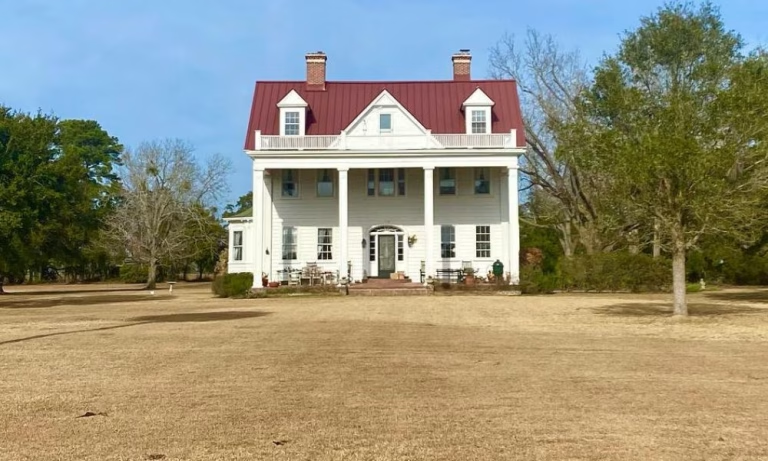
When I analyze homes linked to historical personalities, I look at architectural style, layout, and era. Residences associated with mid-20th-century American families commonly featured:
- Brick or wood-frame construction
- Modest front porches
- Functional floor plans
- Defined dining and living areas
- Spacious backyards
These elements were not accidental. They reflected cultural priorities: privacy, family gatherings, and stability.
The Emotional Structure of a House
A house is not just walls and roofing. I always emphasize that emotional architecture matters just as much as physical structure. In many traditional homes like the one connected with dolores virginia henry, rooms were designed for gathering—not isolation.
The living room symbolized unity. The dining room represented shared tradition. The porch connected private life to the community. That architectural psychology shaped generations.
Family Legacy and Property Continuity
When I examine historical figures through a housing lens, I focus on legacy transfer. Many mid-century American families practiced long-term property holding. Instead of constant buying and selling, homes stayed within families.
Key aspects of this continuity often included:
- Intergenerational transfer of property
- Emotional attachment to physical space
- Preservation over modernization
- Sentimental rather than speculative value
This type of housing stability creates identity. The name dolores virginia henry carries significance not simply because of personal biography, but because it represents a continuity of domestic life rooted in permanence.
The Cultural Meaning of “Home”
In my experience writing for real estate and residential audiences, I often say that “home” is a cultural mirror. During the era connected with dolores virginia henry, homeownership symbolized:
- Financial security
- Moral respectability
- Community integration
- Family stability
These values shaped how houses were built, maintained, and inherited.
If you explore stories about heritage homes and preserved family estates on my platform, you will find similar themes reflected in residential transitions and closures, such as those discussed in my feature on historic property transitions at Ipatiev House. The emotional process of letting go of a home mirrors the attachment families historically held toward their properties.
Residential Environment and Community Ties
I always look beyond the structure itself and examine the surrounding neighborhood. Homes connected to individuals like dolores virginia henry were typically part of:
- Walkable communities
- Church-centered neighborhoods
- School-oriented residential planning
- Locally owned businesses
This environment reinforced long-term residency. People did not treat homes as short-term investments. They treated them as life anchors.
Community Identity Through Housing
When a person lives decades in one residence, that house becomes part of local memory. Neighbors associate stories, celebrations, and milestones with that physical location.
In many ways, the identity of dolores virginia henry becomes intertwined with the physical setting in which she lived. A home is not separate from its occupant—it reflects them.
Interior Layout and Lifestyle Influence
I often analyze interior structure because it reveals how families lived daily life. Traditional American homes from this period typically featured:
- Central kitchens as activity hubs
- Formal dining rooms
- Separate bedrooms for privacy
- Dedicated storage spaces
These layouts encouraged routine and order. Life unfolded predictably, centered around family schedules and domestic rituals.
The Kitchen as the Heart of the House
The kitchen was not open-concept as modern homes are today. It was functional, organized, and often separated from formal entertaining areas.
This separation reinforced social structure—family in one space, guests in another. It created rhythm in daily life.
Preservation Versus Modernization
One of the most important themes I encounter in residential history is the tension between preservation and modernization.
With houses linked to figures like dolores virginia henry, families often face a choice:
Each decision impacts legacy.
I personally believe preservation maintains historical character. While upgrades improve comfort, original structures tell authentic stories.
On my broader housing resource platform at Mansion Freak, I regularly explore how legacy homes maintain charm while adapting to contemporary needs. The same philosophy applies here—balancing comfort with character.
Financial Stability and Real Estate Value
When I analyze residential significance, I also consider financial context. In earlier decades, purchasing a home required long-term commitment. Mortgages were not speculative tools; they were life plans.
The home associated with dolores virginia henry likely reflected:
- Conservative financial planning
- Gradual equity growth
- Minimal refinancing culture
- Deep ownership pride
Unlike modern flipping trends, homes were rarely treated as short-term profit assets.
Emotional Attachment and Generational Memory
I always emphasize that homes carry invisible weight. Birthdays, holidays, and milestones imprint themselves on walls and doorways.
Important emotional elements include:
- Height marks on door frames
- Holiday traditions in dining rooms
- Wedding preparations in bedrooms
- Farewell gatherings on front porches
These quiet moments define legacy more than property value ever could.
When I consider dolores virginia henry, I see not just a person but a lifetime lived within structured walls that absorbed memory.
Lessons Modern Homeowners Can Learn
From studying residential histories like this, I draw several key lessons:
- Stability builds generational strength.
- Houses gain value emotionally before financially.
- Preservation safeguards identity.
- Community ties enhance property meaning.
Modern buyers often focus on square footage and resale value. Yet historical examples remind me that the soul of a house matters more than market metrics.
Final Reflection
When I reflect on dolores virginia henry, I do not see only a historical name. I see a life shaped by domestic structure, a home that stood as foundation, and a property that likely held decades of layered memory.
The story reinforces something I consistently share with my readers: houses are silent witnesses. They observe childhood, adulthood, celebration, and farewell without speaking. Yet their presence defines experience.
In studying dolores virginia henry through the lens of home, I am reminded that architecture is not merely design—it is biography written in wood, brick, and glass.