The modern office is a marvel of glass, steel, and open-plan freedom. But as any employee trying to meet a deadline knows, it is also an acoustic minefield. From the rhythmic clacking of mechanical keyboards to the distant “Can you hear me now?” of a colleague’s video call, noise is the ultimate disruptor.
To combat this, businesses are increasingly turning to acoustic treatments. However, there is often a misunderstanding of how these products actually work. To truly “soundproof” a workspace—or more accurately, to treat its acoustics—you need to understand the science of sound energy.
Absorption vs. Blocking: The Science of Silence
Before diving into products, it is vital to distinguish between two different goals: Soundproofing and Sound Absorption.
- Soundproofing: This is the act of blocking sound from entering or leaving a room. It requires mass (thick walls, heavy doors) and “decoupling” (physical gaps that vibrations cannot jump across).
- Sound Absorption: This is the act of controlling sound within a room. It involves using porous materials to “catch” sound waves so they don’t bounce off hard surfaces and create echoes.
When we talk about using fire rated acoustic wall tiles for commercial buildings, we are primarily talking about absorption. By reducing the “reverberation time” (the time it takes for a sound to die away), panels effectively lower the overall volume of the room.

How Acoustic Panels “Eat” Sound
Imagine a tennis ball thrown against a brick wall; it bounces back with almost the same energy. That is sound hitting a standard office wall. Now, imagine throwing that same ball into a thick pile of wool; it stops dead.
Acoustic panels work on a microscopic level. When sound waves hit the porous fibers of acoustic wall panels, the vibrating air molecules get trapped in the material. This friction converts the sound energy into a tiny amount of heat energy. The sound doesn’t “bounce” back into the room; it is consumed by the panel.
The Benefits of Strategic Absorption:
- Speech Clarity: In a treated room, you no longer have to strain to hear a speaker because their voice isn’t competing with its own echo.
- Reduced Decibel Levels: By removing reflections, the “background hum” of the office naturally drops.
- Psychological Comfort: Quiet environments lower heart rates and reduce the feeling of “sensory overload” during long shifts.
Treating the “Fifth Wall”: Acoustic Ceiling Panels
In many workspaces, the walls are covered by windows, bookshelves, or monitors, leaving very little room for treatment. This is where the ceiling becomes your most valuable asset.
Standard drywall or concrete ceilings are massive sound mirrors. Installing acoustic ceiling panels, whether as a traditional drop-ceiling or as suspended “clouds”—intercepts sound as it travels upward.
Why Ceiling Treatments are Effective:
- Direct Path Interruption: Sound travels in straight lines. If a panel is directly above a conversation, it catches the sound before it can reflect and spread to the rest of the office.
- Scalability: You can add as many or as few panels as needed without affecting the footprint of the office floor.
- Aesthetic Integration: Modern panels can be cut into hexagonal, circular, or bespoke shapes, turning a functional necessity into a design feature.
The Role of Material Density
Not all panels are created equal. The effectiveness of an acoustic treatment is usually measured by its NRC (Noise Reduction Coefficient). A rating of 0.0 means the material absorbs no sound; a rating of 1.0 means it absorbs 100% of the sound hitting it.
- Foam Panels: Great for high-frequency sounds (like the “hiss” of air conditioning) and very lightweight.
- Fabric-Wrapped Mineral Wool: Higher density and excellent for human speech frequencies.
- Recycled PET Felt: A sustainable, modern choice that offers a great balance of durability and absorption.
4 Keys to a Successfully Sound-Treated Office
If you are planning an acoustic upgrade in your workspaces, keep these four principles in mind:
- Placement over Quantity: Putting a few panels at ear-level is often more effective than covering a whole wall near the floor.
- Identify Parallel Surfaces: If you have two hard walls facing each other, sound will “ping-pong” between them. Treat at least one of those walls.
- Don’t Forget the Corners: Bass frequencies tend to build up in corners. “Bass traps” or thicker corner panels can help prevent that muddy, booming sound.
- Balance the Zones: Use heavy absorption in “Quiet Zones” and lighter, decorative panels in “Social Zones” to maintain some energy in the space.
Conclusion
Acoustic panels don’t just “decorate” a wall; they engineer an atmosphere.
By understanding that sound is energy that can be managed, businesses can move away from noisy, distracting environments and toward spaces that actively support the human brain. When you control the unwanted noise on your office, you boost productivity.
Frequently Asked Questions
1. Will acoustic panels stop my neighbor’s loud music?
Probably not. As mentioned, panels are for absorption (internal sound). To stop sound from a neighbor, you need insulation inside the wall or extra layers of heavy plasterboard to block the transmission.
2. Are acoustic panels a fire hazard?
Professional acoustic panels sold for commercial use are treated with fire retardants and must meet strict safety standards (like Class A or Class 1). Always check the fire rating before purchasing for an office.
3. Can I use acoustic panels in a home office?
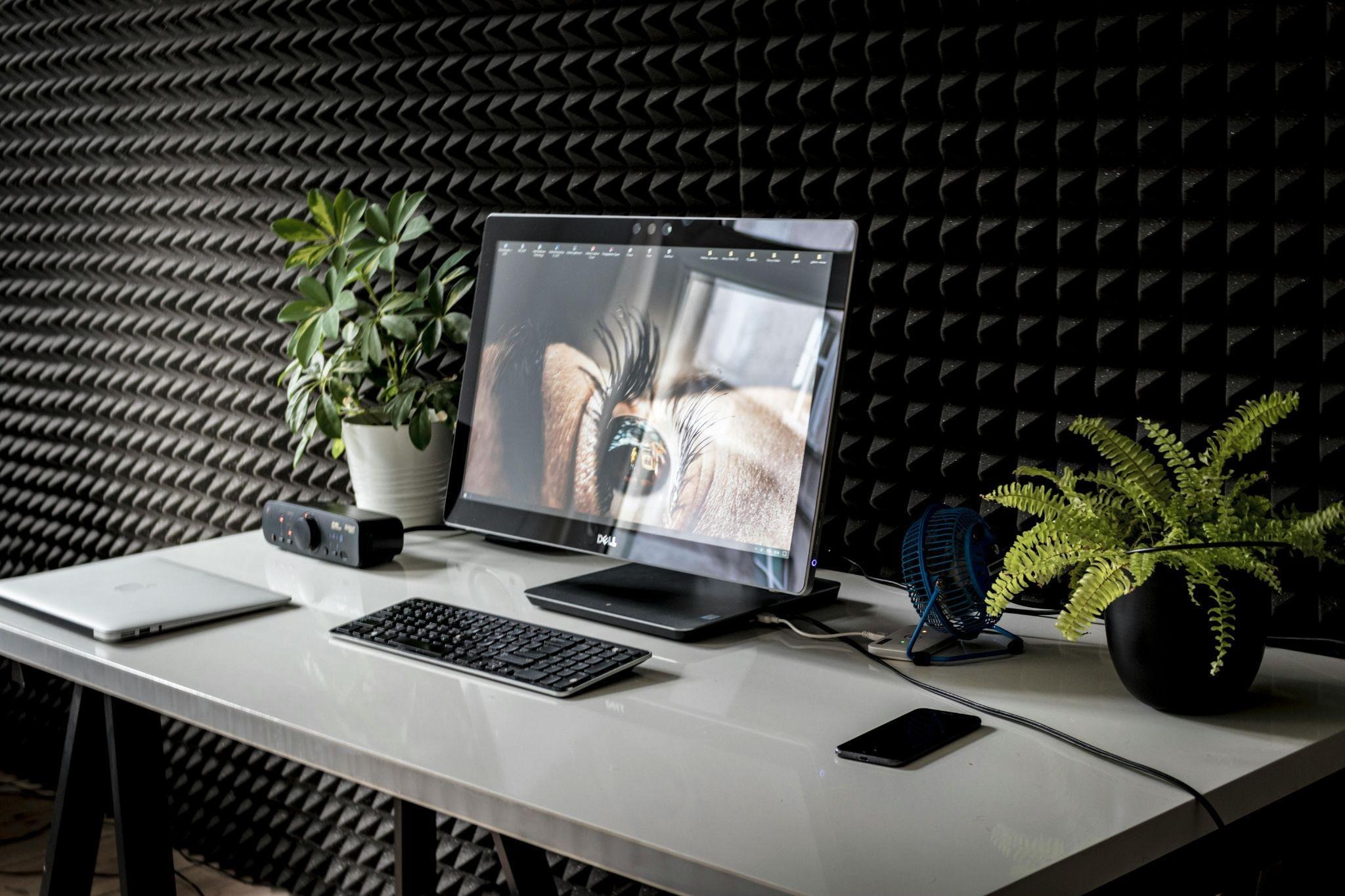
Absolutely. With the rise of video calls, home office acoustics have become vital. A couple of panels behind your monitor can significantly improve how your voice sounds to others on the call.
4. How do I know if I have too many panels?
If a room feels “unnatural” or eerily quiet—like your ears need to “pop”—you may have over-treated it. This is rare in offices but common in recording studios. A healthy office should still have a little bit of life.
5. Are eco-friendly panels as good as traditional ones?
Yes. Panels made from recycled PET (plastic bottles) often have NRC ratings comparable to traditional fiberglass or foam, with the added benefit of being better for the planet and easier to handle.