In the upper tier of residential architecture, material selection is rarely driven by cost alone. Instead, the focus shifts toward permanence, identity, and how a building will age over time. Among the materials increasingly associated with high-end homes, black timber cladding has established a distinct position—quietly replacing more conventional rendered or composite façades.
What makes black timber particularly compelling is not just its appearance, but the way it interacts with light, proportion, and surrounding materials. It has become a defining feature in contemporary luxury homes, especially where restraint and precision are central to the design language.
The Appeal of Black Timber in Luxury Architecture
Unlike lighter finishes that reflect light and emphasise surface, black timber absorbs it. This creates a more controlled visual presence, allowing architectural form to take precedence over material.
In large residential schemes, this effect becomes particularly valuable. Volumes appear more refined, junctions are less visually intrusive, and glazing elements stand out with greater clarity.
For a deeper look at how this material is used in modern residential projects, see black timber cladding for modern houses.
Material Depth and Texture
One of the defining differences between black timber and painted alternatives lies in surface quality. Where painted finishes can appear flat or uniform, charred or treated timber retains a natural grain structure beneath the darkened surface.
This introduces subtle variation:
· Changes in texture depending on light angle
· Depth within the grain rather than a surface coating
· A more tactile, architectural finish
For high-end properties, this level of material richness contributes to the overall perception of quality.
Integration with Other Premium Materials
Black timber is rarely used in isolation. Its strength lies in how it complements other materials commonly found in luxury homes:
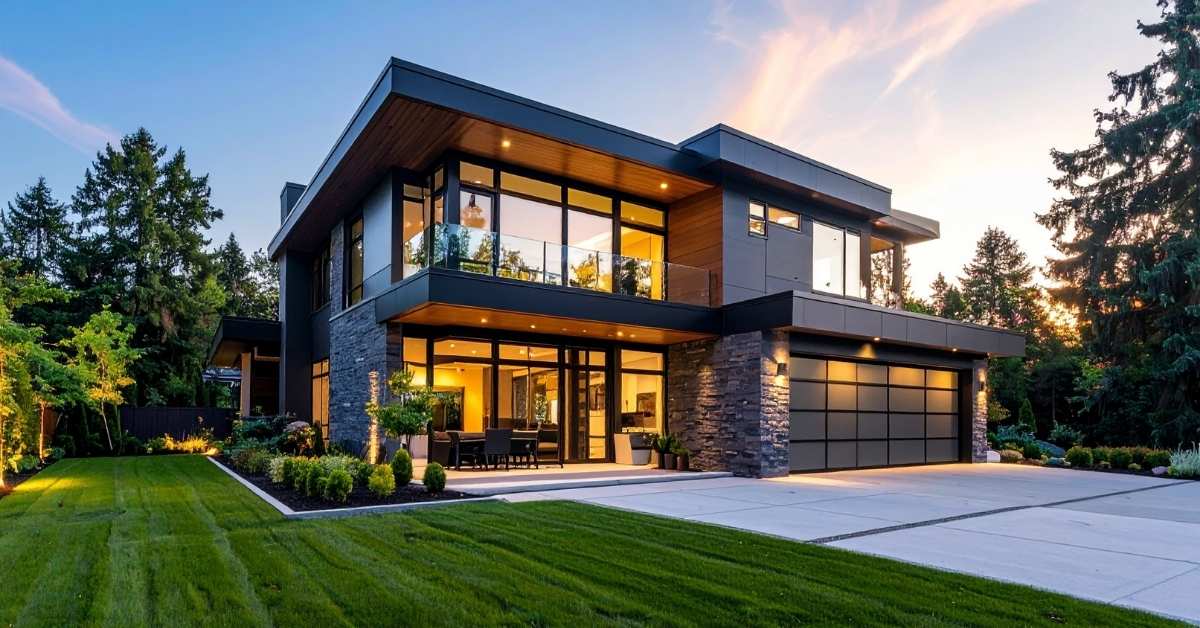
· Glass: Creates strong contrast, enhancing transparency and reflection
· Steel and aluminium: Reinforces a contemporary, precision-led aesthetic
· Stone or concrete: Balances warmth with solidity
This combination allows architects to create façades that feel layered and considered, rather than dominated by a single material.
Longevity and Maintenance Expectations
At the premium end of the market, long-term performance is as important as initial appearance. Materials are expected to maintain their integrity with minimal intervention.
Black timber—particularly in charred or thermally modified forms—offers several advantages:
· Reduced reliance on surface coatings
· More consistent weathering behaviour
· Lower risk of visible maintenance issues over time
This is especially relevant for larger properties where access for maintenance can be complex and costly.
Architectural Use Cases
Black timber is now widely used across a range of high-end residential applications:
Contemporary New-Build Homes
Full façades in black timber create a strong architectural identity, often paired with expansive glazing and clean geometric forms.
Extensions to Period Properties
Used as a contrasting material, black timber allows new additions to be clearly defined without attempting to replicate the original structure.
Coastal and Rural Properties
In exposed environments, darker finishes can integrate more naturally into the landscape while also offering practical durability.
Garden Buildings and Secondary Structures
From pool houses to studios, black timber provides a consistent visual language across the wider property.
Precision in Detailing
Luxury construction demands a higher level of detailing, and timber cladding is no exception. The success of black timber façades depends heavily on execution:
· Consistent board spacing and alignment
· Careful junction detailing around openings
· Hidden or minimal fixings where possible
· Well-designed ventilation gaps to support longevity
These elements are not always immediately visible, but they define the difference between an average installation and a refined architectural finish.
Charred Timber vs Painted Black Finishes
While both approaches can achieve a similar colour, their long-term behaviour differs significantly:
| Aspect | Charred Timber | Painted Timber |
| Finish | Integrated into material | Applied surface coating |
| Maintenance | Low | Moderate to high |
| Ageing | Natural and even | Can show wear or peeling |
| Visual Quality | Textured, varied | Flat, uniform |
For high-value properties, the preference often leans toward finishes that age naturally rather than those requiring ongoing intervention.
The Role of Shou Sugi Ban in Premium Projects
Among black timber options, charred timber—commonly referred to as Shou Sugi Ban—has become closely associated with luxury residential design. Its appeal lies in both its visual depth and its performance characteristics.
Rather than relying on applied colour, the finish is created through a controlled charring process, resulting in a surface that is both durable and distinctive.
For projects where both appearance and longevity are priorities, materials such as shou sugi ban exterior cladding boards are increasingly specified as part of high-end façade systems.
A Material That Defines Architectural Intent
Black timber cladding is not simply a stylistic choice—it is often central to how a building is perceived. It allows architects to reduce visual noise, emphasise proportion, and create a more deliberate relationship between structure and environment.
In luxury residential design, where every detail contributes to the overall composition, this level of control is essential.
Final Perspective
As residential architecture continues to move toward cleaner forms and more restrained material palettes, black timber is likely to remain a defining feature of high-end projects. Its ability to combine natural material qualities with a strong architectural presence makes it uniquely suited to contemporary design.
For developers and designers operating at the premium end of the market, it represents a balance between aesthetics, performance, and long-term value—qualities that are increasingly expected rather than optional.