Furniture marketing changed. Not gradually—suddenly. Five years ago, brands with big photography budgets dominated. Today? The winners are furniture companies using CGI to create visuals that make people stop scrolling.
Here’s how CGI services actually work for furniture brands—from launches to social campaigns. Whether you’re starting out or reshaping an established catalog, these strategies work.
1. Create Lifestyle Scenes That Sell the Dream, Not Just the Product
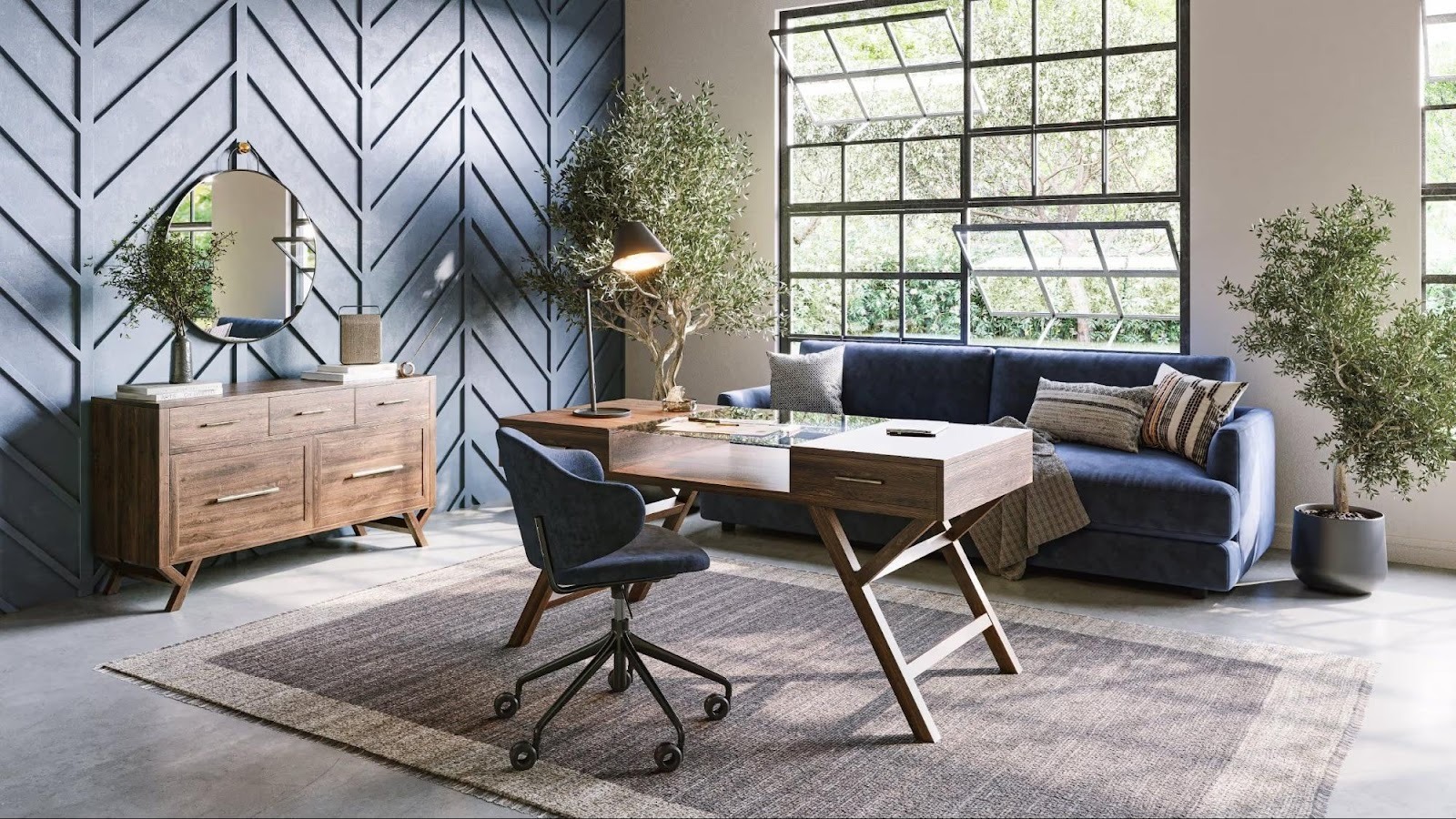
Good furniture brands show their sofas. Great ones show the life you’ll live with that sofa. CGI puts your products in aspirational room settings without the cost of physical staging.
- Build multiple room types (modern loft, coastal home, traditional estate) and drop the same product into each. One sofa, three audiences.
- Add lifestyle touches—morning coffee on the side table, books, natural light through windows.
- Fabric textures and wood grains look better in CGI than traditional photography. The lighting control is perfect every time.
- Create hero images that can’t exist in real staging. Rooftop terraces. Luxury penthouses. Architectural landmarks.
- Keep your styling consistent so customers recognize your brand when they’re scrolling Instagram at 11 PM.
2. Deploy 360° Product Spins That Build Buyer Confidence
Online furniture shopping has one huge problem: people can’t walk around products. 360° CGI spins fix this.
- Put interactive spins on product pages. Let customers rotate items with their mouse or finger.
- Show close-ups of joinery, upholstery stitching, hardware finishes. This builds trust.
- Add zoom that reveals material texture beyond what standard photos can capture.
- Offer different lighting scenarios—bright daylight, warm evening, natural shade. Buyers see how finishes actually look.
- Cut return rates by 15-25%. When customers examine products thoroughly before buying, fewer surprises arrive at their door.
3. Launch Seasonal Campaigns Without Physical Staging Costs
Seasonal marketing used to mean renting spaces, hiring photographers, coordinating schedules. Thousands spent on one-time shoots. Professional CGI services for furniture brands kill those barriers.
- Create spring, summer, fall, winter visuals by changing backgrounds and lighting in the same CGI scenes.
- Launch holiday campaigns without building physical sets.
- Test 5-10 variations of a campaign scene before committing. A/B test everything.
- Update campaigns when trends shift. Add new colors or styles without reshoots.
- Archive CGI assets. Next year’s spring campaign reuses this year’s base scenes with updated products.
4. Build Customization Configurators That Close High-Value Sales
Showing all fabric and finish combinations through photography? You’d need thousands of shots. CGI configurators let customers see their exact specs in real-time.
- Let customers change upholstery fabrics, wood finishes, metal accents, dimensions. They watch the product update instantly.
- Display accurate fabric textures—weave patterns, sheen levels, color depth that photos miss.
- Cut sales cycle time by 30-40%. Customers visualize custom orders without waiting for samples.
- Integrate configurators into e-commerce checkout. Make customization part of buying, not a separate inquiry.
- Provide shareable links. Customers send their configured product to the family for approval before buying.
5. Create Virtual Showrooms That Eliminate Geographic Limitations
Physical showrooms cost $50-200 per square foot annually. They reach customers who can visit in person. Virtual CGI showrooms? Anyone with internet access, anywhere.
- Build photorealistic digital showrooms customers navigate from phones or computers.
- Update product displays instantly. Swap in new arrivals without moving physical furniture.
- Add interactive hotspots for product details, specs, pricing.
- Track which products customers view longest. This informs inventory and marketing.
- Offer guided virtual tours for VIP customers or trade buyers.
6. Integrate AR Try-Before-You-Buy Features That Drive Conversion
AR powered by CGI assets lets customers see your furniture in their actual homes before buying. This converts.
- Develop mobile apps or web-based AR using device cameras to place CGI furniture models in customers’ spaces.
- Show accurate scale. Does that sectional actually fit their living room? Now they know.
- Enable social sharing. Customers ask friends and family for opinions on how furniture looks in their space.
- Boost conversion rates by 40-94% according to industry studies. Customers who use AR buy more.
- Cut return rates when customers verify fit and style before products ship.
7. Produce Video Walkthroughs That Showcase Collection Stories
Static images tell part of the story. Video brings furniture to life—showing how pieces work together, how materials respond to movement and light.
- Create cinematic walkthroughs of room scenes with multiple products from a collection.
- Show fabric textures responding to light changes, cushions compressing, drawers opening smoothly.
- Include close-up shots that highlight craftsmanship features photos can’t capture.
- Produce multiple video lengths from one CGI environment. 15-second social clips. 60-second product features. 3-minute collection stories.
- Use video everywhere—email campaigns, social ads, website heroes, trade shows.
8. Generate Before/After Transformations That Demonstrate Impact
Nothing sells furniture like showing the dramatic difference it makes. CGI before/after comparisons create this without staging two separate rooms.
- Start with a basic room. Show the transformation when your furniture arrives.
- Demonstrate how one piece—a bold sofa, striking dining table, elegant bed—elevates everything.
- Create side-by-side comparison sliders for product pages. Let customers toggle between states.
- Use transformations in paid social where stopping power matters. Dramatic changes grab attention.
- Build case studies showing how your furniture solved real design challenges.
9. Scale Catalog Production While Maintaining Visual Consistency
Annual catalogs with hundreds of products used to take months of photography, countless staging setups, huge budgets. CGI does this in weeks with perfect consistency.
- Build a library of room environments once. Drop different products into the same scenes all year.
- Keep lighting, styling, color accuracy consistent across hundreds of images.
- Update catalog imagery when products get design revisions. Change dimensions, fabrics, finishes in the CGI model—no reshoot.
- Produce print-resolution and web-optimized versions from the same CGI source files.
- Cut catalog production costs by 40-60% versus traditional photography. Better quality too.
10. Provide Custom Assets for Influencer Collaborations
Furniture brands partner with interior designers and home influencers for reach. CGI lets you provide custom branded assets that make these partnerships worth more.
- Create branded room scenes with your products in styles matching specific influencers’ aesthetics.
- Generate multiple image variations so influencers have content for different platforms.
- Place your products in aspirational settings that align with influencer audiences.
- Provide AR-ready assets so influencers can show your furniture in their actual spaces without physical samples.
- Track campaign performance by giving different influencers unique scene variations.
Key Takeaways
- CGI turns furniture marketing from expensive photo shoots into flexible visual production that gets better over time.
- Initial CGI investment pays off through reusable assets, faster production, creative possibilities photos can’t match.
- Success needs CGI partners who understand furniture-specific requirements and keep brand aesthetics consistent.
- Furniture e-commerce winners today use CGI for 360° views, AR try-before-you-buy, immersive virtual showrooms.
- CGI doesn’t replace great design. It amplifies how well you communicate your furniture’s quality and value.
FAQs
Q. How much does CGI cost compared to traditional furniture photography?
Initial CGI for a furniture product (3D modeling + first lifestyle scene) runs $800-2,500. But once the 3D model exists, additional scenes cost only $300-800. Traditional photo reshoots cost $1,500-3,000. CGI gets cheaper fast.
Q. How long does it take to create CGI images for furniture products?
Simple product renders: 2-3 days. Lifestyle scenes: 5-7 days. Complex video walkthroughs: 10-14 days. Rush services cut timelines by 30-50% at premium pricing. Traditional photography often takes longer when you factor in scheduling, staging, post-production.
Q. Can CGI really match the quality of professional furniture photography?
Yes. Professional furniture CGI is indistinguishable from photography when done by experienced studios. Many “photographs” in current furniture catalogs are actually CGI renders. The technology hit photorealistic quality.
Q. What information do CGI artists need to create furniture visualizations?
CAD files or detailed measurements, fabric samples or manufacturer codes, finish specs, hardware details, reference photos of similar products. More detailed input = faster, more accurate CGI output.