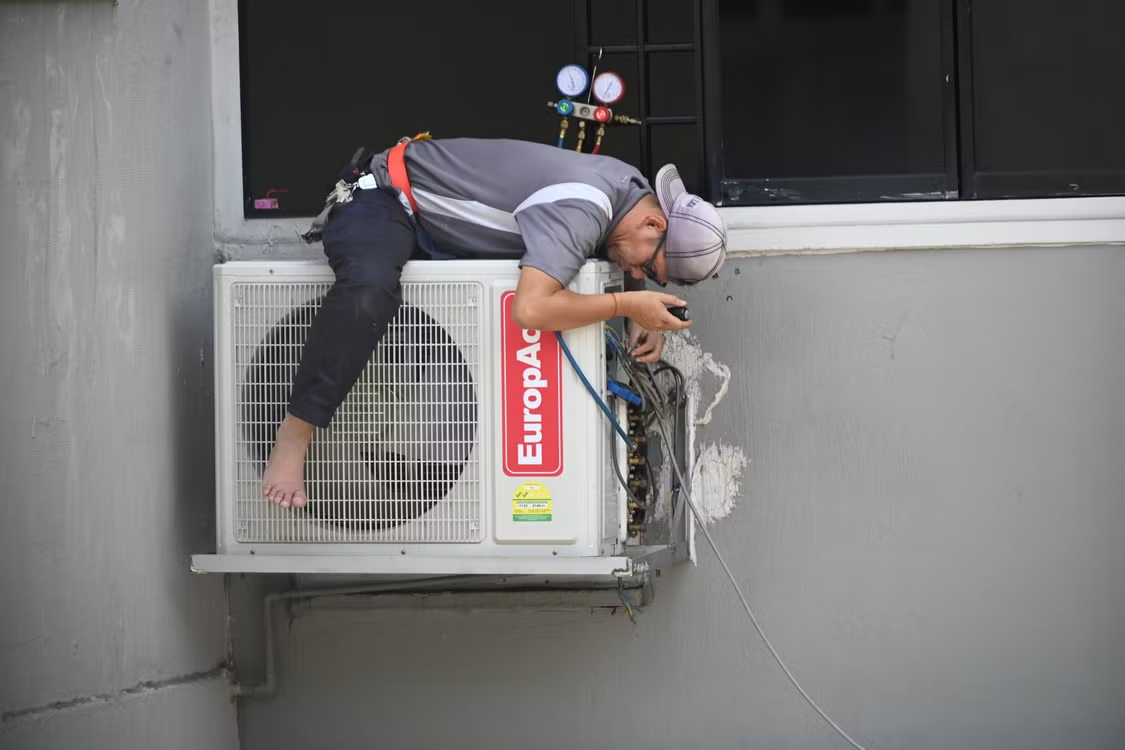
Nothing ruins a hot summer day quite like an air conditioner that suddenly quits.
Your house is comfortable and cool one minute. Then it suddenly gets hot, muggy and your vents stop blowing. Sound familiar?
Believe it or not, it’s quite common. Actually, 70% of homeowners experience an HVAC emergency during peak seasons — when they need their system running more than any other time.
Here’s the thing:
Emergency AC repair isn’t simply inconvenient. It can put your children, elderly relatives and pets in danger. If your home suddenly becomes hot on a 95 degree afternoon, it pays to know how to act in an emergency heat pump repair situation. That’s where the expert technicians at emergency AC repair in Indianapolis come in. They will save you time, money and lots of headaches.
Let’s jump in…
Here’s what’s inside:
- Spotting An AC Breakdown Before It Gets Worse
- First Steps To Take When Your AC Quits
- When To Call An Emergency Heat Pump Repair Pro
- How To Avoid Another Surprise Breakdown
Spotting An AC Breakdown Before It Gets Worse
The majority of AC failures give you advanced warning days (sometimes weeks) before they occur. The issue is that most people don’t listen.
Watch out for these red flags:
- Warm air blowing from the vents
- Strange noises like banging, hissing, or grinding
- A sudden spike in your energy bill
- Water pooling around the indoor unit
- Weak airflow even on the highest setting
By detecting these warning signs early, you can save yourself a lot of time and money down the road. Roughly 40% of HVAC emergencies begin with thermostat issues – something you can diagnose and repair before the system completely breaks down.
Leaks, small problems and funny humming noises can turn into emergencies if not addressed. Preventative maintenance visit NOW rather than an emergency service call during a 95 degree afternoon.
First Steps To Take When Your AC Quits
So your AC has officially stopped working. Now what?
Take a breath. There are a few things you can check before picking up the phone. Most common issues require less than 10 minutes to diagnose — and that might be all that’s needed to restore cool comfort.
Oh and btw…most people don’t bother with any of these things and just pick up the phone. Resist the urge. You’ll avoid a service charge by waiting.
Check Your Thermostat First
Yeah, sounds silly but it’s NUMBER ONE! Check your thermostat. Is it set to “Cool” and is the temperature setting lower than the room temperature?
If the screen is blank or dim, replace the batteries. It will amaze you how many times a $3 battery job saves a $300 service call.
Look At Your Circuit Breaker
Go to your circuit breaker and locate one labelled “AC”, “HVAC”, or “Furnace”. If it has tripped, turn it off and then back on.
Inspect Your Air Filter
Blocked filter is the number one cause of sudden stops. If it looks grey, dusty or furry — change it.
Clear The Outdoor Unit
Go outside and inspect the condenser. Leaves, grass, and debris can clog airflow causing your system to shut off as a protective measure.
Pretty simple, right?
If none of these work, it’s time to bring in a pro.
When To Call An Emergency Heat Pump Repair Pro
The reality is – not all AC problems require an emergency call after hours. However, some do.
An honest-to-goodness emergency heat pump repair is required when your heat pump stops working and threatens your family’s safety. Industry statistics show that over 60% of HVAC emergencies occur during peak season.
You need an emergency call if you notice:
- Indoor temperatures climbing above 95°F
- A burning smell coming from the unit
- Smoke or sparks near the system
- Water leaking near electrical components
- Strange gas-like odours in the air
Do you have infants, elders, or patients with cardiac/pulmonary conditions in your home? Act now. Heat can pose serious health risks to these sensitive populations.
Extreme heat is the number one weather-related killer in America. During 2022, 1,714 US deaths were tied to heat-related causes — and yearly deaths have been increasing.
Here’s why this matters:
Summers in Indianapolis are not cooling off. Indiana can expect a 5 to 6 degree increase in average annual temperatures by 2050. This means more days above 95° F, added stress to AC units, and increased emergency failures throughout the state.
When you require immediate assistance, select a around the clock emergency heat pump repair company. They will have the necessary parts, tools and expertise to correct the issue same call.
How To Avoid Another Surprise Breakdown
The best emergency is the one that never happens.
Okay, here’s the thing. The thought might cross your mind that paying for maintenance feels pointless if everything is already working. That’s fair… but homeowners who schedule maintenance are 50% LESS likely to experience an unexpected breakdown.
With proper maintenance, you can expect an AC unit to last 15-20 years. Without? Usually half that. And if your system completely wears out, you can spend $4,500 to $12,500 on replacement, depending on your region.
Maintaining your air conditioner is similar to taking your car in for service. You wouldn’t run 50,000 miles on your car without changing the oil, would you? Give your AC the care it needs.
To keep your system healthy:
- Schedule a tune-up twice a year (spring and fall)
- Replace your air filter every 1-3 months
- Keep the outdoor condenser clear of debris
- Listen for strange noises and act fast
- Watch your energy bills for unusual spikes
Emergency service calls during prime summer months can run you 50-100% more than standard service calls. That is something you could save by preventing the issue.
Bonus tip: Enroll in a maintenance plan through a local HVAC company. Customers in these programs experience 73% fewer emergency service calls than individuals who forego service.
Bringing It All Home
Few things are more frustrating than an unplanned AC failure. But of course, when your AC goes out, it’s almost never at a convenient time.
The key is knowing what to do before, during, and after. To quickly recap:
- Watch for early warning signs
- Try simple fixes before calling a pro
- Don’t wait when temperatures get unsafe
- Invest in regular maintenance to avoid future surprises
A little prevention can go a long way. Stay cool. Stay safe. Listen to (and watch) your system BEFORE it goes from cool to broke.