
Jesus Statue White House: The Viral Trend vs. The Real $4.5M Wonder of the World
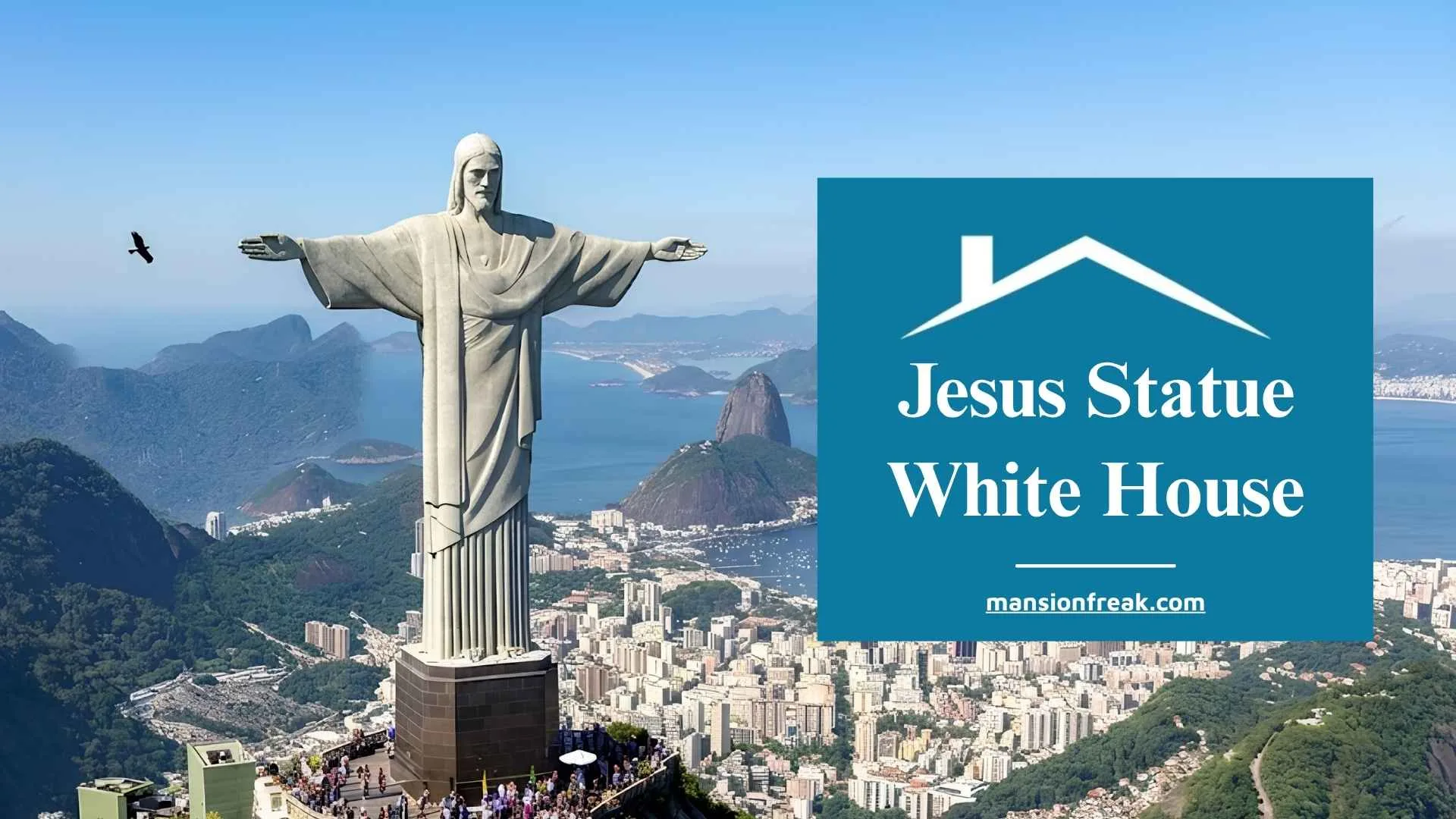
Few images in recent internet history have stirred as much wonder, debate, and confusion as the viral videos appearing to show a towering Jesus statue standing on the White House lawn. Whether you stumbled across these clips on TikTok, X (formerly Twitter), or Facebook, the question quickly became: is there really a Jesus statue White House?
The answer is a fascinating blend of fact-checking, digital deception, and the remarkable real story of the world’s most iconic statue of Christ — standing tall not in Washington D.C., but atop a dramatic mountain in Rio de Janeiro, Brazil.
For more iconic landmarks and celebrity properties, explore everything at MansionFreak, where history, architecture, and cultural legacy come alive. Let’s set the record straight and take a full journey into the story behind the most famous Jesus statue on earth.
Christ the Redeemer — Quick Overview
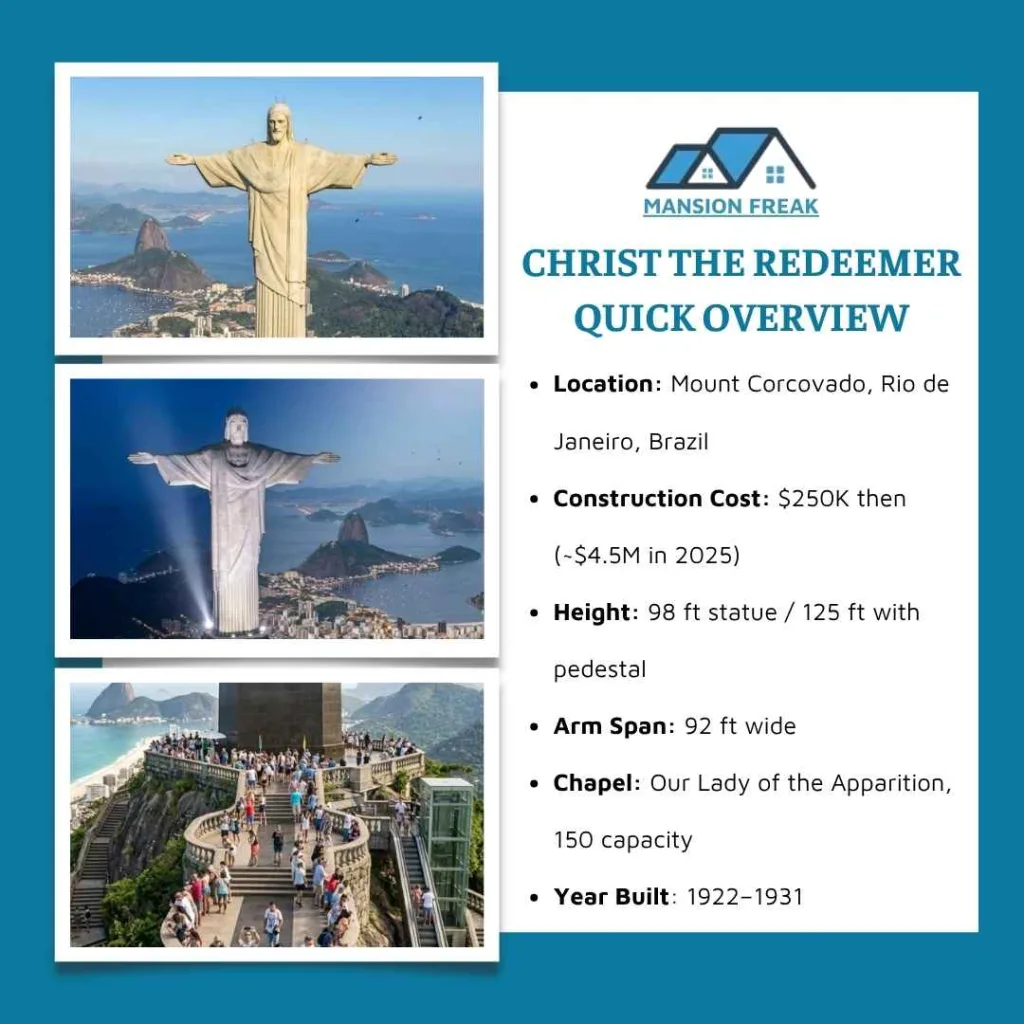
| Property Detail | Information |
| 📍 Location | Peak of Mount Corcovado, Tijuca National Park, Rio de Janeiro, Brazil |
| 💰 Construction Cost | USD $250,000 at the time (approx. $4.5 million in 2025) |
| 🏠 Statue Height | 30 meters (98 ft) tall — 38 meters (125 ft) including pedestal |
| 🌳 Arm Span | 28 meters (92 ft) wide, fingertip to fingertip |
| 🛕 Interior / Chapel | Chapel of Our Lady of the Apparition; capacity for 150 worshippers |
| 🏗️ Year Built / Inaugurated | Construction: 1922–1931; Dedicated: October 12, 1931 |
| 🎯 Key Highlights | One of the New Seven Wonders of the World, 6 million soapstone tiles, 2+ million visitors annually, panoramic observation deck, lightning rod system |
Christ the Redeemer Statue: Location
- Exact Address: Parque Nacional da Tijuca, Alto da Boa Vista, Rio de Janeiro – RJ, 20531-590, Brazil
- Neighborhood: Tijuca National Park — the largest urban national park in the world.
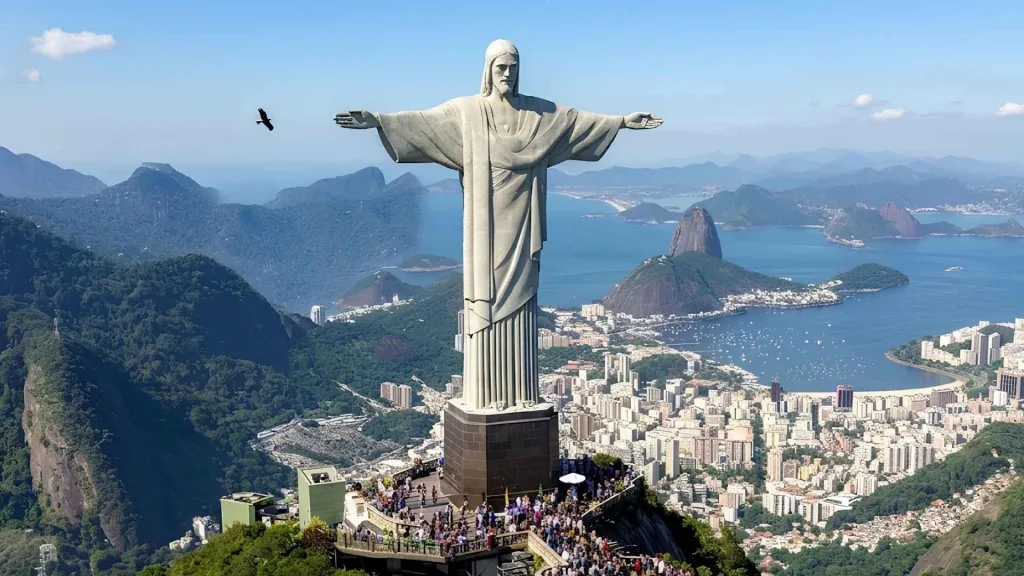
The statue sits atop the 710-meter Corcovado Mountain, providing sweeping views across the entire city of Rio de Janeiro, including Sugarloaf Mountain, Copacabana Beach, Ipanema, and Guanabara Bay. The location was deliberately chosen in 1921 by the Roman Catholic Archdiocese of Rio, who believed a monument visible from anywhere in the city would powerfully declare Rio as a city of faith. For visitors, the most popular way to reach it is via the Corcovado cogwheel railway — a scenic 20-minute train ride through the lush Atlantic Forest.
Christ the Redeemer Statue Tour
I arrived at the base of Corcovado Mountain on a warm October morning, the air already thick with anticipation. The cog railway wound upward through walls of green, the city dropping away below. When we finally stepped out onto the platform and turned around — there it was.
Nothing prepares you for the sheer scale of Christ the Redeemer in person. The outstretched arms seem to reach beyond the mountain itself, as if the statue is trying to hold the entire city in an embrace. I stood there longer than I planned. Much longer.
Christ the Redeemer: A Feature-by-Feature Tour
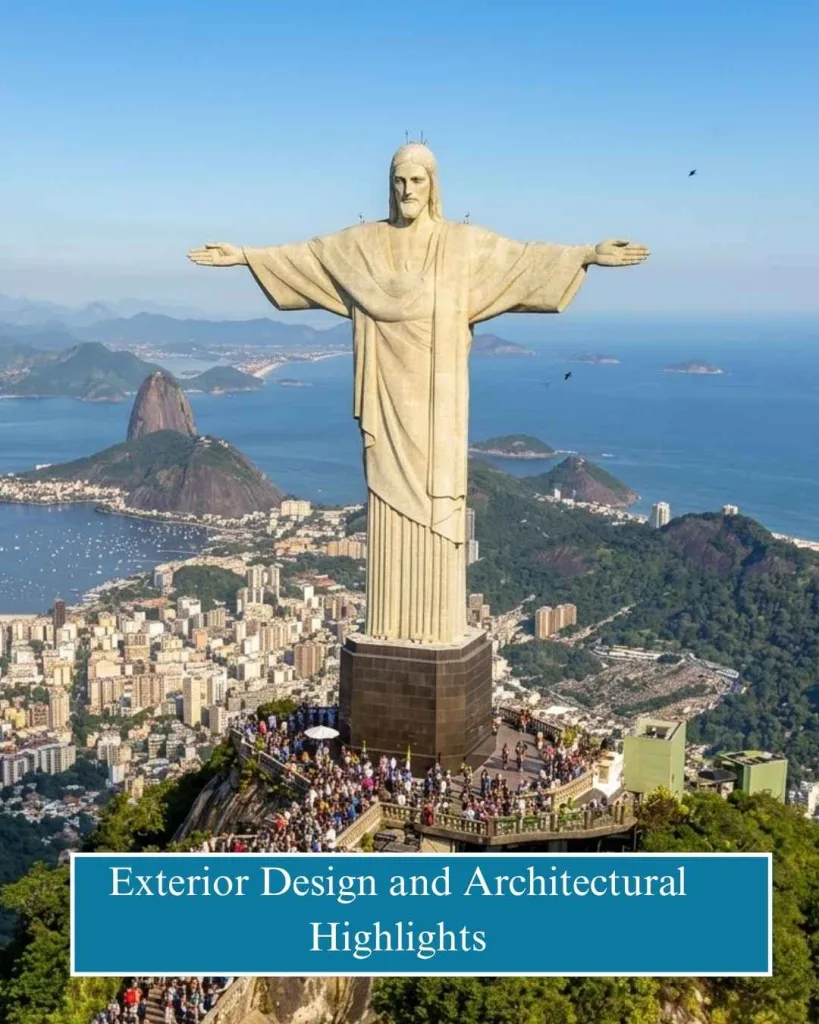
Exterior Design and Architectural Highlights
Christ the Redeemer is the largest Art Deco sculpture in the world. Made of reinforced concrete and clad in approximately six million small triangular soapstone tiles sourced from Minas Gerais, its pale cream-white tone glows against the deep green rainforest. The statue faces east, arms outstretched in a universal gesture of peace and welcome, equipped with lightning rods due to its exposed mountaintop position.
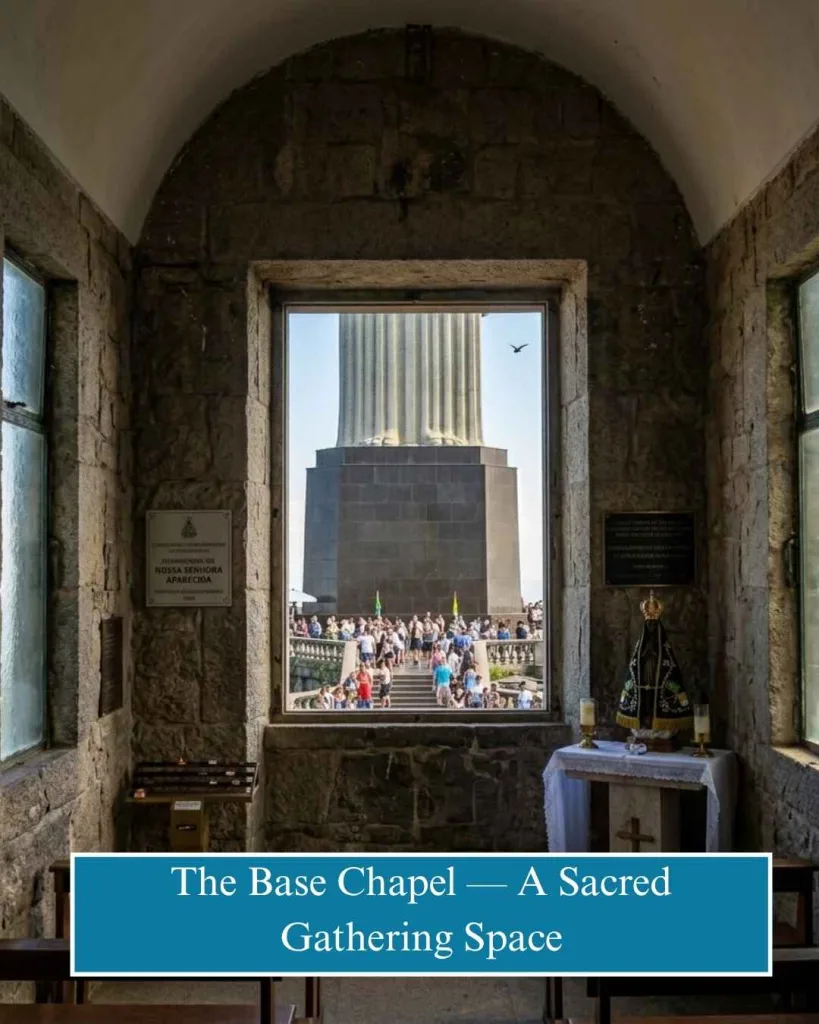
The Base Chapel — A Sacred Gathering Space
Tucked beneath Christ’s feet is one of Brazil’s most intimate spiritual spaces. Consecrated in October 2006 on the statue’s 75th anniversary, the Chapel of Our Lady of the Apparition holds up to 150 worshippers and hosts Catholic baptisms and weddings. Natural light filters through small windows, and the stone walls carry the quiet weight of decades of faith — more moving, for many visitors, than the statue itself.
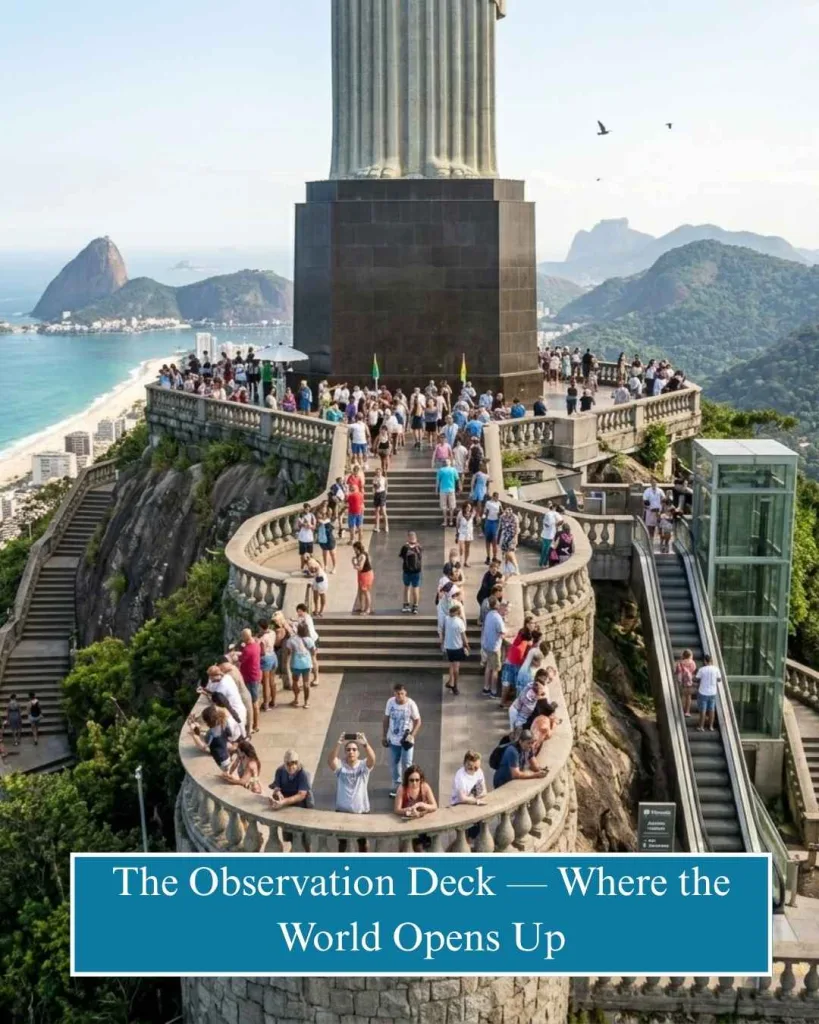
The Observation Deck — Where the World Opens Up
The wide observation platform surrounding the statue’s base delivers a full 360-degree panorama of Rio de Janeiro. Visitors access it via escalators and elevators, bypassing over 200 steps. From this deck, the curving shoreline of Copacabana, the rounded silhouette of Sugarloaf Mountain, the turquoise waters of the bay, and the dense Atlantic Forest unfold in every direction. Every angle offers a postcard-perfect vista.
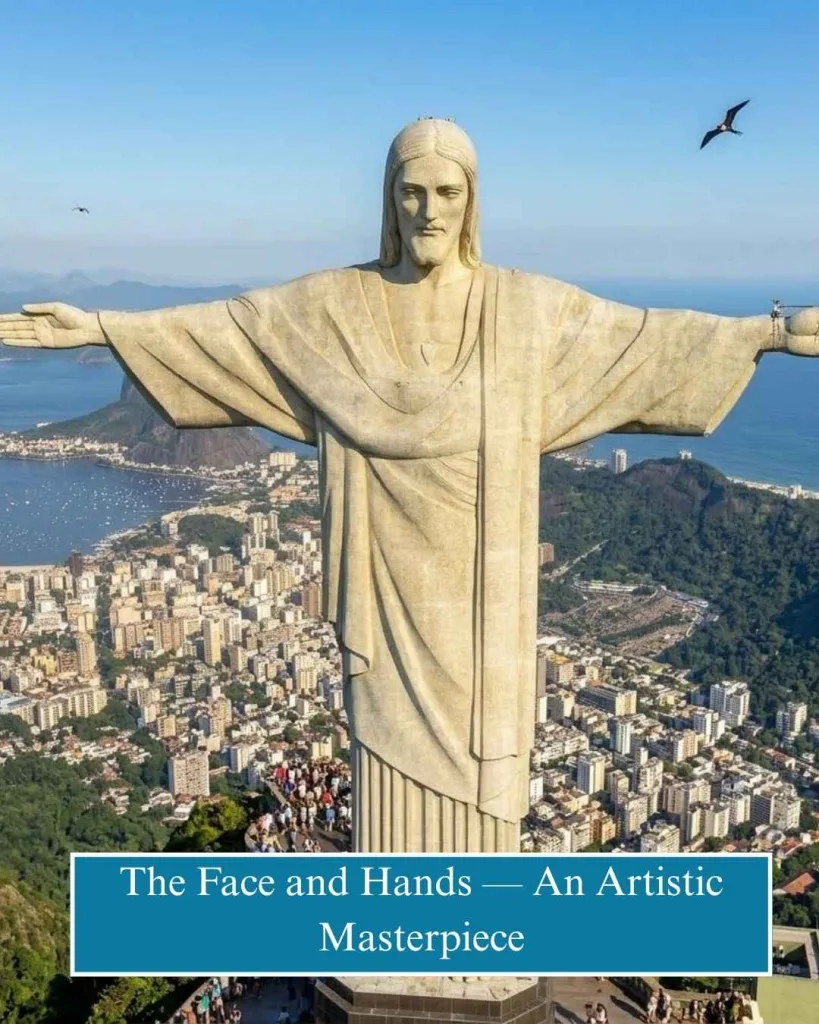
The Face and Hands — An Artistic Masterpiece
The serene, downward-gazing face was designed by Romanian sculptor Gheorghe Leonida, while the overall Art Deco form was created by French-Polish sculptor Paul Landowski. Christ’s open arms stretch nearly 92 feet wide, and each hand is roughly as long as three men standing together. The scale only fully registers when standing directly beneath the outstretched arms — a moment virtually every visitor describes as deeply humbling.
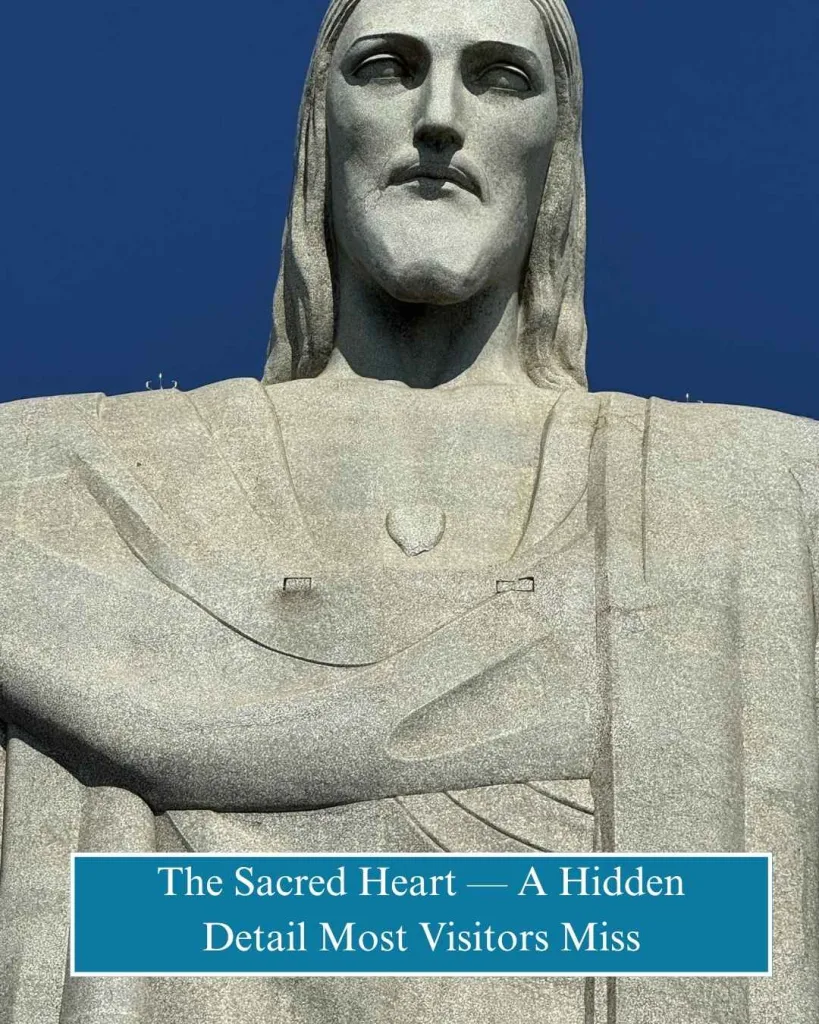
The Sacred Heart — A Hidden Detail Most Visitors Miss
Located just above the mantle, Christ the Redeemer features a small, discreet Sacred Heart of Jesus measuring 1.30 meters — the only detail sculpted directly into the monument’s structure. Easy to overlook from the platform below, it represents the spiritual intention behind every centimeter of the statue: the love of Christ extended over all of Rio.
The Soapstone Skin — Crafted by the Women of Rio
Perhaps the most overlooked story in the statue’s construction is the role of the women of Rio de Janeiro. The mosaic coating of small triangular soapstone pieces was assembled by their hands — and as they worked, many women wrote the names of their loved ones on the individual tiles before they were set. Those names remain sealed into the statue’s skin today, transforming an engineering achievement into a deeply communal act of faith.
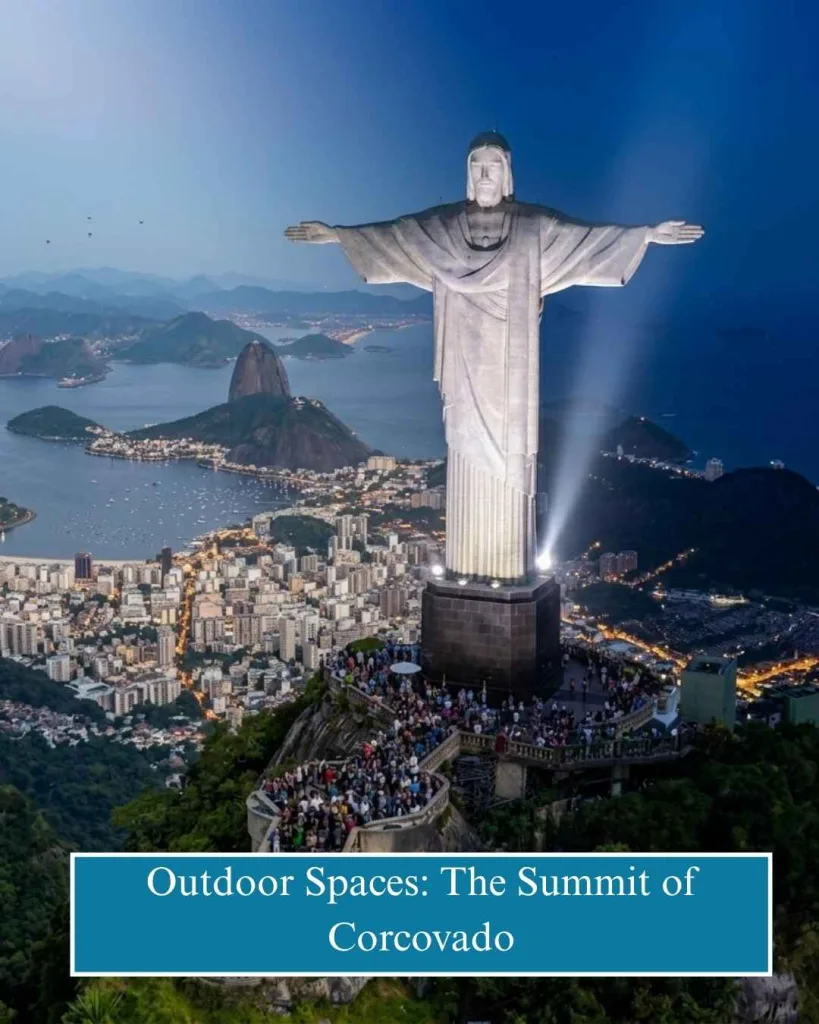
Outdoor Spaces: The Summit of Corcovado
The outdoor environment surrounding Christ the Redeemer is as dramatic as the statue itself. The upper section of Mount Corcovado, at 710 meters above sea level, serves as the statue’s permanent grounds. The surrounding Tijuca National Park — a dense Atlantic rainforest — provides remarkable natural contrast to the gleaming white figure. On clear days, visibility extends far out to sea. At night, the statue is dramatically illuminated, visible from vast distances across the city and the bay.
Jesus Statue White House Viral Videos — Full Fact Check
In February 2025, millions of people across TikTok, X, Facebook, and Instagram encountered videos claiming to show a massive 200-foot statue of Jesus Christ being erected on the White House lawn in Washington D.C. The clips were captioned with phrases suggesting President Donald Trump had ordered the construction as a symbol of Christian America. The videos spread explosively, accumulating millions of views within days.
Multiple fact-checkers, including Snopes, USA Today, and Lead Stories, confirmed the videos were AI-generated:
- AI detection tools flagged both videos as artificially generated.
- Live White House webcams showed no such statue at any point.
- Visual errors in the videos — including incorrect window counts on the building and glitching cranes — pointed clearly to an AI origin.
- The TikTok account responsible, @spectacularsights, had a documented history of creating fake Jesus imagery at famous locations worldwide, including a giant statue made of burgers and another of Easter eggs.
- A White House spokesperson directly confirmed to fact-checkers that no such statue exists or was planned.
So to answer the question directly: there is no Jesus statue at the White House. There never was. The videos were entirely artificial — creative, provocative, and for millions of viewers, convincing enough to share.
Why AI-Generated Religious Imagery Goes Viral
The Jesus Statue White House trend is part of a broader pattern of AI-generated faith-based content engineered for maximum emotional impact. Understanding why these videos spread so effectively helps cut through future misinformation:
- Emotional resonance: Religious imagery triggers strong feelings across both believers and skeptics, making users more likely to share without verifying.
- Political framing: Tying the image to a sitting president gives it an air of credibility and urgency.
- Visual realism: Modern AI video tools can generate convincing construction scenes that look plausible at first glance.
- Platform algorithms: High-engagement content, regardless of accuracy, gets amplified rapidly on TikTok and X.
Accounts like @spectacularsights use this formula repeatedly — placing Jesus imagery at globally recognizable sites to manufacture viral moments. Keen observers of similar viral trends will recognize this same playbook used across other celebrity and landmark stories covered at MansionFreak’s celebrity homes section.
Where Does the Jesus Statue Actually Live?
The most iconic and universally recognized Jesus statue in the world lives on top of Mount Corcovado in Rio de Janeiro, Brazil. Known as Cristo Redentor in Portuguese, Christ the Redeemer has stood at that mountaintop since October 12, 1931 — watching over the city through wars, festivals, political upheaval, the Olympics, and now the age of viral AI content.
More than 2 million visitors travel to this architectural wonder each year, making it one of Rio’s top tourist attractions. It is owned and maintained by the Archdiocese of Rio de Janeiro and recognized as both a UNESCO-protected site and a New Seven Wonders of the World landmark since 2007.
Just as remarkable landmark stories like the Erik Spoelstra home and the historically significant Erwin Rommel home reveal the places that shaped their subjects, Christ the Redeemer reveals the faith and ambition of an entire nation — built not by one person but by thousands.
The History Behind the Construction of Christ the Redeemer
The story of how Christ the Redeemer came to be is as dramatic as the statue itself:
- 1889: Brazil transitions from monarchy to republic, separating church and state. The Catholic Church loses influence and begins seeking a powerful public symbol.
- 1920: The Roman Catholic Archdiocese of Rio launches a national fundraising campaign called Semana do Monumento (“Monument Week”) to fund a landmark statue.
- 1921: Brazilian engineer Heitor da Silva Costa and artist Carlos Oswald design the now-iconic figure with arms outstretched — chosen over earlier proposals showing Christ carrying a cross or a globe.
- April 4, 1922: The foundation stone is laid, chosen to mark the centennial of Brazil’s independence from Portugal.
- 1922–1931: French-Polish sculptor Paul Landowski sculpts the figure in clay sections in Paris, which are shipped to Brazil. Brazilian and French engineers reconstruct the statue in reinforced concrete on-site.
- October 12, 1931: Christ the Redeemer is officially inaugurated atop Mount Corcovado.
Christ the Redeemer: Cost and Cultural Value
The statue’s financial story is as fascinating as its physical one. Construction cost the equivalent of US$250,000 at the time — roughly $4.5 million in today’s terms — funded almost entirely by donations from Brazilian Catholics. Today the statue generates significant tourism revenue for Rio, while annual maintenance costs exceed one million dollars.
The exterior soapstone requires regular replacement, lightning damage must be repaired each year, and the elevators and access infrastructure demand constant upkeep. As a cultural asset, it is effectively priceless — a UNESCO World Heritage Site and global symbol of faith that no commercial valuation can adequately capture.
Who Owns Christ the Redeemer?
The Christ the Redeemer statue is owned by the Archdiocese of Rio de Janeiro. It is officially a religious monument and a protected cultural heritage site under both Brazilian law and UNESCO designation. The Archdiocese oversees all maintenance, access, and religious activities at the site, including the chapel at the statue’s base where Catholic weddings and baptisms are regularly performed. While Mount Corcovado sits within Tijuca National Park — a federal entity — the statue and its immediate surroundings fall under the jurisdiction of the Catholic Church in Brazil.
Is Christ the Redeemer for Sale?
No. The Christ the Redeemer statue is not for sale and cannot be sold. As a protected UNESCO World Heritage Site and one of the New Seven Wonders of the World, it is classified as an irreplaceable cultural and religious landmark. Brazilian law protects it from any commercialization or transfer of ownership. While the site generates tourism income and sponsors fund certain restoration projects, the statue belongs — in every real sense — to Brazil and to the world.
Conclusion
The story of the Jesus statue White House trend is ultimately a story about how powerful imagery — real or artificial — can travel the globe in hours. The real Jesus statue, Christ the Redeemer, has stood on the summit of Mount Corcovado in Rio de Janeiro since 1931, watching over one of the most beautiful cities on earth with open arms and a face of perfect calm.
No AI-generated video, no viral social media trend, and no political narrative can replicate what that mountaintop holds. When people search for the Jesus statue White House and find the truth, they discover something far more extraordinary than any fabricated clip: a genuine wonder of the world, built by thousands of ordinary people who believed something beautiful could outlast them all.
Frequently Asked Questions
Where does the Jesus statue live?
The most famous Jesus statue in the world — Christ the Redeemer, or Cristo Redentor — lives on the summit of Mount Corcovado in Rio de Janeiro, Brazil, at 710 meters above sea level.
Is there really a Jesus statue at the White House?
No. The Jesus statue White House videos that went viral in early 2025 were confirmed by multiple fact-checkers including Snopes, USA Today, and Lead Stories to be entirely AI-generated. No such statue exists or has ever been constructed at 1600 Pennsylvania Avenue.
Who built the Christ the Redeemer statue?
The statue was designed by Brazilian engineer Heitor da Silva Costa and artist Carlos Oswald, sculpted by French-Polish sculptor Paul Landowski, with the face created by Romanian sculptor Gheorghe Leonida. It was inaugurated on October 12, 1931.
How tall is the Christ the Redeemer statue?
The statue stands 30 meters (98 feet) tall, with its pedestal adding another 8 meters (26 feet), for a total height of 38 meters (125 feet). Its outstretched arms span 28 meters (92 feet) from fingertip to fingertip.