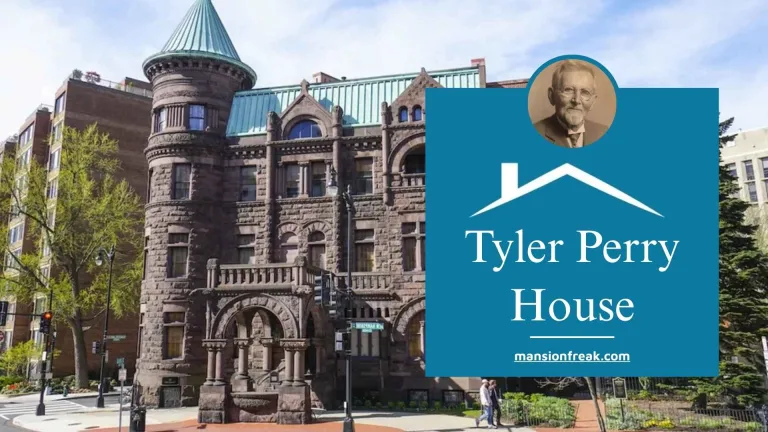
Erwin Rommel Home: Inside the Historic Villa in Herrlingen
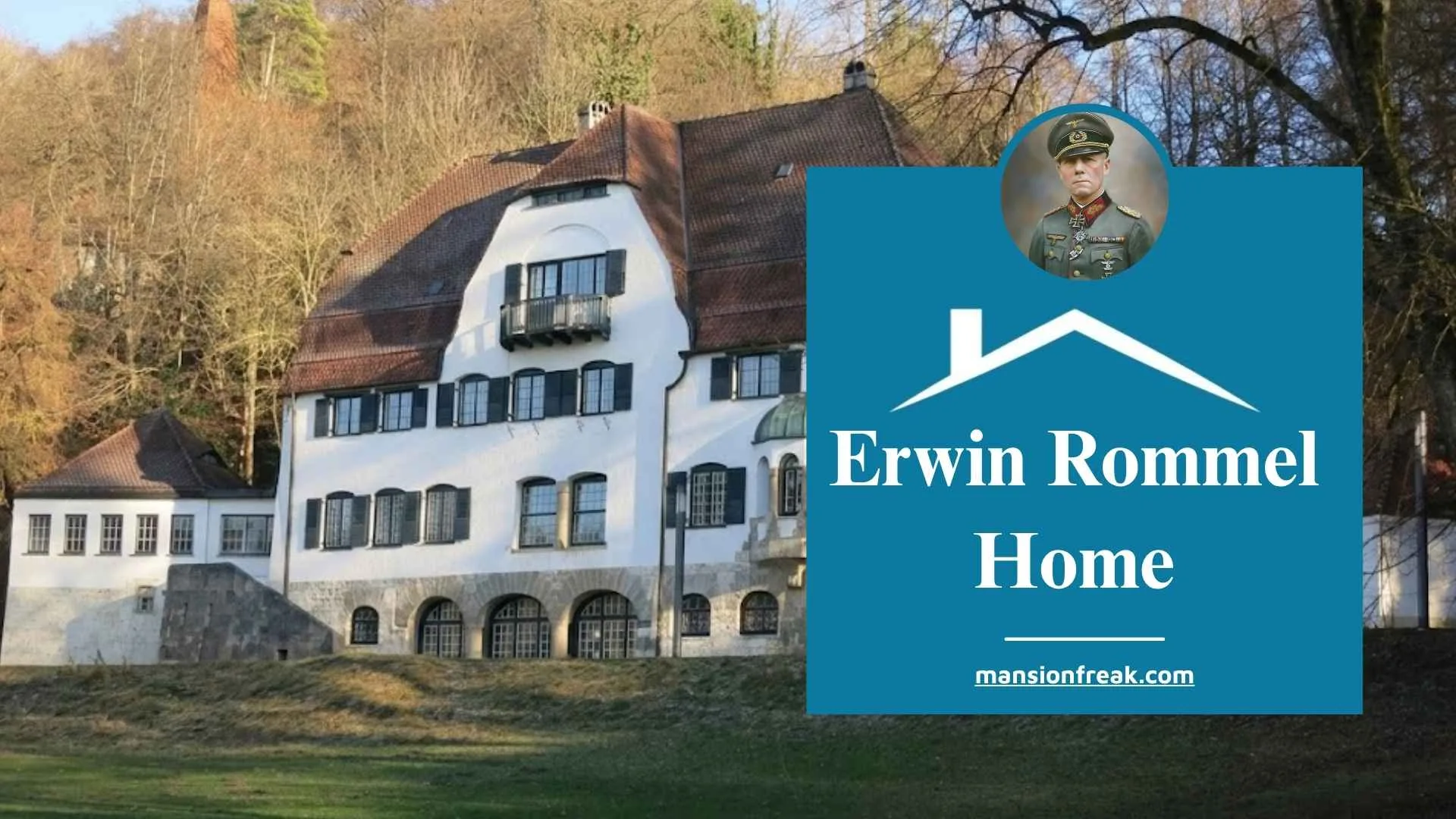
Erwin Rommel’s journey from a schoolmaster’s household in Heidenheim to the rank of Field Marshal is one of the most dramatic military stories of the twentieth century, and that story is vividly told through the homes he occupied. From a modest family residence in southern Germany’s Kingdom of Württemberg to the quiet Villa Lindenhof in Herrlingen, each property reflects a distinct chapter of a life defined by brilliance, loyalty, and ultimately, tragedy.
The Erwin Rommel home in Herrlingen stands today as perhaps the most historically charged private residence of World War II Germany, a place where personal fate and global conflict converged on a single October afternoon in 1944. For anyone fascinated by the intersections of military history and the places that shaped it, MansionFreak offers deep explorations into iconic residences connected to history’s most consequential figures.
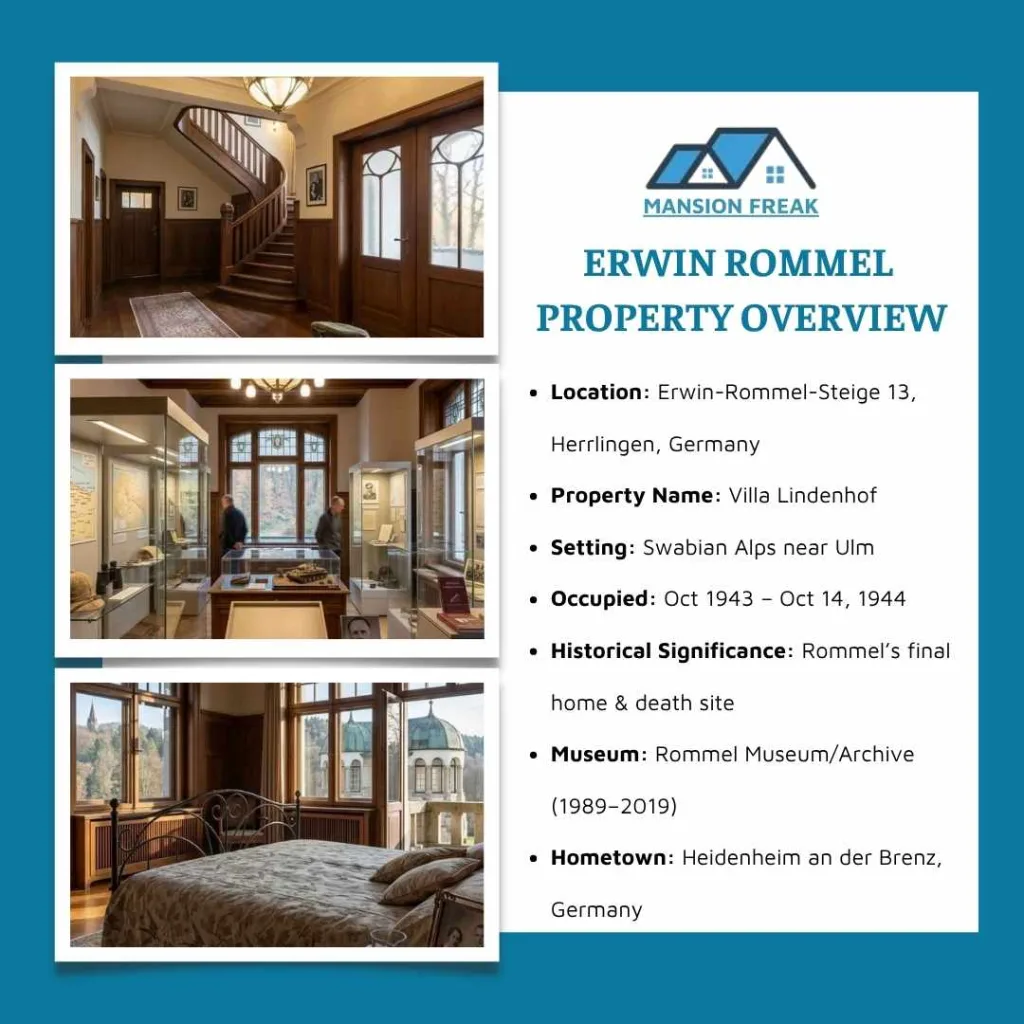
Erwin Rommel Home, Herrlingen: Key Property Details
| Property Detail | Information |
| 📍 Primary Location (Herrlingen) | Erwin-Rommel-Steige 13 (formerly Wippinger Steige 13), Herrlingen, Blaustein, Baden-Württemberg, Germany |
| 🏠 Property Name | Villa Lindenhof |
| 🌳 Setting | Quiet residential village in the Swabian Alps, near the city of Ulm |
| 🏗️ Occupied | October 1943 – October 14, 1944 |
| 🛏️ Style | Traditional German upper-middle-class villa; solid facade, sloped roof, spacious rooms, surrounding garden |
| 🎯 Historical Significance | Final home of Field Marshal Erwin Rommel; site of his forced suicide on October 14, 1944 |
| 🏛️ Museum | Rommel Museum/Archive operated in the villa from 1989 to May 2019 |
| 📍 Hometown | Heidenheim an der Brenz, Baden-Württemberg, Germany (birthplace, November 15, 1891) |
Erwin Rommel Home, Herrlingen: Location & Map
Exact Address: Erwin-Rommel-Steige 13 (originally Wippinger Steige 13), Herrlingen, Blaustein, 89134 Baden-Württemberg, Germany.
Neighborhood: Herrlingen sits approximately 6 kilometres west of Ulm in a rugged, hilly region of the Swabian Alps. The village is accessible by a short train ride from Ulm, with its own small railway station. For anyone consulting a Herrlingen Germany map, the village lies nestled in the Blautal valley, surrounded by the elevated plateau of the Swabian Jura. The drive into Herrlingen from Ulm takes the visitor through open agricultural land and forested hills — a landscape that communicated privacy and seclusion to anyone seeking refuge from the political turmoil of wartime Berlin.
Erwin Rommel Known For: The Desert Fox and His Military Legacy
Rommel is best known as the commander of the Afrika Korps in North Africa (1941–1943), earning the nickname “the Desert Fox” for his armoured warfare tactics in the desert. Even Winston Churchill praised him before the British Parliament.
His Wider Military Record
Beyond North Africa, Rommel led the 7th Panzer Division during the Fall of France in 1940 and later commanded Army Group B defending the Atlantic Wall at the time of the D-Day landings. He earned Germany’s highest First World War decoration, the Pour le Mérite, for his actions in France, Romania, and Italy. He remains one of the most studied commanders of the twentieth century. For similar explorations of historically significant celebrity and public figure homes, see the full collection at MansionFreak Celebrity Homes.
Erwin Rommel House Herrlingen: A Room-by-Room Portrait
The Erwin Rommel house Herrlingen — Villa Lindenhof — is a traditional Art Nouveau (Jugendstil) manor built in the early twentieth century, located at what is now Erwin-Rommel-Steige 13 in Herrlingen (Blaustein), Baden-Württemberg. Designed in 1904 by Munich architect Richard Riemerschmid for industrialist Max Robert Wieland, the villa was built as a comfortable summer residence. Rommel moved his family here in October 1943, seeking privacy and safety from Allied bombing. Every room of this house carries the quiet weight of its final, most famous occupant.
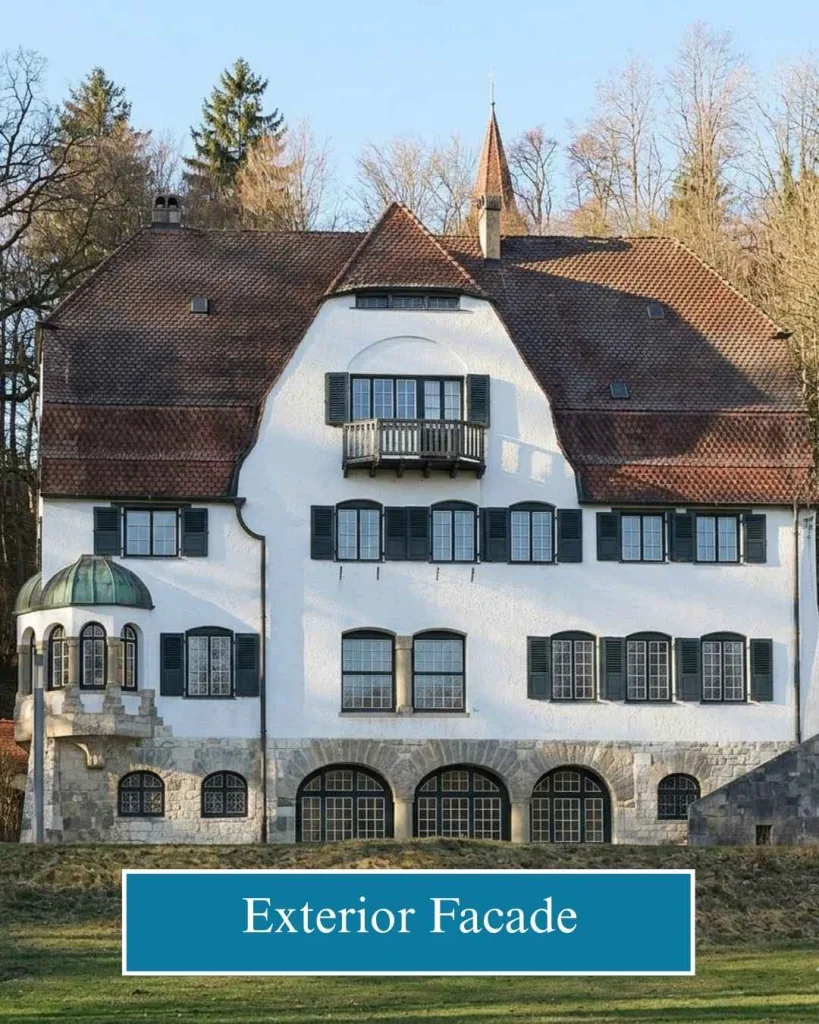
Exterior Facade
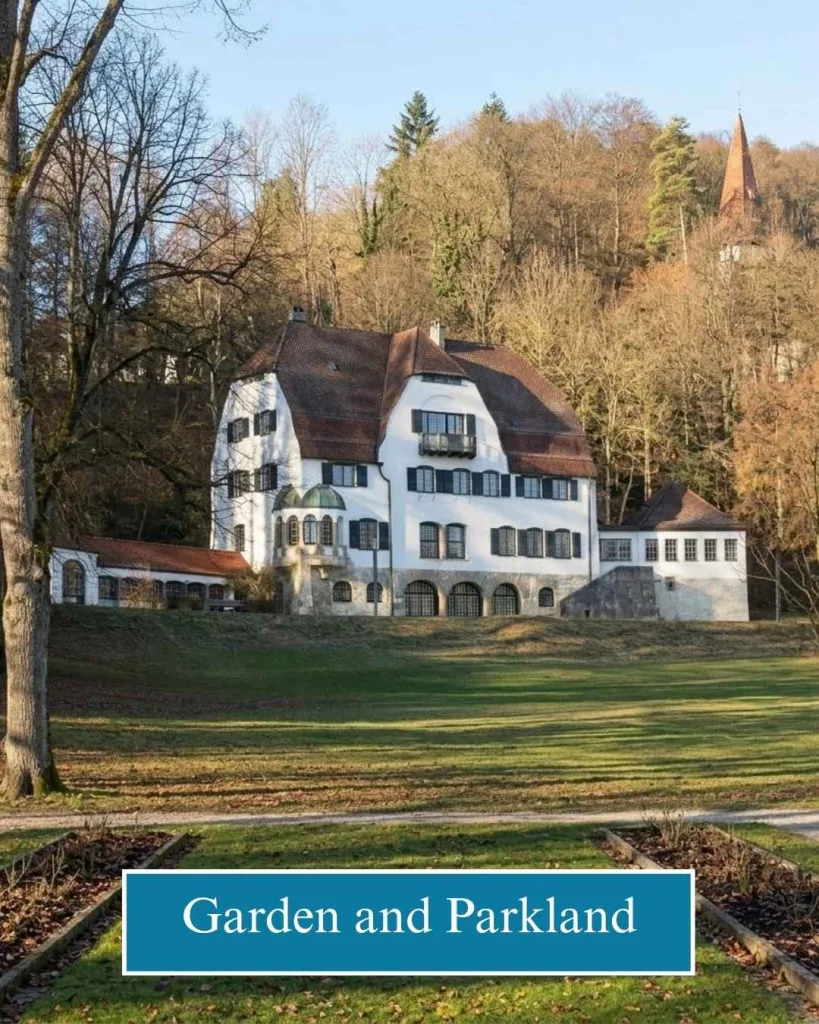
The villa presents a solid, dignified Jugendstil facade — stone-finished walls, a steeply pitched sloped roof, and symmetrical window placement. It was built for a wealthy upper-middle-class family, and its exterior communicates stability rather than ostentation. Rommel chose this house partly because it sat on a public village road, keeping it inconspicuous among ordinary residential surroundings in the Swabian Alps.
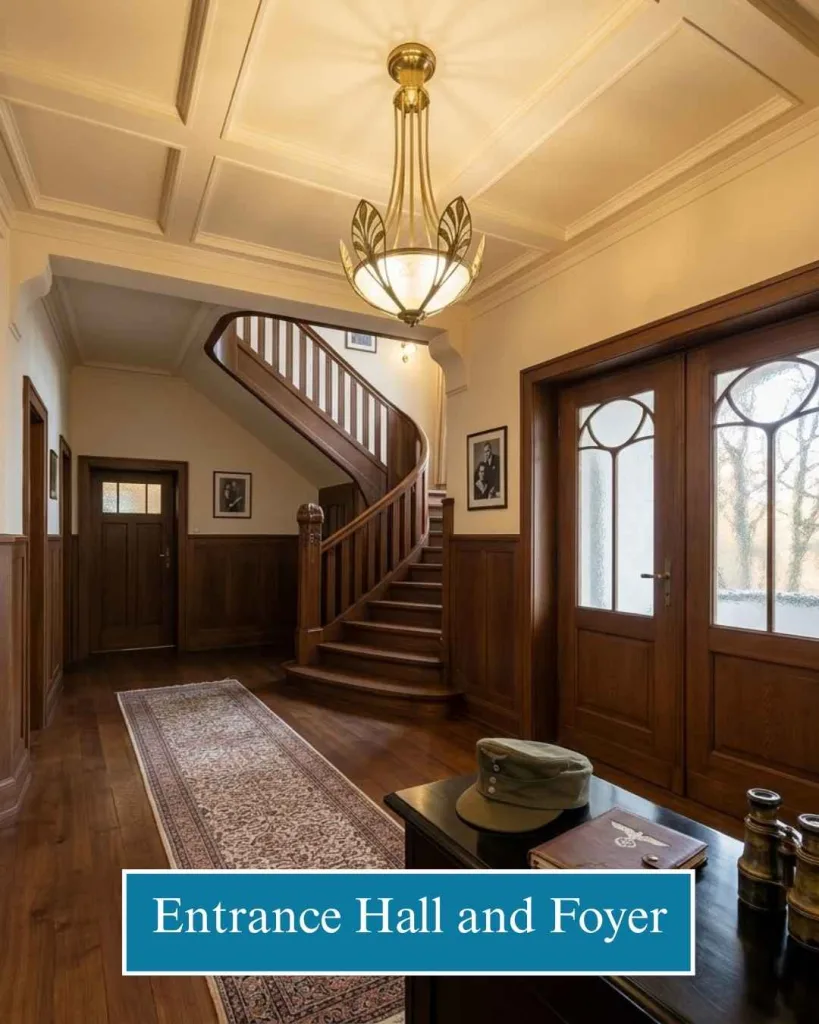
Entrance Hall and Foyer
The entrance hall reflects the villa’s Art Nouveau origins — clean architectural lines, quality woodwork, and high ceilings typical of early-twentieth-century German craftsmanship. As visitors stepped inside, the foyer set a tone of dignified comfort. For Rommel, returning here from field command in France and Africa, this entrance represented the sharpest possible contrast between war and home.
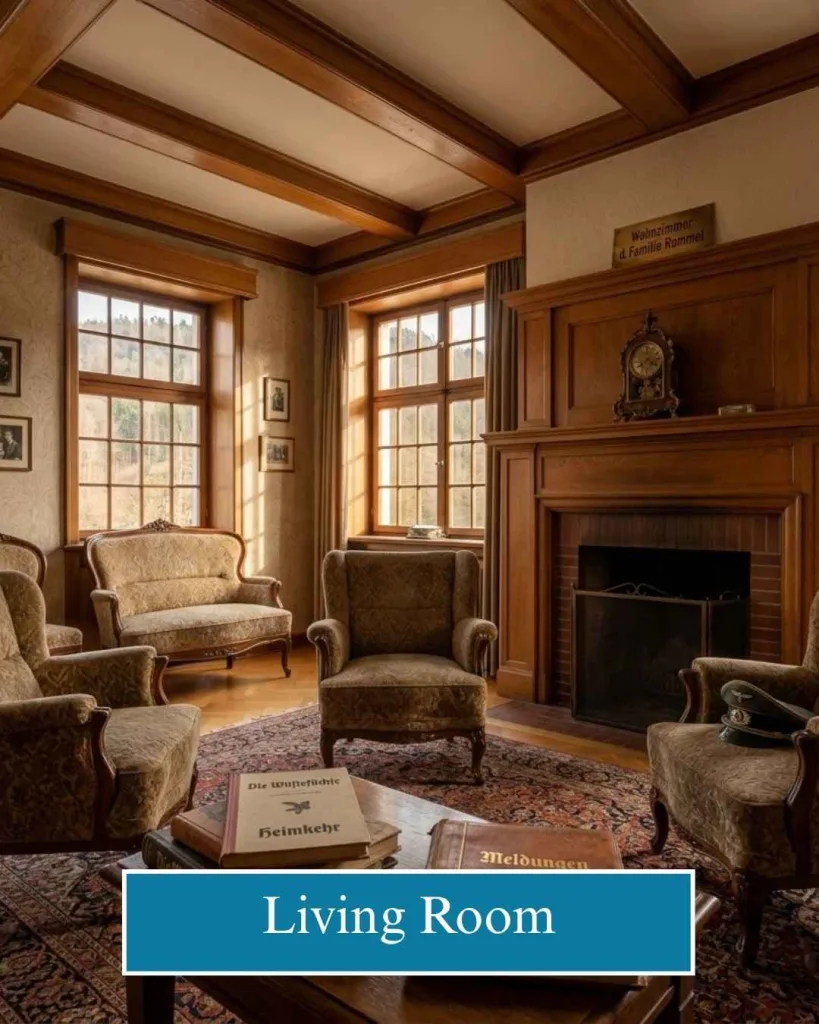
Living Room
The living room served as the family’s central gathering space during Rommel’s convalescence in the summer and autumn of 1944. Designed in the cosy, domestic style of the Jugendstil period, it featured warm interior woodwork and comfortable furnishings. Visitors to the later Rommel Museum described the villa’s living spaces as intimate and warm — more a family retreat than a general’s residence.
Dining Room
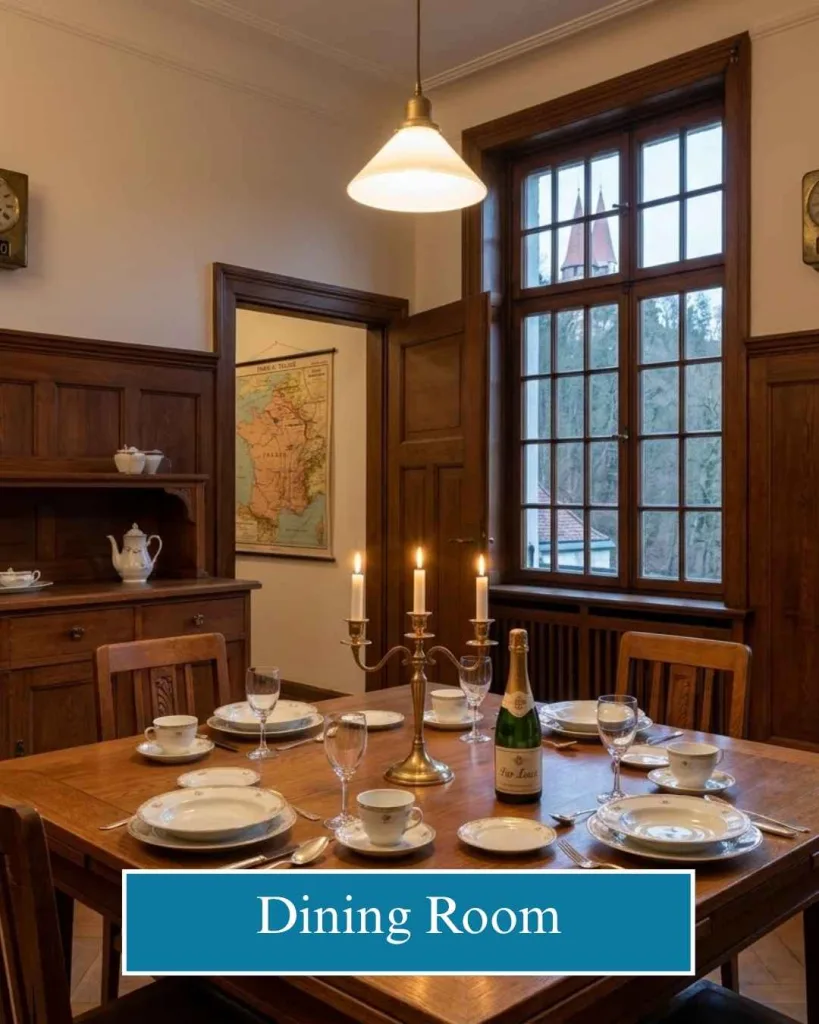
The dining room was where the Rommel family shared meals during the months at Herrlingen — one of the few peaceful routines available amid the political tensions of 1944. On June 5, 1944, the night before D-Day, Rommel had celebrated his wife Lucie’s fiftieth birthday here before being urgently recalled to France. That dinner would prove to be one of the last ordinary moments the family shared.
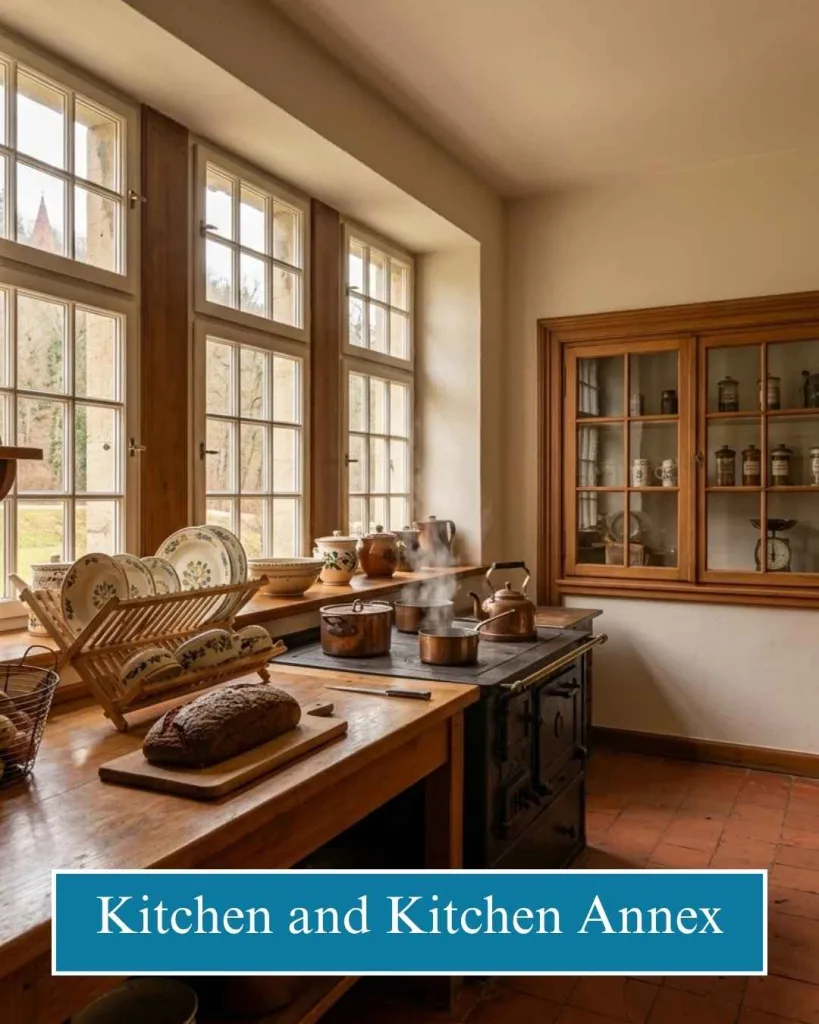
Kitchen and Kitchen Annex
Villa Lindenhof was originally constructed with a dedicated kitchen building attached to the main structure — a feature noted in the original 1904 architectural plans by Richard Riemerschmid. This adjoining kitchen annex was designed to serve a large upper-middle-class household. For the Rommel family, it functioned as a fully operational domestic kitchen, supporting daily life during the fourteen months they lived at the villa.
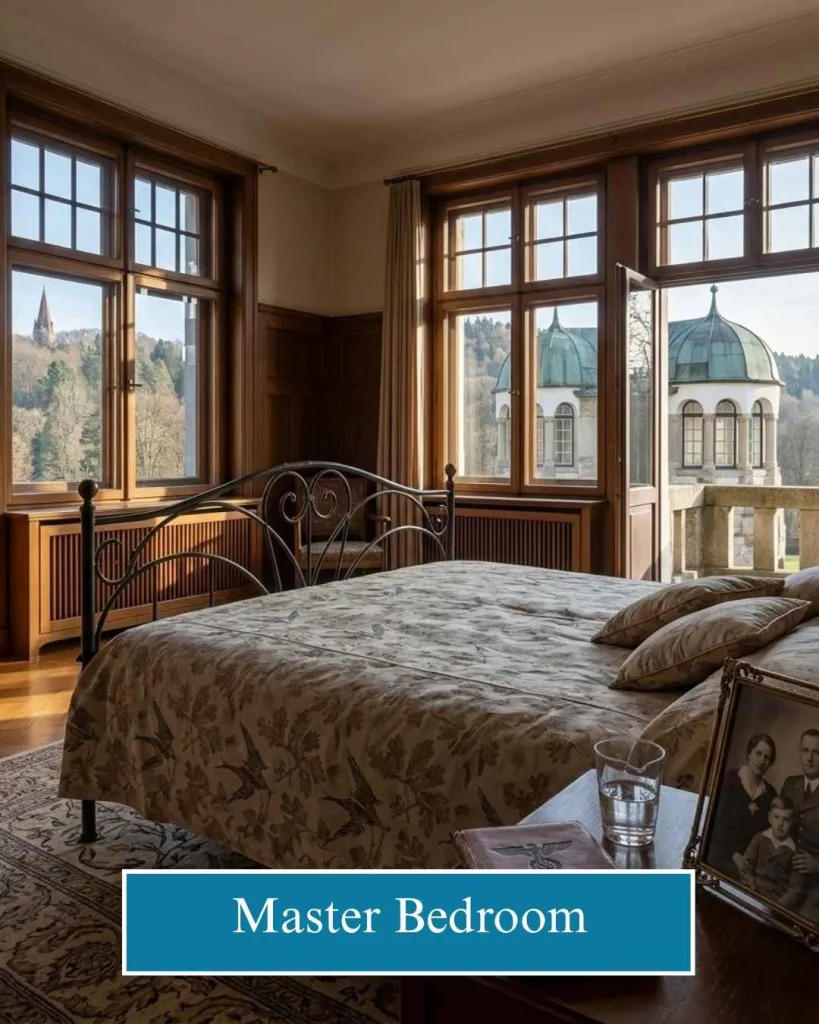
Master Bedroom
The master bedroom was Rommel’s personal retreat during his convalescence following the July 1944 air attack. It was here that he spent weeks recovering from a fractured skull and facial injuries before the fateful October visit. The room overlooked the villa’s peaceful garden and park surroundings — a composed, private space that gave no outward signal of the crisis unfolding around its occupant.
Garden and Parkland
The villa is surrounded by an extensive landscaped park — one of the most distinctive features of the Erwin Rommel home. Mature linden trees, open lawns, and carefully planted grounds create a setting that the original owner commissioned as an aesthetic whole alongside the house. Rommel and his son Manfred took long walks here on the morning of October 14, 1944, in the hours before the generals arrived.
Museum Exhibition Rooms
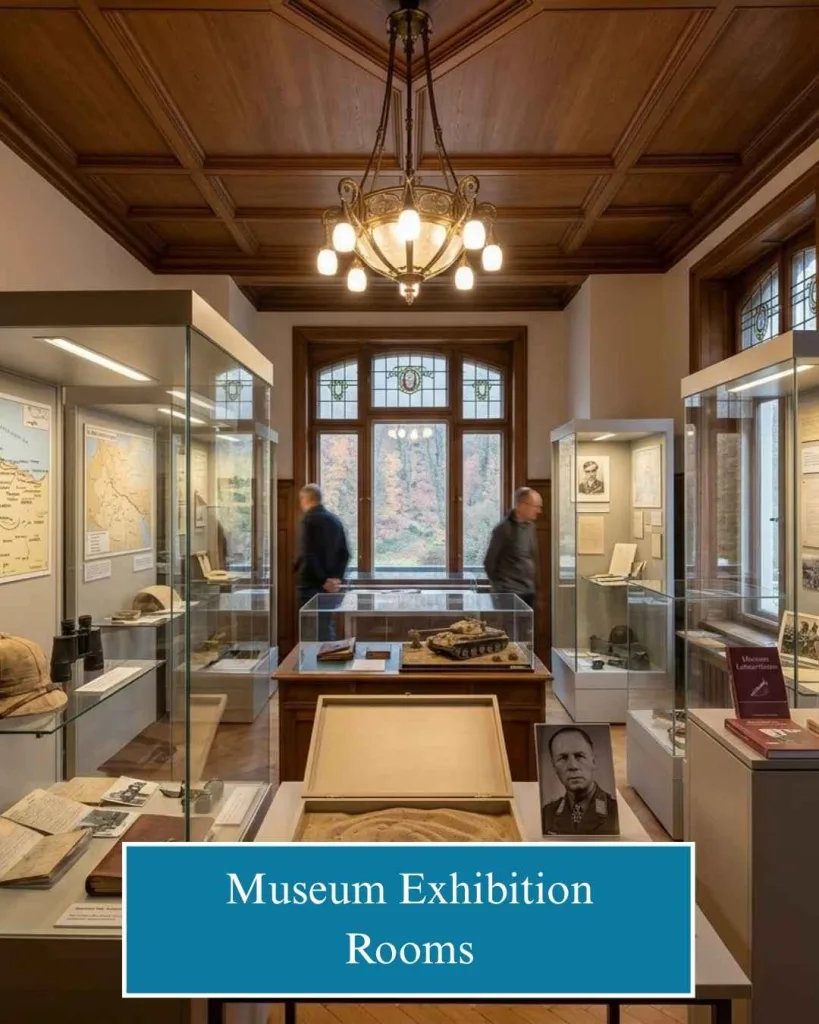
From 1989 to 2019, several rooms of Villa Lindenhof were repurposed as the Rommel Museum and Archive — the only museum in Germany dedicated to a senior German military figure of the Nazi era. Exhibits included documents, maps, photographs, and personal artefacts from the North African Campaign, along with sand brought back by German soldiers from the African theatre. Access was free and arranged through the Herrlingen town hall. Since 2019, the villa has operated as Museum Lebenslinien, covering the broader history of Herrlingen’s notable residents.
The Wedding Room (Trauzimmer)
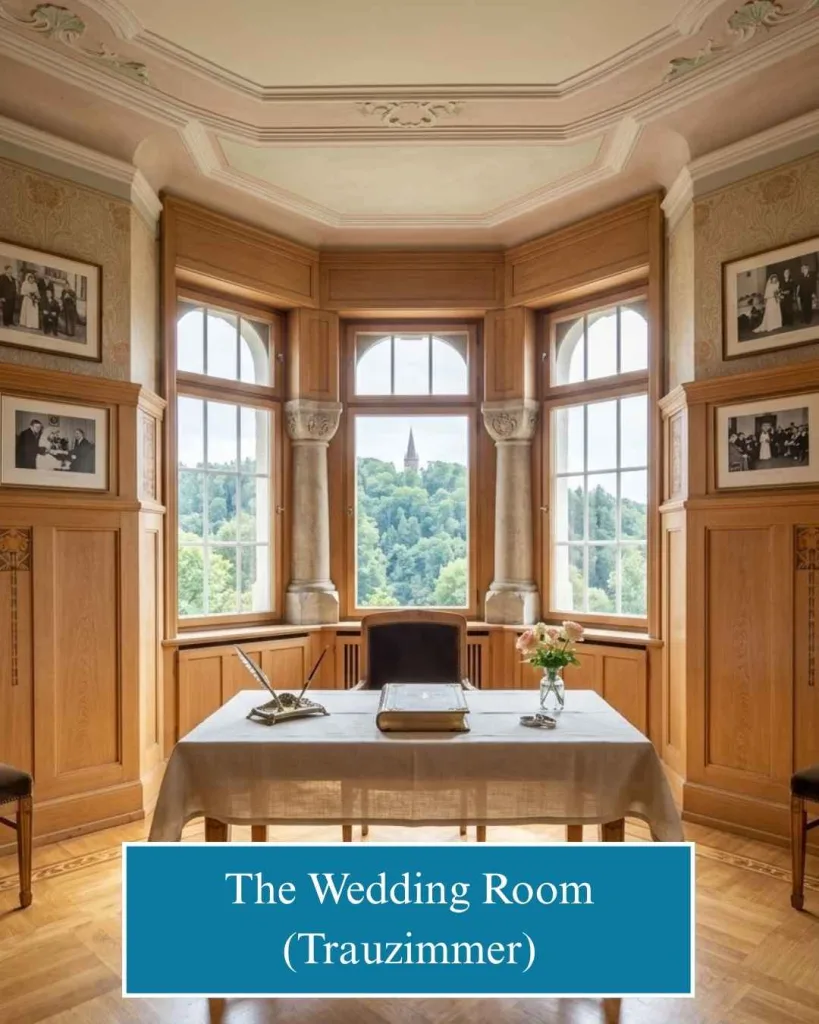
On the first floor of Villa Lindenhof, a bay-windowed room known as the Trauzimmer (wedding room) has been used for civil wedding ceremonies. It is one of the original Jugendstil interior rooms preserved in the villa, featuring the architectural detailing — decorative cornices, quality natural light, and period proportions — that made the villa a listed historical monument. Today it serves as one of the villa’s most sought-after cultural spaces.
Erwin Rommel Other Houses – A Complete Property Portfolio
Beyond Villa Lindenhof, Rommel’s life touched several significant properties across Germany and Austria. Each residence marks a different phase of his career — from a schoolmaster’s son in Heidenheim to a Field Marshal navigating the final years of a world war.
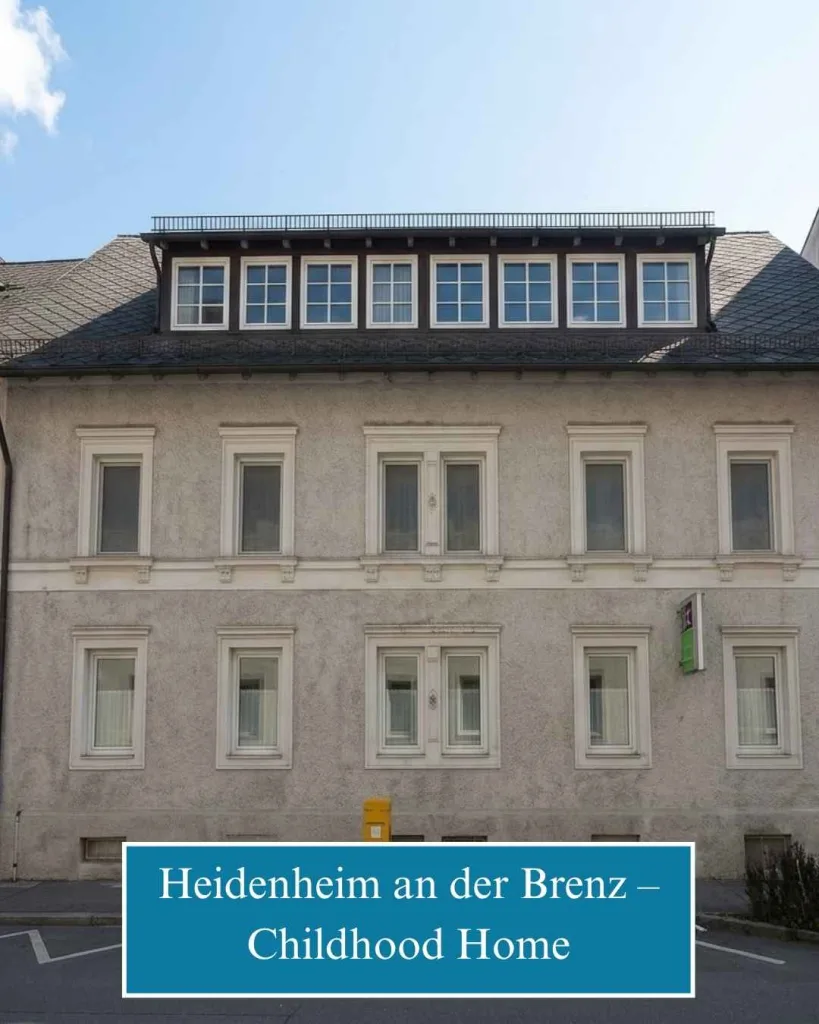
Heidenheim an der Brenz – Childhood Home
Rommel was born on November 15, 1891, in this modest family residence in Heidenheim an der Brenz, approximately 45 kilometres from Ulm. His father was a schoolmaster, and the household was disciplined and middle-class — the environment that shaped Rommel’s methodical, self-reliant character.
Stuttgart – Post-World War I Family Home
After the First World War, Rommel was posted to Stuttgart, where he and Lucie established their first long-term shared home. They lived in the city for approximately eight years. Stuttgart later became meaningful again when their son Manfred served as its Lord Mayor from 1974 to 1996.
Wiener Neustadt, Austria – Military Academy Residence (1938–1943)
When appointed commander of the Theresianische Militärakademie in 1938, Rommel relocated his family to Wiener Neustadt, near Vienna. They remained for five years until intensifying Allied bombing of nearby Messerschmitt works made the area too dangerous for his family to remain.
They remained there for five years until Allied bombing made the area unsafe. Today, as with similarly historically complex estates like the Bill Gates House in Washington or the Jimmy Carter House, each property tells us something distinct about the circumstances, character, and times of its occupant.
Erwin Rommel How Did He Die: The Final Hours at Villa Lindenhof
Rommel died on October 14, 1944, by forced suicide — he bit a cyanide capsule provided by Generals Maisel and Burgdorf inside their car, a short distance from Villa Lindenhof. He was 52 years old.
The Events Leading to His Death
On July 17, 1944, Rommel’s staff car was attacked by an Allied fighter near Normandy. He suffered a fractured skull and facial bones and was brought to the Herrlingen home on August 8 to recover. By autumn, the failed July 20 plot against Hitler had cast suspicion over him. Gestapo agents began infiltrating Herrlingen. On October 14, the two generals arrived with Hitler’s ultimatum: face the People’s Court (effectively a death sentence with consequences for his family) or take poison privately with a guarantee of a state funeral and family safety.
Rommel told his fifteen-year-old son Manfred: “To die at the hands of one’s own people is hard. But the house is surrounded and Hitler is charging me with high treason.” He said farewell to Lucie and Manfred, dressed in his Afrika Korps uniform, and got into the car. He was dead within minutes. The German public was told he had died from his earlier injuries.
Erwin Rommel Funeral: A State Burial Built on a Lie
Rommel’s funeral was held on October 18, 1944, in Ulm — four days after his death — with full state military honours.
Field Marshal Gerd von Rundstedt delivered the eulogy. Hitler sent a personal wreath. A nineteen-gun salute was fired. The entire ceremony was built on a lie: the official cause of death remained the July air attack. The true circumstances were not confirmed publicly until after the war, when Lucie, Manfred, and adjutant Hermann Aldinger gave their accounts. Rommel’s ashes are buried in the Herrlingen village cemetery, approximately 250 metres from Villa Lindenhof, marked with an iron cross-shaped wooden grave marker.
Erwin Rommel Home Now: Villa Lindenhof Today
The Villa Lindenhof still stands at Erwin-Rommel-Steige 13 in Herrlingen, Blaustein. The street itself was renamed in Rommel’s honour. The Rommel Museum operated there from 1989 until May 2019, offering free access to documents, maps, and personal artefacts. Since its closure, the villa is privately maintained and not open to the public.
Three connected sites remain accessible to visitors:
- Villa Lindenhof — Visible from the street; not open for tours
- Herrlingen Cemetery — Rommel’s grave, iron cross marker, free to visit
- Memorial Stone — Roadside site of his death, approximately 1.5 km from the village station
Manfred Rommel donated his father’s marshal’s baton and military distinctions to the Haus der Geschichte Baden-Württemberg in Stuttgart, where they remain on permanent display.
Frequently Asked Questions
Where is Erwin Rommel’s house located?
The Erwin Rommel home is located at Erwin-Rommel-Steige 13 in Herrlingen, now part of Blaustein, Baden-Württemberg, Germany — approximately 6 kilometres west of Ulm.
What is the Erwin Rommel house Herrlingen called?
The house is known as Villa Lindenhof. It served as Rommel’s family residence from October 1943 until October 14, 1944, and later housed the Rommel Museum and Archive from 1989 to 2019.
Where is Erwin Rommel buried?
Rommel’s ashes are interred in the Herrlingen village cemetery, approximately 250 metres from Villa Lindenhof. The grave is marked with an iron cross-shaped wooden marker and is freely accessible to visitors.
Who were Erwin Rommel’s grandchildren?
Through his son Manfred, Rommel had one granddaughter, Catherine, a lawyer. Through his illegitimate daughter Gertrud Pan, he had two grandchildren: Anton Pan and Helga Pan.