
Seven Way Wiring Diagram: A Complete and Simple Guide for Beginners
If you are getting ready to tow a trailer and you keep hearing about a seven way wiring diagram, you are in the right place. I know it can look confusing at first — seven wires, seven pins, different colors, and two different standards depending on the type of trailer you have. But once you break it down step by step, it makes complete sense. This guide covers everything you need to know: what each pin does, what the colors mean, how to wire it properly, and how to fix problems when something does not work. And if you enjoy practical home and tech setups, you might also enjoy this piece on smart home and decorative tech ideas at Mansion Freak.
What Is a Seven Way Wiring Diagram?
A seven way wiring diagram is a schematic that shows how seven individual wires connect a towing vehicle to a trailer through a single seven-pin connector. This diagram shows how each pin in the connector is assigned specific functions, like powering the trailer lights, brakes, turn signals, and auxiliary systems. Seven pins are usually included with dedicated lines for the left turn signal, right turn signal, brake lights, tail/running lights, electric brakes, reverse lights, and a 12V auxiliary power.
Think of this diagram as a map. Each wire is a road, and each road leads to a specific function on your trailer — whether that is your brake lights, your electric brakes, or the power line that keeps your trailer battery charged while you drive.
Various connectors are available from four to seven pins that allow for the transfer of power for the lighting as well as auxiliary functions such as an electric trailer brake controller, backup lights, or a 12V power supply for a winch or interior trailer lights.
The seven-pin setup is by far the most complete and is now standard on most modern trucks and SUVs that come with a factory trailer hitch.
The Two Types of Seven Way Connectors
Before you read a seven way wiring diagram, you need to know which type of connector you are dealing with.
There are two types of 7-way connectors. One has flat pins, which are often referred to as blades. The other has round pins. The round pin style is very rare. The RV style 7-way with flat pins (or blades) is very common. It is often found on newer trucks and SUVs that come equipped from the factory with a trailer hitch.
Beyond the physical shape, there are also two wiring standards:
- SAE J2863 (Traditional SAE) — used on utility trailers, cargo trailers, gooseneck trailers, and equipment trailers
- RV Standard — used on travel trailers, fifth wheels, and campers
The pin positions and functions are identical between both standards — only the wire colors are different. A trailer wired with SAE colors will physically connect to a vehicle wired with RV colors, but you need to match functions, not wire colors.
This is one of the most important things to understand when reading any seven way wiring diagram. The plug fits either way, but if you match colors instead of functions, your lights will not work right.
Understanding Each Pin in the Seven Way Wiring Diagram
Here is a breakdown of what each of the seven pins does. I am using the Traditional SAE standard here, which is the most common for utility and cargo trailers.
- White — Ground. This is the foundation of the entire system. Every circuit returns through this wire. Always connect it to a clean, rust-free surface.
- Brown — Tail lights and running lights. These stay on whenever your vehicle’s lights are on.
- Yellow — Left turn signal and brake light. This flashes when you signal left and activates with your brake pedal.
- Green — Right turn signal and brake light. Same function as yellow but on the right side.
- Blue — Electric brakes. This wire carries the signal from your brake controller to the trailer’s brake magnets.
- Black — 12V auxiliary power. This wire charges your trailer’s onboard battery or powers accessories like interior lights or a winch.
- Red (or Purple) — Reverse lights. This activates when you shift into reverse.
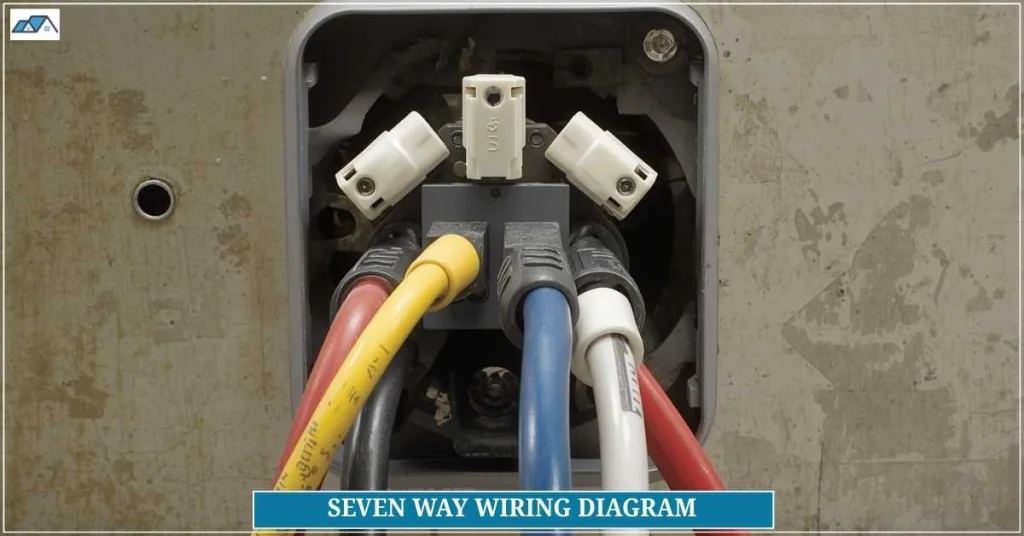
White is always ground; brown handles tail and marker lights; yellow and green control left and right turn signals; blue manages electric brakes; black feeds auxiliary 12-volt power; and purple (or red) activates reverse lamps.
Wire Gauge: Why It Matters
Getting the right wire size is not optional. Using wire that is too thin creates real safety risks like the Whole House Fan Installation.
The minimum suggested wire size for a 7-way trailer plug is 16 gauge for the turn signals, brake lights, reverse lights, and running light wires. The suggested minimum for the ground, brake power, and battery hot lead wires is 12 gauge. If the wire is too thin, it can overheat and even catch fire when carrying electrical current.
When you are working from a seven way wiring diagram, always check the gauge requirements alongside the color codes. The diagram tells you where to connect — the gauge tells you how safely to carry the load.
RV Standard vs SAE: A Side-by-Side Look
Since both standards use the same pin positions but different colors, I want to make this crystal clear.
| Function | SAE J2863 Color | RV Standard Color |
|---|---|---|
| Ground | White | White |
| Tail/Running Lights | Brown | Brown |
| Left Turn/Brake | Yellow | Yellow |
| Right Turn/Brake | Green | Green |
| Electric Brakes | Blue | Blue |
| 12V Auxiliary Power | Black | Orange |
| Reverse Lights | Red | Grey |
White (ground) and Blue (brakes) are the same in both standards. All other colors differ. Always verify your trailer’s wiring standard before connecting wires.
Tools You Need Before You Start
You do not need a lot of fancy equipment. Here is a simple list of what you should have ready:
- Wire strippers
- Crimping tool
- Heat shrink connectors
- A multimeter or circuit tester
- Electrical tape or split-loom tubing
- Dielectric grease
- 7-way connector kit (SAE or RV depending on your trailer type)
Always disconnect your vehicle’s negative battery terminal first. This step prevents short circuits and shocks. Use insulated tools designed for electrical work for extra protection. Don’t work on wet surfaces or in the rain with electrical parts.
How to Wire a Seven Way Trailer Connector Step by Step
Once you have your seven way wiring diagram in hand and your tools ready, follow these steps.
Step 1: Disconnect the Battery
Before you touch a single wire, disconnect your vehicle’s negative battery terminal. This is not optional. It prevents shorts, shocks, and damage to your vehicle’s electronics.
Step 2: Prepare the Wires
Start by stripping about 3/8 inch of insulation from each wire. Use wire strippers and be careful not to cut the wire strands. Twist the copper strands tightly to prevent fraying and ensure a solid connection.
Step 3: Identify Each Terminal
Look at the connector housing. Most connectors are numbered or marked. Use the seven way wiring diagram that came with your kit to identify which terminal matches which function. Do not guess.
Step 4: Connect Ground First
Always start with the white ground wire. Insert it into the ground terminal and crimp firmly. Tug on it lightly to confirm it is locked in. A bad ground is the number one cause of trailer light problems.
Step 5: Work Through the Remaining Pins
After every crimp, slide the heat-shrink over the joint, but don’t shrink it yet. Once all seven are crimped, use a heat gun (not an open flame) to shrink each sleeve until the adhesive oozes slightly at the ends. A watertight seal here means fewer calls later.
Step 6: Mount and Route the Harness
On the trailer side, the first step is often to mount a small junction box near the tongue. This box keeps wires organized and sealed from the weather.
Route your harness along the trailer frame and secure it with zip ties or harness tape. Keep it away from sharp edges, exhaust components, and moving parts.
Step 7: Test Everything Before You Drive
Reconnect your vehicle battery, plug in the trailer connector, and have someone help you test each function:
- Turn on running lights and check tail lights
- Activate left turn signal — check left blinker
- Activate right turn signal — check right blinker
- Press the brake pedal — check brake lights
- Shift into reverse — check reverse lights
- Test the brake controller if your trailer has electric brakes
Troubleshooting Common Problems
Even with a good seven way wiring diagram, things can go wrong. Here are the most common issues and how to fix them.
Lights Not Working at All
This almost always points to a ground problem. Check that the white wire is connected to a clean, bare metal surface — not a painted or rusty spot.
Only One Turn Signal Works
If only one blinker fails, inspect this pin first, then chase the wire to the lamp. You likely have a loose crimp or a broken wire on either the yellow or green pin.
Brakes Feel Weak or Inconsistent
Delivering pulse-width-modulated power from your brake controller to the magnets, using undersized wire here overheats coils and weakens the stopping force. Check that your blue wire is the correct gauge and that the connections are clean and tight.
Corrosion on the Pins
Moisture can corrode the plug’s contacts, disrupting electrical connections. Regular cleaning and protective covers can prevent this.
Apply dielectric grease inside the connector every time you hitch up. Use a rubber cap when the trailer is not connected.
Blown Fuses
Check for blown fuses in the towing vehicle or trailer’s electrical system. If a fuse keeps blowing on the same circuit, you likely have a short somewhere in that wire’s run.
Maintenance Tips to Keep Your Connector Working Long Term
A good installation only stays good if you take care of it. Here is what I recommend:
- Spray the plug with dielectric grease each time you hitch up
- Slip a rubber cap over the connector when the trailer is parked
- Store spare pigtails in a dry place
- Once a year, unplug the harness and inspect every crimp
- Tug each wire lightly — loose connections fail when you need them most
- Keep a copy of your seven way wiring diagram in your toolbox or glove box for quick reference
Ten minutes now saves long roadside evenings later.
When to Use an Adapter Instead of Rewiring
Not every situation calls for a full rewire. Sometimes an adapter is the smarter choice.
If your vehicle has a 4-pin flat connector and your trailer needs a seven-pin, you can use an adapter kit instead of splicing into your vehicle’s wiring. An adapter will plug into your existing 4-way plug and provide two additional pins for your trailer brakes and battery lead.
Adapters are great for:
- Temporary setups or borrowed trailers
- Vehicles where custom wiring is not available
- Budget-friendly solutions when you do not tow often
Do You Need a Brake Controller?
If your trailer has electric brakes, the answer is yes.
With a 7-pin setup, you will require a trailer brake controller if your trailer has electric brakes. A brake controller will manage the electric brake wire so that the appropriate braking force will be commanded on the trailer, and hence, allows selective braking. This is important for safe towing, particularly for heavier trailers.
The blue wire in your seven way wiring diagram is specifically for this — it carries the signal from your brake controller to the trailer’s braking magnets. Without a brake controller connected to this wire, your trailer brakes simply will not engage.
Safety and Legal Compliance
Wiring your trailer correctly is not just about convenience. In most places, it is the law.
DOT regulations require trailers to have operational lighting and brake systems. Proper wiring is crucial for meeting these standards.
Running without working brake lights or turn signals puts you, your passengers, and everyone around you at risk. If your trailer is going to be on public roads, the wiring needs to work — every single time.
A Final Word
The seven way wiring diagram may look complicated at first, but it becomes much easier once you understand the purpose of each wire and follow the installation step by step. Instead of relying only on wire colors, focus on the function of each connection because standards can vary between manufacturers.
Using the correct wire gauge, sealing connections properly, and testing everything before driving can prevent costly problems later. Whether you are installing a new trailer setup or replacing an old connector, a proper seven way wiring diagram helps save time, money, and frustration while keeping your trailer safe and reliable on the road.