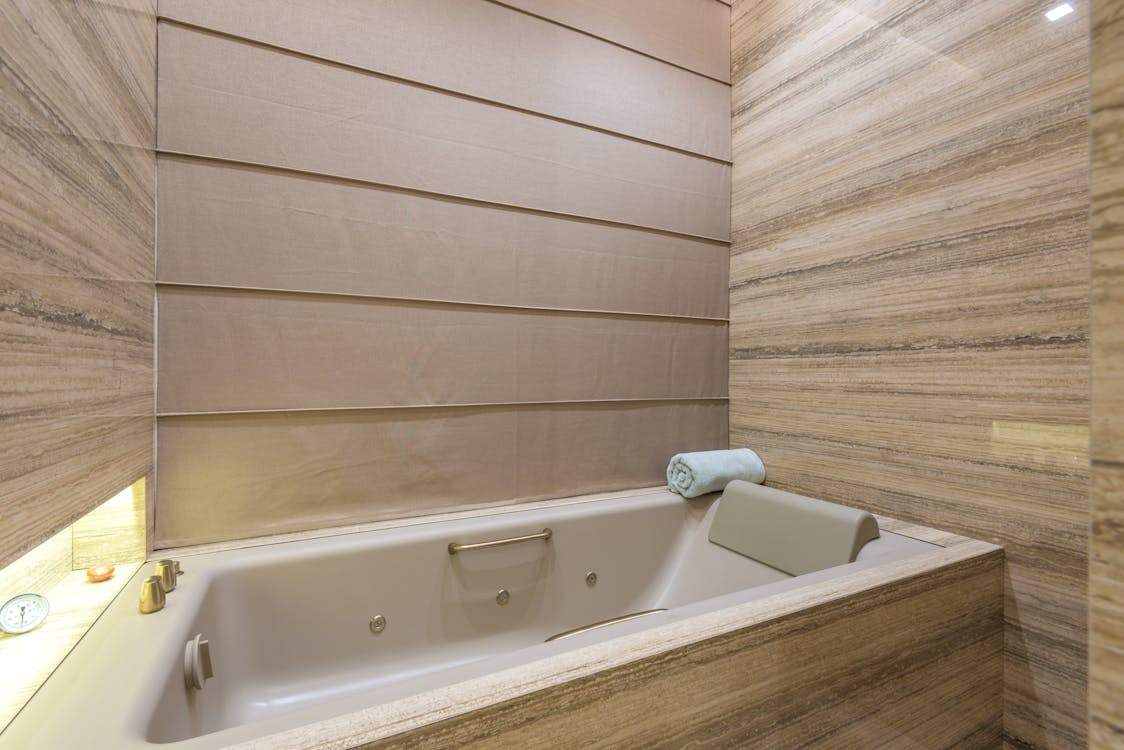
Want to turn your bathroom into a 5-star spa retreat?
Remodeling your bathroom into a spa-style retreat is one of the most rewarding do-it-yourself projects. It’s hard to beat taking that relaxing soak when you get home from work every day.
But here’s the thing:
But behind every dreamy soaker tub and rainfall shower is complex network of piping, drains, and venting that needs to be designed from day one. Spa bathrooms are becoming more popular by the day. Americans spent an estimated $603 billion on home remodeling in 2024. Bathrooms are ranked #1 year after year.
Skip the plumbing side of things and the whole project falls apart.
What you’ll discover:
- Why Plumbing Is the Backbone of a Spa Bathroom
- The Biggest Plumbing Upgrades to Plan For
- Picking The Right Water Heater
- Humidity, Ventilation, and Why It All Matters
- Smart Fixtures That Pay You Back
- Common Mistakes To Avoid
Why Plumbing Is the Backbone of a Spa Bathroom
Who says a spa bathroom has to have nice tile and matte black fixtures? Think experience…
Steam showers. Heated floors. Multiple shower heads. Freestanding soaker tubs.
Every one of these amenities has very particular plumbing requirements. Pipe sizing, water pressure, drain capacity, and venting all need to be perfect or that “luxury getaway” ambiance goes downhill quickly.
Because the stakes are so high when you remodel your bathroom. According to the 2024 Cost vs. Value Report, a mid-range bathroom remodel costs around $25,251, while an upscale, spa-style bathroom will run you closer to $78,840. No one wants to drop that kind of cash just to deal with low water pressure, slow drains, or a steam shower that doesn’t fully heat up.
It’s also why most homeowners call a trusted local professional right away. A specialist team like Nichols Plumbing can perform the rough-in work, fixture selection, and AC tune up coordination necessary to keep your room comfortable as sweat and humidity dominate the space. Scheduling your plumbing upgrade with a new AC tune up can keep your entire home system running smoothly and help protect your new bathroom long term.
Pretty important, right?
Let’s break down the upgrades worth planning for.
The Biggest Plumbing Upgrades to Plan For
Plumbing for spa bathrooms is more complex than typical residential plumbing. Fixtures are larger, water requirements are greater, and drainage must be more powerful.
Here are the main upgrades to plan around:
- Bigger supply lines — Rainfall showerheads and body jets use more water at higher pressures. 1/2″ lines often have to be increased to 3/4″.
- Upgraded drains — Freestanding tubs and curbless showers need wider, deeper drain channels.
- Dedicated water heater capacity — A soaking tub can consume an entire hot water heater filling just one tub.
- Proper venting — Without it, drains gurgle and traps lose their seal.
They all affect multiple areas of the home. That’s why plumbing should be decided FIRST… Before tile. Before vanities. Before anything pretty.
Picking The Right Water Heater
This one trips up a lot of homeowners…
Your typical 40 gallon water heater does not work with a 70 gallon soaker tub. By the time you fill it up, the water is cold already. Such a buzzkill way to begin your spa night.
There are a couple of options here:
- Upgrade to a larger tank (60-80 gallons works for most spa bathrooms)
- Switch to a tankless system for unlimited hot water
- Add a recirculating pump so hot water reaches the fixture faster
Tankless is by far the most common solution for spa renovations, as it allows you to enjoy unlimited hot water for your tub fill, multi-jet showers and any heated towel rails you install.
Humidity, Ventilation, And Why It All Matters
Here’s something most homeowners don’t think about…
A steam bathroom produces gallons of steam. Far greater than your average bathroom. That steam has to be exhausted or it will infiltrate into walls ceilings and your HVAC system.
The Home Ventilating Institute suggests 1 CFM per square foot of bathroom space. Therefore a 10 x 10 spa bathroom would require a minimum of 100 CFM exhaust fan. And yes… you can usually install a larger fan for spas.
To keep the room comfortable and the air system protected, think about:
- A high-CFM exhaust fan with a humidistat
- Properly sized HVAC for the space
- Regular HVAC servicing to handle the added humidity load
- Moisture-resistant building materials
During peak usage times, like in the bathroom, the cooling system has to work hard to dehumidify the air. Preventative AC maintenance each season allows it to continue functioning properly.
Smart Fixtures That Pay You Back
Spa-style bathrooms aren’t only about feeling good. They can actually save money long term.
For example…
Energy-efficient showerheads and toilets save customers huge amounts on their water bills. Motion sensor faucets only deliver water when you need it. Radiant floor heat warms up your space without maxing out the thermostat. All these upgrades add value to your property.
It also makes sense when you look at the numbers. The 2024 report shows that mid-range bathroom remodels recoup around 72.7% nationally. Bathroom renovations have one of the highest ROI.
Some fixtures worth budgeting for:
- Thermostatic shower valves — Steady water temp every single time
- Pressure-balancing valves — No more cold shocks when someone flushes
- Smart leak detectors — Catch problems before they ruin the floors
- Heated towel rails — A small upgrade with big spa energy
Common Mistakes To Avoid
Even the best-planned spa bathrooms can run into problems if these basics get skipped:
- Ignoring water pressure — Multiple shower heads need adequate flow.
- Forgetting drain size — Curbless showers can pool if the drain is undersized.
- Skipping the vent stack — Drains will gurgle and smell without it.
- Cheap fixtures — Pretty is not always synonymous with quality. Consider lifetime value instead of purchase price.
- DIY plumbing — A leak behind the tile costs 10X more to repair.
A pro plumber will spot these before they ever become problems.
Bringing It All Together
A spa-style bathroom can completely transform a home… When it’s done right.
Plan your plumbing, drainage and ventilation first. If you get the fundamentals right then the rest of your renovation should fall into place – and everything will stand the test of time.
The reality is this:
Luxury bathrooms stress every system in your home. Hot water needs, humidity load, AC tune up… you need specialists who see the big picture. Invest the time to choose a team that covers all these aspects and you can have your dream spa bathroom sans the drama.
Quick recap:
- Plan plumbing and venting first
- Upgrade the water heater for spa demand
- Don’t skimp on ventilation or HVAC servicing
- Pick smart fixtures for long-term savings
Get those right and the spa bathroom takes care of itself.