20 Awkward Living Room Layout Ideas to Fix Odd Spaces
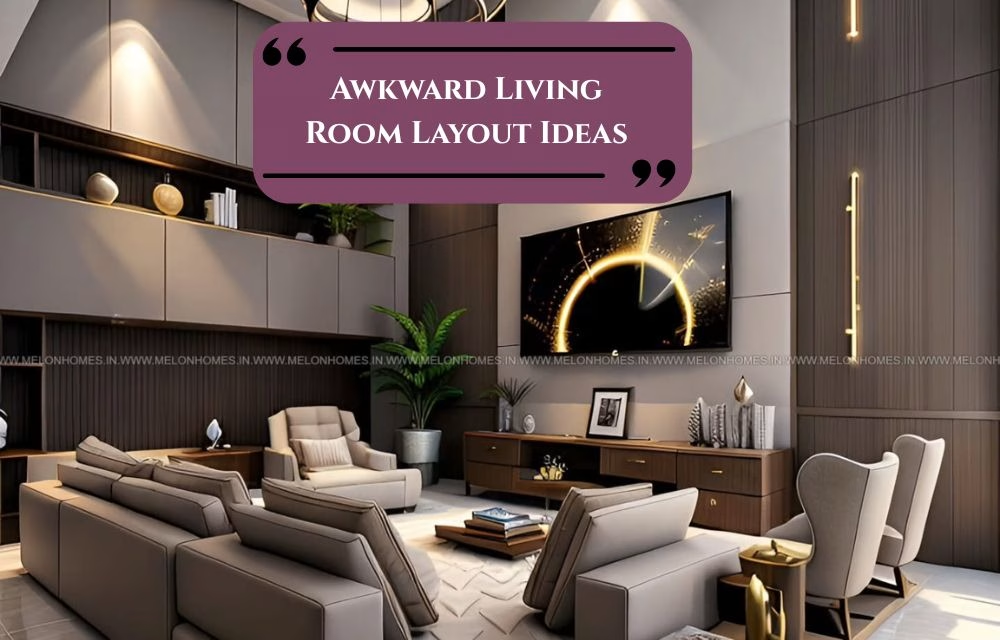
Walking into an awkward living room layout can feel frustrating at first, but with the right design moves, that tricky space can turn into your home’s most charming and functional spot.
I’m Leyden, lead interior designer at MansionFreak.com, and I’ve worked with many “odd” layouts over the past decade.
This article delivers ideas designed specifically for those awkward spaces so your living room finally feels intentional and inviting.
or more inspiration and smart ways to refresh your décor, explore these 22 Stunning Beauty Shop Interior Design Ideas that bring style, comfort, and creativity together to effortlessly transform any space.
| Idea | Best For | Key Benefit | Design Tip |
|---|---|---|---|
| Anchor a central sculpture or plant | Rooms with no clear focal point | Creates an instant visual anchor that organizes the layout | Choose a 5–6 ft piece on a circular rug and leave 30″ traffic clearance |
| Floating L-shaped seating zone | Open or oversized living rooms | Defines a social area away from walls and improves circulation | Place sofa + two chairs in an L and use a round coffee table to soften angles |
| Highlight the ceiling with low-hanging lighting | Rooms with awkward walls or strong window presence | Shifts attention upward and balances visual weight | Use dimmable pendants hung ~7’6″ above floor and match fixture finishes |
| Build an angled bookcase to follow a slanted wall | Rooms with sloped ceilings or odd angles | Turns wasted architecture into useful storage and character | Vary shelf depths, add under-shelf LEDs, paint back panel slightly darker |
| Define zones with rugs of different shapes | Multipurpose or large awkward spaces | Breaks the room into usable areas without walls | Use full furniture placement on each rug and coordinate colors across rugs |
| Frame the TV in an asymmetrical media wall | Rooms where the TV sits off-center | Makes asymmetry feel intentional and visually balanced | Combine open shelving with panels; mount TV at 42–48″ eye level |
| Rotate the sofa to face a window view | Rooms with an attractive window or view | Integrates the view into the living layout and enhances comfort | Keep sofa 12–18″ from glass and add a narrow console behind it |
| Incorporate a built-in window bench with storage | Rooms with low windows or shallow walls | Creates seating and hidden storage in an otherwise wasted spot | Build 18″ high bench, 16–20″ deep, with hinged lids or drawers |
| Choose modular furniture for a flexible layout | Uncertain or frequently changing spaces | Offers many layout options and adapts to awkward footprints | Pick uniform-height modules, add casters to one piece for mobility |
| Use a partial divider like a low cabinet or open shelving | Rooms with odd circulation or open plan flows | Defines zones while preserving sightlines and light | Choose 30–36″ height, leave 36″ circulation, top with lamps or runner |
| Mirror opposite the most awkward wall | Small rooms with deep recesses or odd corners | Visually widens the room and masks awkward geometry | Start mirror ~6″ above floor, tilt slightly forward, add dedicated lighting |
| Introduce curved furniture to soften sharp angles | Rooms with many straight lines and corners | Improves flow and invites movement around seating | Pair a curved sofa with a round coffee table and rugs that echo the curve |
| Install wall-mounted fold-out tables | Narrow, elongated “car-shaped” rooms | Provides surface area without consuming permanent floor space | Mount at ~26″ high, allow 30″ clearance when folded, store stools beneath |
| Rotate art placement to mid-wall height in tall rooms | Rooms with high ceilings and underused vertical space | Brings scale down to human level and fills tall walls thoughtfully | Hang art center at 57–60″ from floor; cluster smaller pieces for spread |
| Create a cozy conversation circle in a corner bay | Bay windows or protruding corners | Makes niche areas useful and intimate for two-person chat | Angle chairs 30°, add a round table, pouf, and textured rug beneath |
| Use tall narrow storage units at entry to a living room | Rooms that open directly from hallways or front doors | Defines the transition and offers display without blocking views | Choose 18–24″ wide cabinets with glass doors and internal lighting |
| Choose contrasting ceiling colour for long narrow spaces | Tunnel-like or very long living rooms | Shortens perceived length and breaks monotony | Pick a matte, slightly darker ceiling tone and continuous center lighting |
| Place a sideboard perpendicular to the sofa in open plan layouts | Shared living/dining/kitchen areas | Creates a soft division and adds functional surface and storage | Use a 30–34″ high sideboard about two-thirds the sofa length; allow 34–36″ behind |
| Leverage colour-blocked walls to reframe odd geometry | Rooms with odd angles or protrusions | Makes the strange section feel intentional and framed | Paint the section within the palette, repeat the accent elsewhere for balance |
| Add a bench or settee behind the floating sofa | Sofa floated in roomy central positions | Creates transition, extra seating and an intentional back detail | Choose bench 70–80% of sofa length, leave 28–30″ for circulation |
1. Anchor a central sculpture or plant
Create a sculptural plant or art piece at the centre of the space. Placing a bold object slightly off-centre helps the eye settle in a room that otherwise lacks a natural focal point.
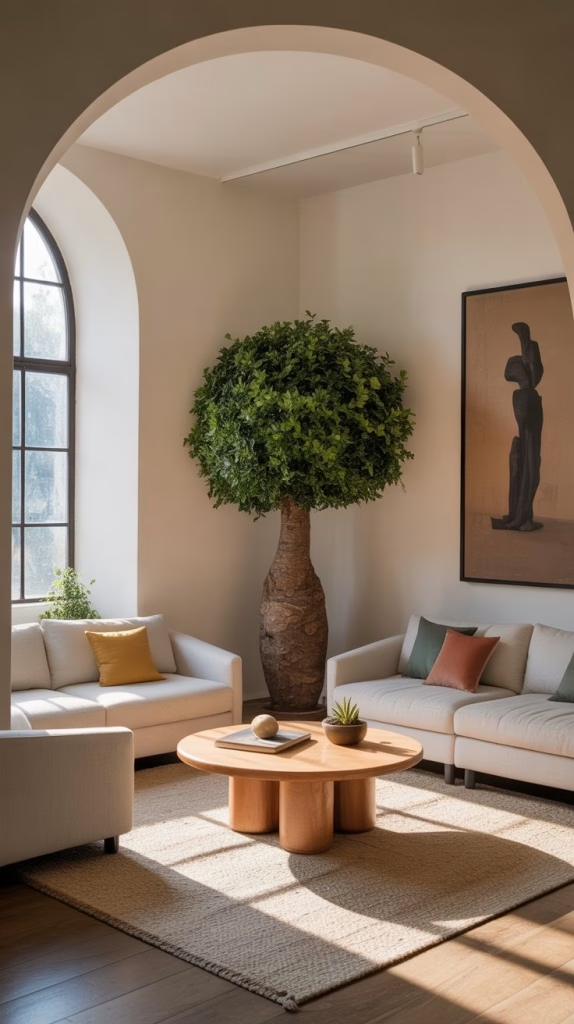
- It gives the room an unmistakable anchor point, preventing wall-faced furniture drift.
- It transforms a weird floor-plan into something deliberate.
- Choose a piece around 5-6 feet tall so it commands presence without overwhelming.
- Place it on a circular rug so the flow and furniture arranges around it.
- Ensure there’s at least 30 inches clearance for traffic circulation and visual breathing-room.
2. Use a floating L-shaped seating zone
Rather than pushing everything to the perimeter, pull the seating out into the room in an L-shaped arrangement. That gives the space shape and character.

- Floating furniture breaks the awkward “wall-hugging” look common in odd layouts.
- It invites conversation and gathers people together instead of scattering them.
- Use a sofa on one side and two armchairs perpendicular to complete the L.
- Position the back of the sofa towards a walkway to create a visual corridor.
- Choose a round coffee table to soften the angles and maintain flow.
3. Highlight the ceiling with low-hanging lighting
In rooms where wall space is odd or windows dominate, draw attention upward with pendant lights or hanging elements.

- It shifts focus from awkward walls to the overhead plane, balancing the room.
- A cluster of pendants lets you define different zones (reading nook, seating, game table).
- Ensure the bottom of lights hang at least 7 feet 6 inches above floor for clearance.
- Use dimmable fixtures so you can change mood easily for different uses.
- Coordinate fixtures’ finishes with your furniture legs or hardware to tie the overhead into the room.
4. Build an angled bookcase to follow a slanted wall
An odd angle or sloped ceiling often creates unused space. A custom angular bookcase can make that space purposeful.
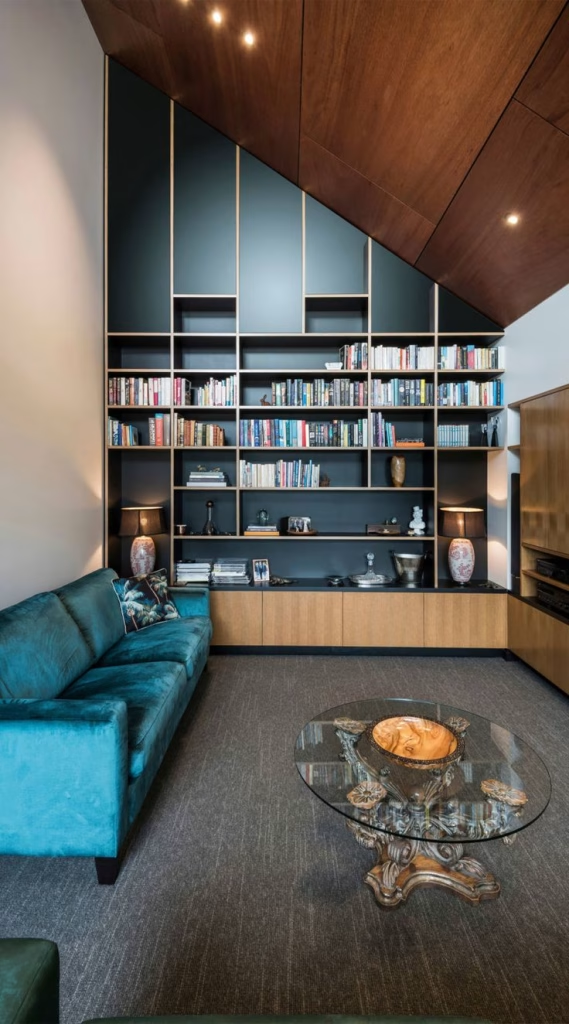
- It turns an architectural oddity into a practical feature and gives character.
- Use varying shelf depths (e.g., 10-14 inches) to match the wall angle.
- Mount under-shelf LED strips to accent the slope and provide ambient light.
- Paint the back panel of bookcase in a slightly darker tone to add depth.
- Keep the shelf height consistent across the run to maintain visual rhythm.
5. Define zones with rugs of different shapes
Instead of one big rug, use two or three smaller ones to create distinct zones (TV area, reading corner, entry/foyer).
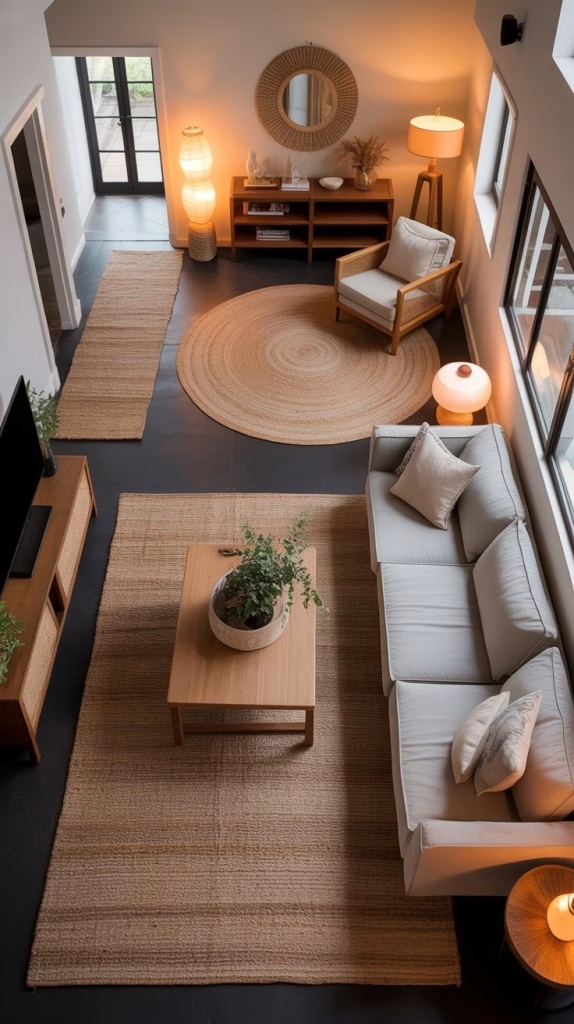
- It allows the room to function like multiple linked spaces, reducing the awkward “one large nothing” feel.
- Choose a round rug for smaller zones to soften corners and odd edges.
- Place furniture fully on each rug so each zone feels cohesive.
- Align the rugs based on traffic flow, not symmetry alone.
- Use coordinating colors so the separate zones still feel part of one story.
6. Frame the TV in an asymmetrical media wall
If the TV is on a strange wall or offset from furniture, build a media wall that embraces the asymmetry.

- A purposeful backdrop turns awkward placement into a design feature.
- Use open shelving on one side and paneling on the other to balance visual weight.
- Mount the TV at eye-level when seated (about 42-48 inches high) so it’s comfortable.
- Integrate a console beneath that spans the length of the wall to anchor everything.
- Use matching hardware finishes so the wall treatment reads as one piece, not patchwork.
7. Rotate the sofa to face a window view
If your layout gives you a nice window but the usual sofa placement ignores it, rotate the sofa to face the window instead of the wall.
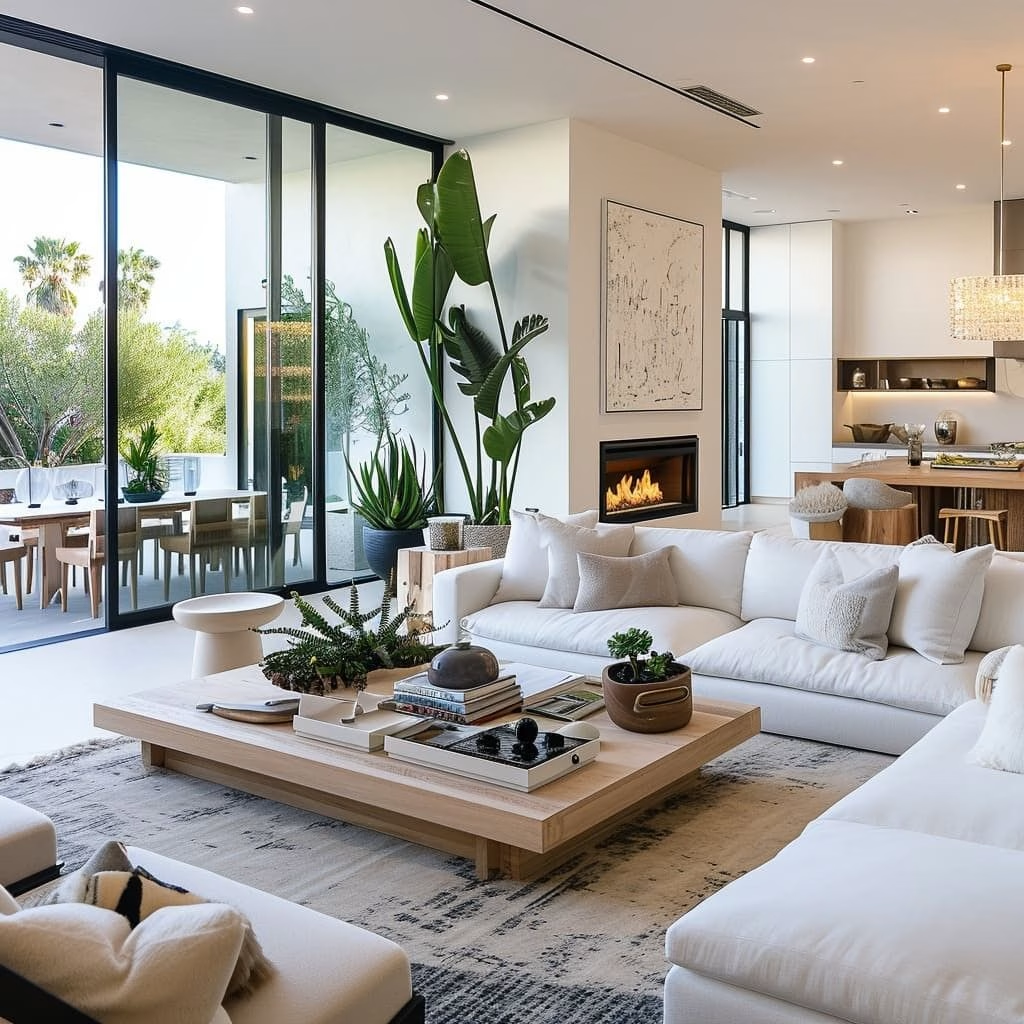
- It lets the view become part of the room’s design rather than neglected.
- Position the sofa about 12-18 inches away from the glass to allow curtains to hang freely.
- Place a narrow console behind the sofa for storage without crowding space.
- Add two swivel chairs opposite the sofa so guests can enjoy the view too.
- Use sheers combined with blackout curtains so you can control daylight glare.
8. Incorporate a built-in window bench with storage
A low bench beneath an awkward window creates seating, storage, and uses otherwise wasted wall space.
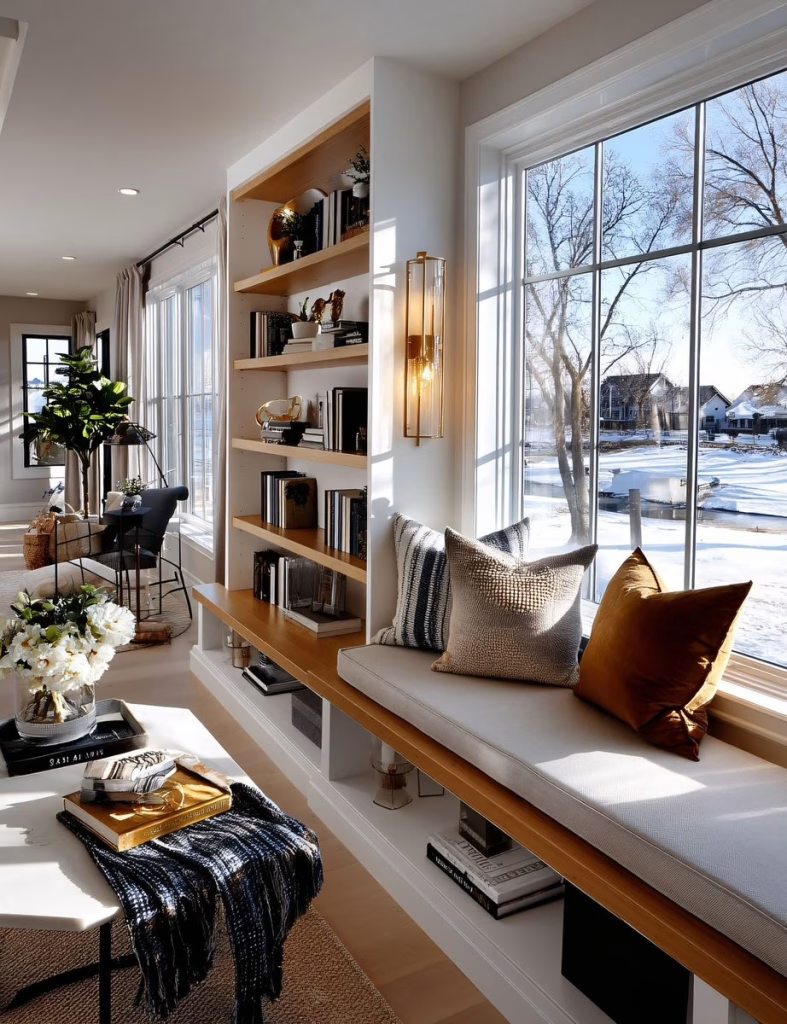
- It fills the “dead zone” under a window and gives the room purpose.
- Use bench height of about 18 inches for comfort; depth around 16-20 inches works well.
- Use hinged lids or pull-out drawers for extra storage.
- Add cushions and lumbar pillows in durable fabric for everyday use.
- Add small table lamps at each end of the bench for reading light and ambiance.
9. Choose modular furniture for a flexible layout
In rooms where you’re not sure how the furniture will fit, use modular seating that can be split and reconfigured.

- It adapts to odd floor shapes and offers multiple layout possibilities.
- Pick modules that are uniform height and depth to keep visual consistency.
- Use casters on one piece so you can move it easily when guests arrive.
- Have at least two end-tables that can double as stools or side seating.
- Store one module under a console table when you don’t need the full arrangement.
10. Use a partial divider like a low cabinet or open shelving
In a space with awkward circulation paths, use a low cabinet (around 30-36 inches high) or open back shelving to subtly separate zones.

- It gives structure to the space without creating a full wall.
- Place items like books or decorative baskets to add texture while still maintaining openness.
- Add castors so you can move the divider when you need more open space.
- Align the divider parallel to the traffic path, but leave at least 36 inches of clearance for walking.
- Top the divider with a runner and two lamps to draw the eye upward and turn it into a feature.
11. Mirror opposite the most awkward wall
Placing a tall mirror on the wall opposite a deep recess or odd corner can visually widen the space.
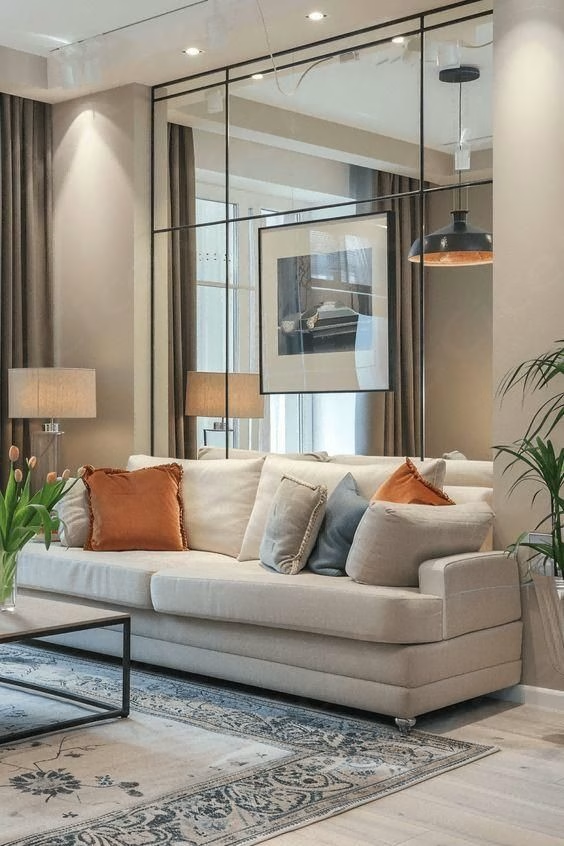
- Reflecting the room doubles apparent space and hides awkwardness.
- Choose a mirror height that starts about 6 inches above the floor for best human-scale reflection.
- Tilt it slightly forward (about 3°) so ceiling reflections are minimized.
- Frame the mirror in a color or finish that matches existing trims for cohesion.
- Ensure there’s lighting aimed at the mirror to maximize its effect at dusk.
12. Introduce curved furniture to soften sharp angles
When you have a room with lots of straight lines and odd corners, use a curved sofa or rounded chairs to soften the geometry.
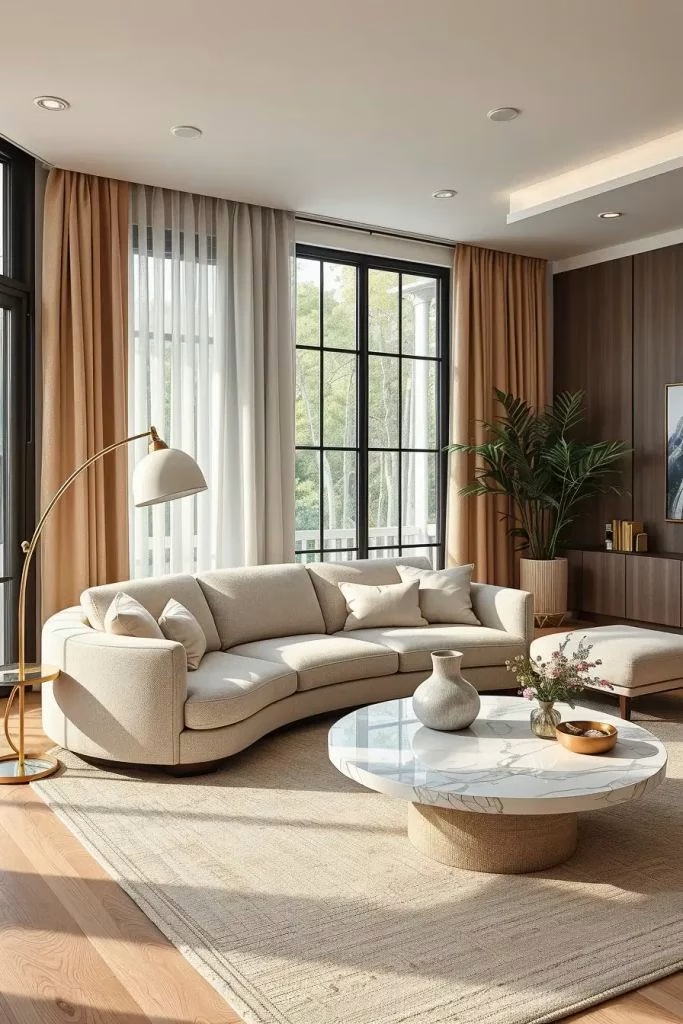
- A curved piece reduces visual hardness and invites flow around the furniture.
- Ensure the curve faces the main traffic path, not the corner.
- Pair it with a round coffee table whose diameter is roughly two-thirds the length of the sofa.
- Use area rugs that echo the curve to ground the seating zone.
- Place two slim side-tables flanking the sofa for symmetry and function.
13. Install wall-mounted fold-out tables in vehicle-shaped layouts
If your living room is narrow and elongated (think “car garage” shape), avoid placing all furniture along the long walls—install fold-out wall tables that act as side surfaces when needed.
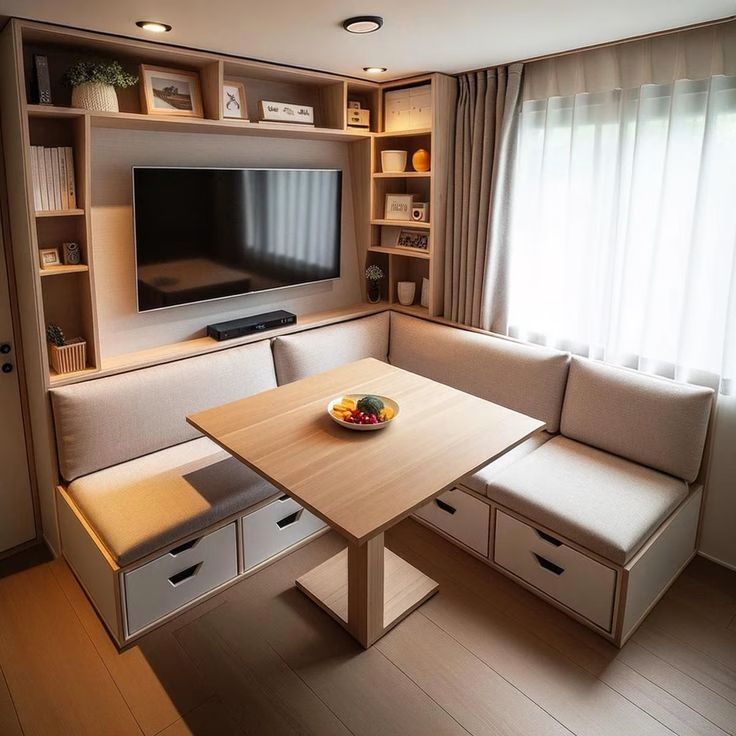
- They occupy minimal permanent space but add flexible surface-area.
Mount at about 26 inches high so they double as desks or dining for casual meals. - Use matte finish to reduce reflection from opposite windows.
- When folded down, leave at least 30-inch clearance for traffic.
- Store stools under them when not in use for clean aesthetics.
14. Rotate art placement to mid-wall height in tall rooms
In rooms with high ceilings and odd proportions, adjust art placement so that art hangs at 57-60 inches from floor to centre rather than following a rigid grid.

- It brings the vertical space down to human scale, reducing “empty tall” effect.
- Use clusters of smaller pieces instead of one oversized piece to spread focus.
- Maintain about 3 inches spacing between frames for cohesion.
- Use picture lights or directional ceiling lights to highlight these art groupings.
- Keep the bottom of the art collection at least 6 inches above furniture tops.
15. Create a cozy conversation circle in a corner bay
Don’t ignore odd bay windows or protruding corners—turn them into intimate conversation zones by arranging two chairs and a small round table there.
- It makes use of the odd geometry rather than ignoring it.
- Use chairs angled toward each other at about 30° for better face-to-face interaction.
- Place a small pouf opposite the table so there’s a casual extra seat.
- Add a low bookcase behind one chair to create visual anchoring.
- Use a textured rug beneath this mini-zone to define it without walls.
16. Use tall narrow storage units at entry to a living room
If your living room opens directly from the front door or flows from a hallway into it, use two matching tall, narrow cabinets (around 72 inches) on either side of the opening.

- It gives the transition gesture a museum-like feeling, and helps define the living room space.
- Use glass doors so you don’t block sightlines; display curated objects to draw guests in.
- Place a narrow console table between them for keys or mail.
- Choose cabinet width around 18-24 inches to avoid narrowing the walkway.
- Add lighting inside the cabinets for evening interest.
17. Choose contrasting ceiling colour for long narrow spaces
In a room that feels tunnel-like, painting the ceiling a slightly darker tone than walls shortens the sense of length and brings the space in.
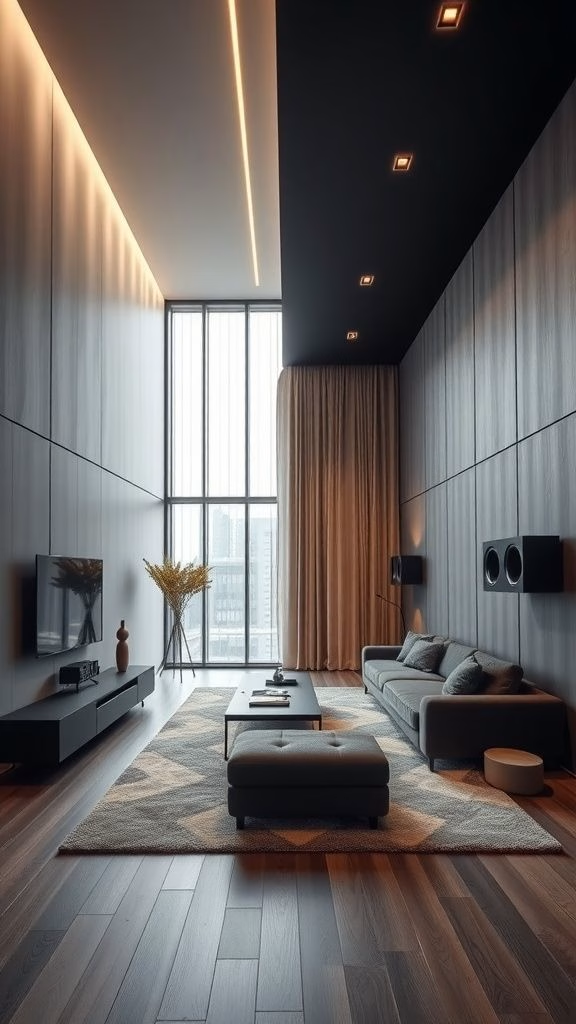
- It visually “lowers” the profile and breaks the monotony of a long span.
- Choose a matte finish to avoid glare on long walls.
- Maintain door and window trims in the wall colour so only the ceiling change is noticeable.
- Use continuous lighting down the centre (pendants or flush mounts) to complement the ceiling shift.
- Add vertical art or tall plants at the far end to draw focus inward.
18. Place a sideboard perpendicular to the sofa in open plan layouts
When your living room shares space with dining or kitchen areas and lacks clear division, place a sideboard perpendicular behind the sofa to delineate zones.
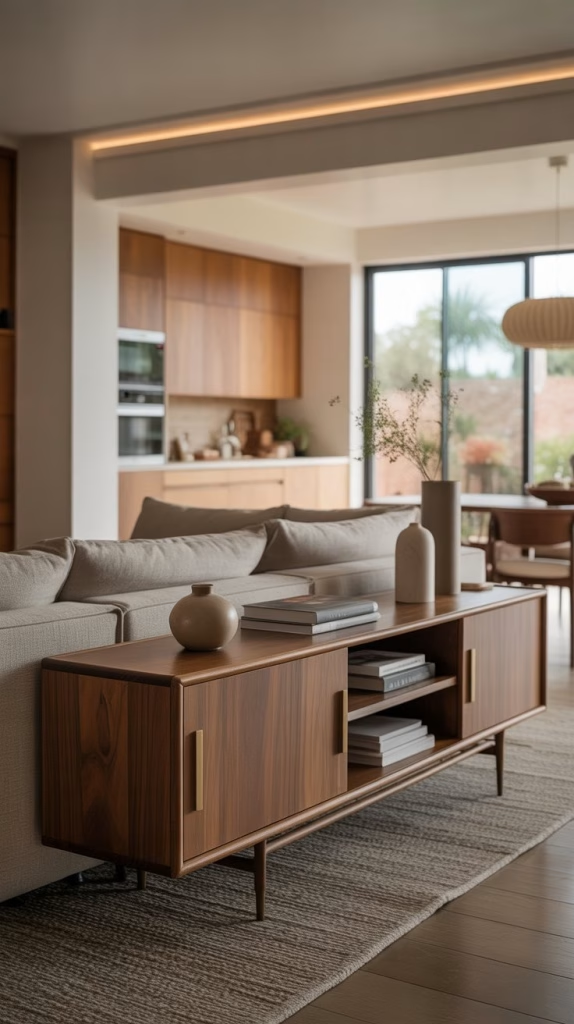
- It acts as a subtle transitional element without a full wall.
- Choose a sideboard height of 30-34 inches so it doesn’t block sightlines.
- Use the top of the sideboard for lamps or decorative items to enhance function.
- Keep the width around two-thirds the sofa length for visual proportion.
- Leave at least 34-36 inches of clearance behind the sofa for traffic.
19. Leverage colour-blocked walls to reframe odd geometry
If you have an oddly angled wall or protruding corner, paint that section a contrasting colour (but within the room’s palette) to give it definition rather than letting it fade awkwardly.
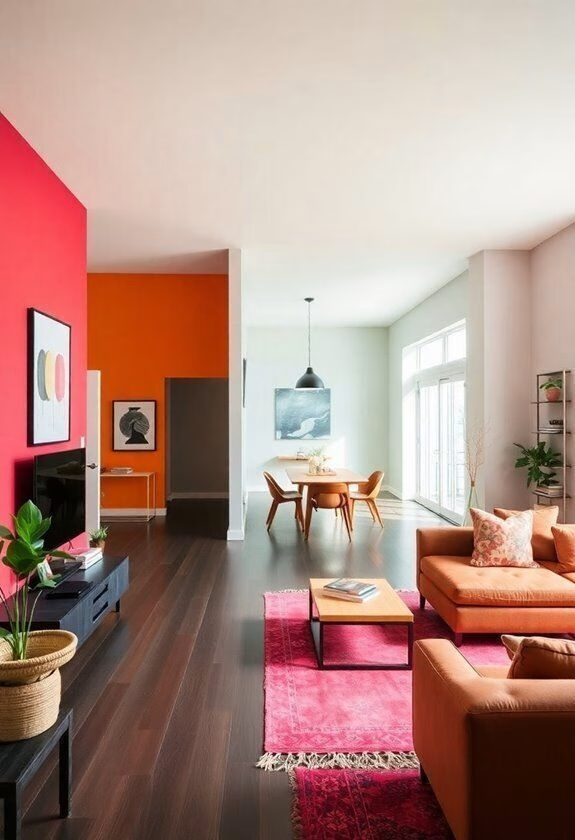
- It turns a visual disruption into a design opportunity.
- Use the same accent on one other unrelated wall for balance.
- Keep the accent height limited to 2/3 of wall height so it doesn’t feel top-heavy.
- Link the accent colour to cushions or a rug to tie the space together.
- Maintain lighter ceiling and trim colours so the accent zone remains the feature.
20. Add a bench or settee behind the floating sofa
When you float a sofa in the centre of the room and have space behind it, place a narrow settee or bench behind the sofa.

- It creates a transitional surface and doubles as extra seating or display.
- Choose bench length about 70-80% of sofa length so it follows but doesn’t overpower.
- Use fabric or finish different from sofa to create layering.
- Add a table lamp or two on the bench so the back of the sofa is intentional, not bare.
- Ensure you leave about 28-30 inches between the sofa back and bench for circulation.
Key takeaways
- Odd room layouts are not design failures—they’re design opportunities when you pick the right moves.
- Small changes (lighting, placement, a unique focal point) often produce more impact than re-building walls.
- Define zones, float furniture, and use visuals (colour, height variation, rugs) to bring structure.
- Each detail should respond to the room’s quirks, not fight them.
- With the right guidance, your living room becomes purposeful and engaging.
I hope these ideas inspire you to turn your “awkward” living room into a space that feels both comfortable and considered.
On MansionFreak.com I’ve guided many homeowners through exactly this challenge—and I’d love to help you next.
With thoughtful planning, clever spacing, and a few smart styling choices, your Awkward Living Room Layout Ideas can turn an uneven room into a space that feels intentional and inviting—just like the inspiration shared on MansionFreak.com by Leyden.
Explore Mansion Freak’s Living Room Design Services and transform your tricky layout into a comfortable, stylish haven.